
What Actually Happens on a Survival Holiday, Day by Day
A question I get asked a lot, usually over a drink, is some version of: but what do you actually do out there for eleven days? The short answer is Learn, then Challenge, then Celebrate. Roughly five days of bushcraft training on an uninhabited island, three days surviving with the instructors out of sight, then a rescue, a hot shower and a final night of celebration. The exact count shifts by destination, because our trips run from ten to twelve days, but that three part shape holds everywhere we go.
For years we’ve been better at describing how an island feels than what happens on it. There’s what it feels like, and there’s one training day up close. Neither gives you the whole thing in order. This one does, coconuts and all.
Think of it as the timetable I should have written years ago.
What Actually Happens on a Survival Holiday, Day by Day?
A survival holiday with us runs in three phases. You arrive and get briefed, spend about five days learning bushcraft from instructors on an uninhabited island, then survive for three days with minimal kit and the instructors out of sight. After a rescue, you finish with a celebration dinner and a proper bed.
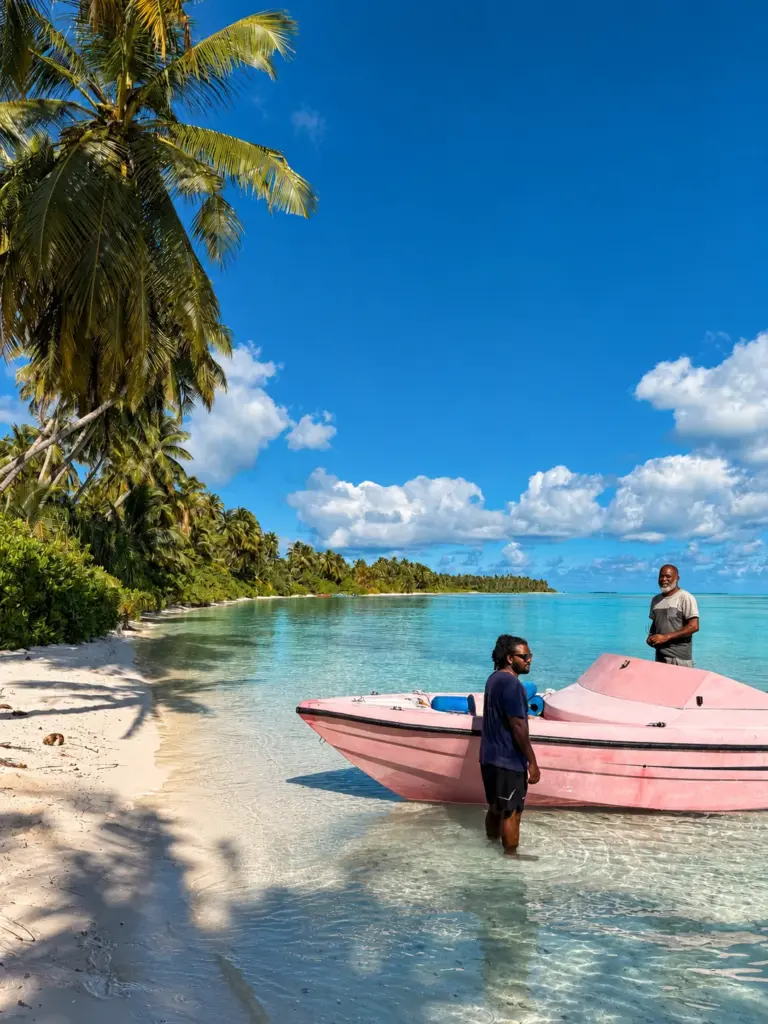
Here’s how that looks on our eleven day trips to Panama’s Pearl Islands and the southern Maldives atolls, which share almost exactly the same running order.
| Day | Phase | What happens |
|---|---|---|
| Day 1 | Arrival | Meet at the hotel or guesthouse, expedition and safety briefing, dinner together, early night |
| Day 2 | Learn | Speedboat to the island, set up hammocks, build shelter, first dinner cooked over the fire |
| Day 3 | Learn | Friction fire in the morning, fishing for supper in the afternoon |
| Day 4 | Learn | Foraging from the ocean and shoreline, opening coconuts, handline fishing, preparing your own catch |
| Day 5 | Learn | Island time, the signal is gone and the group cooks and eats together |
| Day 6 | Learn | Gathering resources and preparing mentally for the survival phase |
| Days 7 to 9 | Challenge | Three days with minimal kit, shelter, water, fire and food down to you, instructors out of sight |
| Day 10 | Celebrate | Rescue, hot shower, hotel or resort, celebration dinner |
| Day 11 | Departure | Boat back to the mainland and flights home |
Exact days vary by destination. The ten day Philippines trip goes straight to the island on day one, with survival on days six to eight and rescue on day nine. The twelve day Tonga trip adds humpback whale swimming, with survival on days eight to ten and rescue on day eleven. Each expedition page carries its own running order.
What Happens During the Learn Phase?
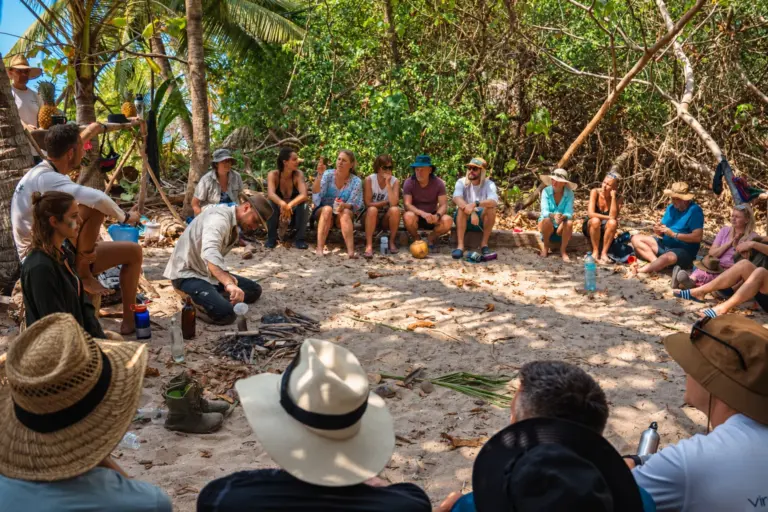
The Learn phase is roughly five days of hands on bushcraft on the island: shelter, friction fire, fishing, foraging, coconuts and water. You sleep in a hammock, cook over the fire and learn by doing, with world class instructors beside you. No experience is needed. The skills build day by day towards the survival phase.
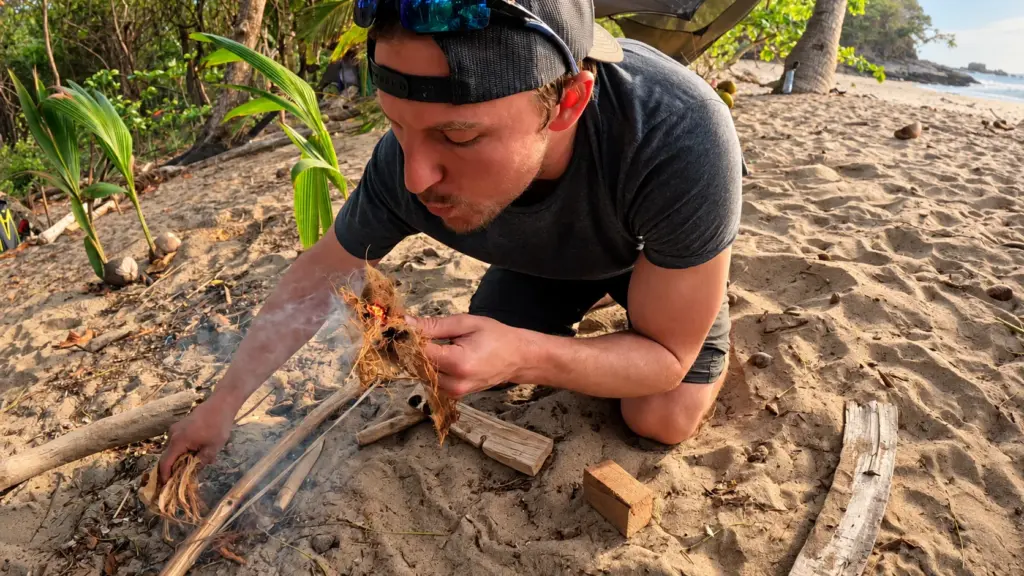
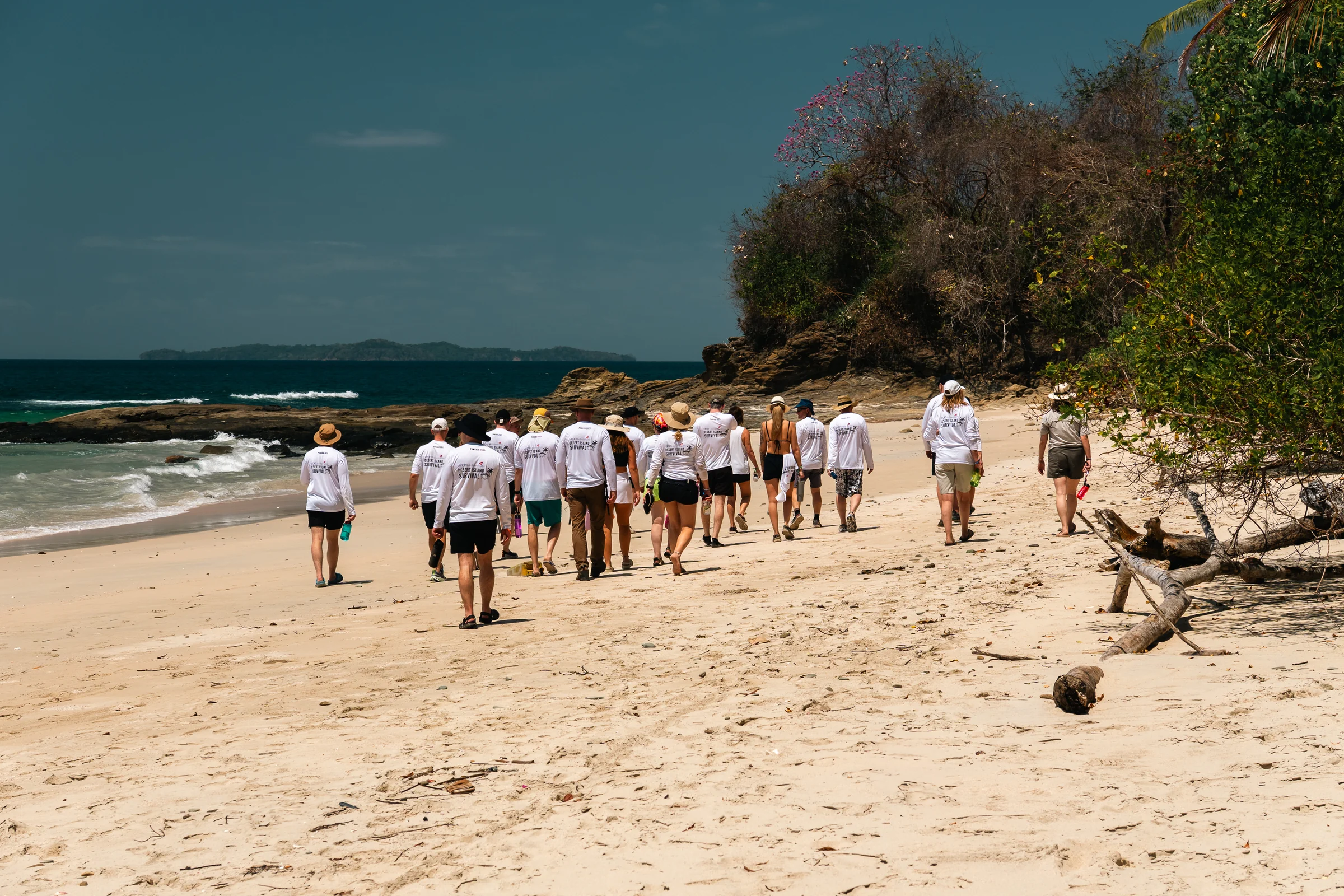
Day two is the boat. In Panama it’s a 90 minute speedboat ride to a private 560 acre island, and the first afternoon is hammocks, shelter and discovering that knots are harder than they look on the internet. Day three is friction fire, which I have a complicated relationship with. On an early expedition I did a bow drill demo the day after slicing a tendon with a machete, felt it pop open halfway through, and kept going, because you don’t put the fire out. I don’t recommend my method. Our guide to making a fire is considerably less bloody.
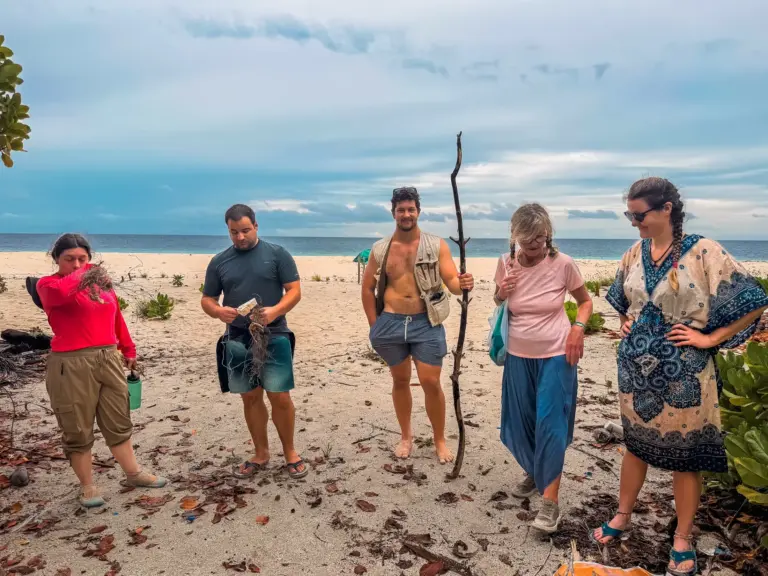
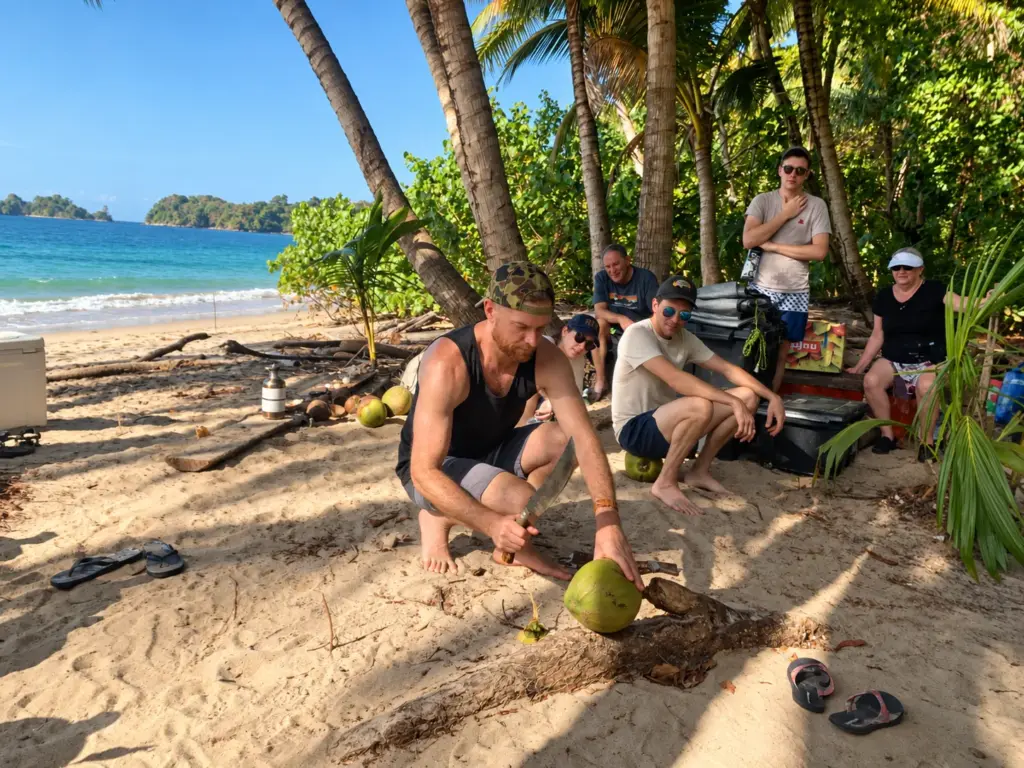
By day four you’re opening coconuts, twisting up handlines and getting absurdly proud of a fish the size of a biro. Day five is the day the noise stops: the signal goes and the group cooks together. Day six is gathering resources and talking through the psychology of surviving in the wilderness before the instructors step back.
Every island follows this shape, but each one adds its own bushcraft and its own experiences. There’s moonlit lobster diving in Tonga, a jungle hike in Panama, and in Tonga you swim with humpback whales, where a calf is basically a three ton puppy. You can meet the instructors before you go, which matters, because they make or break the whole thing.
What Happens During the Challenge Phase?
The Challenge phase is three days, or 72 hours, where you put the training to work. You move to a wilder spot, or on the Maldives trip to a separate survival island, with minimal kit. Shelter, water, fire and food are down to you, and the instructors stay out of sight.
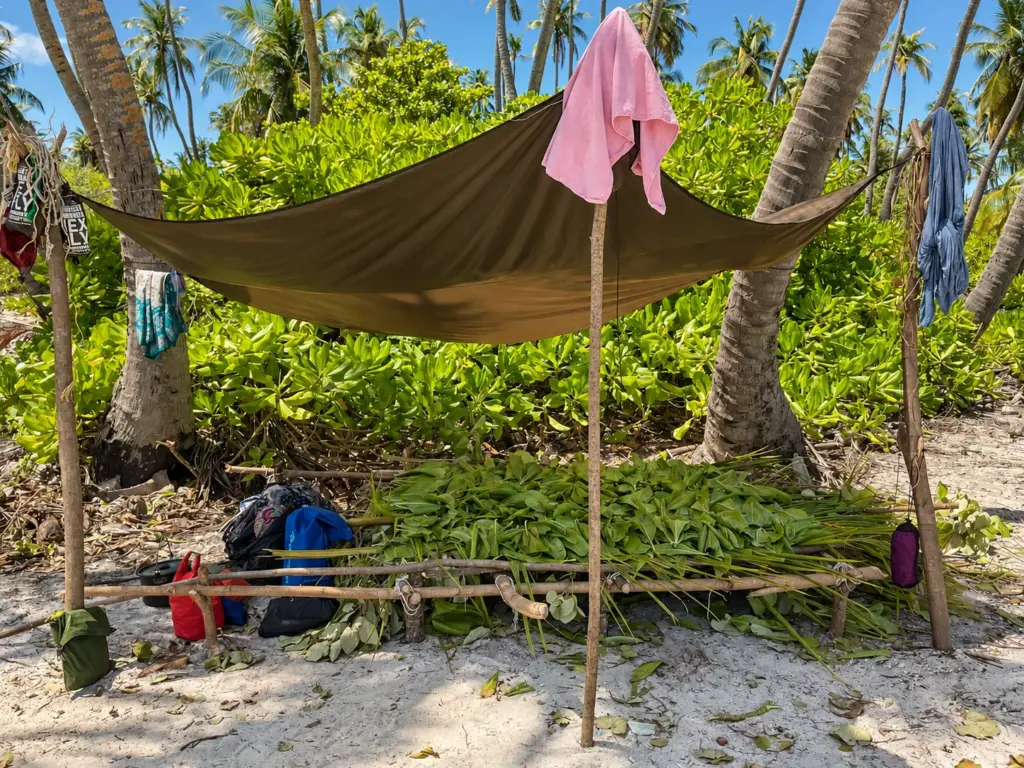
This is the bit you picture when you hear the words desert island, and it’s both harder and simpler than you’d expect. Calories are the money of nature, so the days organise themselves around water, fire and whatever the sea gives you. Hunger is the best sauce. A fire that won’t catch at dusk feels like a small tragedy, and one that does feels like winning something.
In Panama, after dark, bioluminescent plankton lights up the water. You’re a bit hungry and the sea is glowing. I won’t try to explain what that does to a person.
Do You Survive Alone or in a Group?
At most of our destinations the survival phase is a group effort, with your tribe sharing shelter, fire and food. Panama, the Maldives and Tonga each offer a couple of solo spots, two per departure, first come first served. In Sweden it’s different: everyone survives solo.
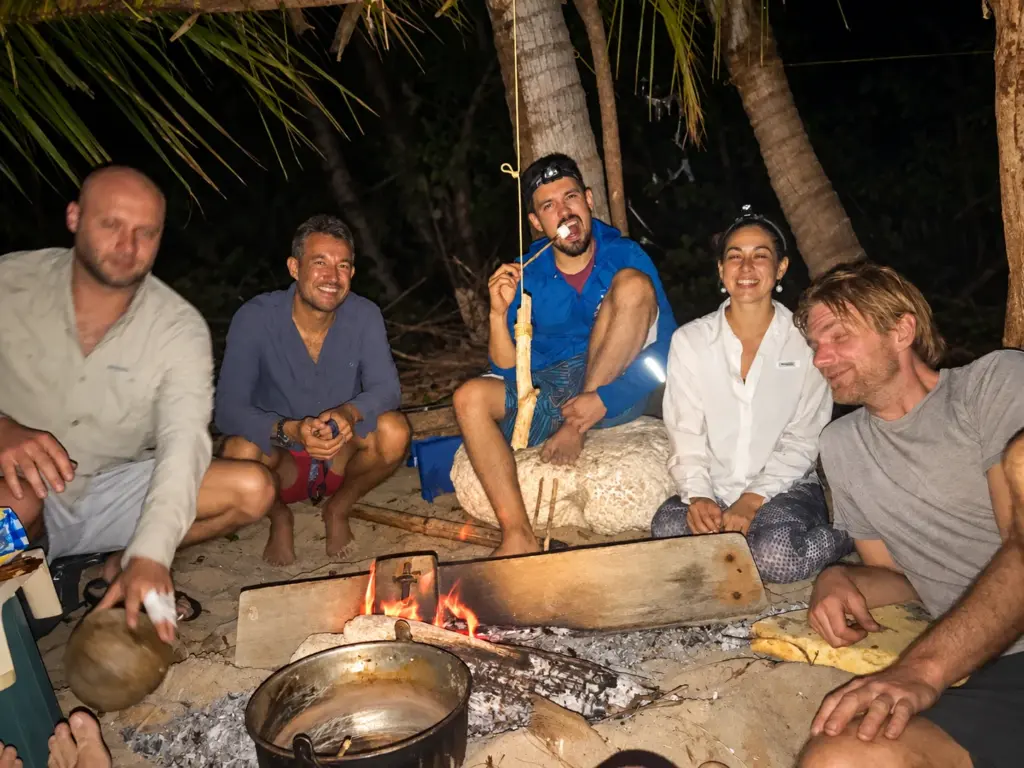
Solo guests still train with the group for the full five days, so nobody’s thrown in cold. Panama and the Maldives top out at twelve guests, and Tonga at ten, which is deliberate, and why we cap expeditions explains the thinking. Three days of shared adversity tends to leave you a tight tribe by the end of it. I spent 35 days alone in Canada filming Alone, so I’m biased towards solo, but I’ve watched plenty of groups become something special around one fire.
Is a Survival Holiday Safe If You’ve Never Done Anything Like This?
Yes, and it’s built for exactly that. No prior experience is needed. The training days exist so you arrive at the survival phase with the skills already in your hands. We call our approach invisible safety: the support is there throughout, it just stays out of the way so the challenge still feels real.
Across 500+ castaways, we’ve never had a major or life threatening incident. The real risks on an island tend to be ordinary ones, dehydration, coral cuts and tool injuries, and I can personally vouch for the last of those. If you want the full picture of how we think about it, there’s a whole piece on risk, reality and invisible safety in far more detail than fits here.
How Is This Different from a Normal Wilderness Holiday?
A normal wilderness holiday usually brings the comfort with you: a guide, a set menu, a tent that someone else pitched. On a survival holiday the comfort is what you build. You learn the skills, then rely on them for three days, and the celebration only lands because you’ve earned it. You found water, made fire and got through the nights, and now you know you can.
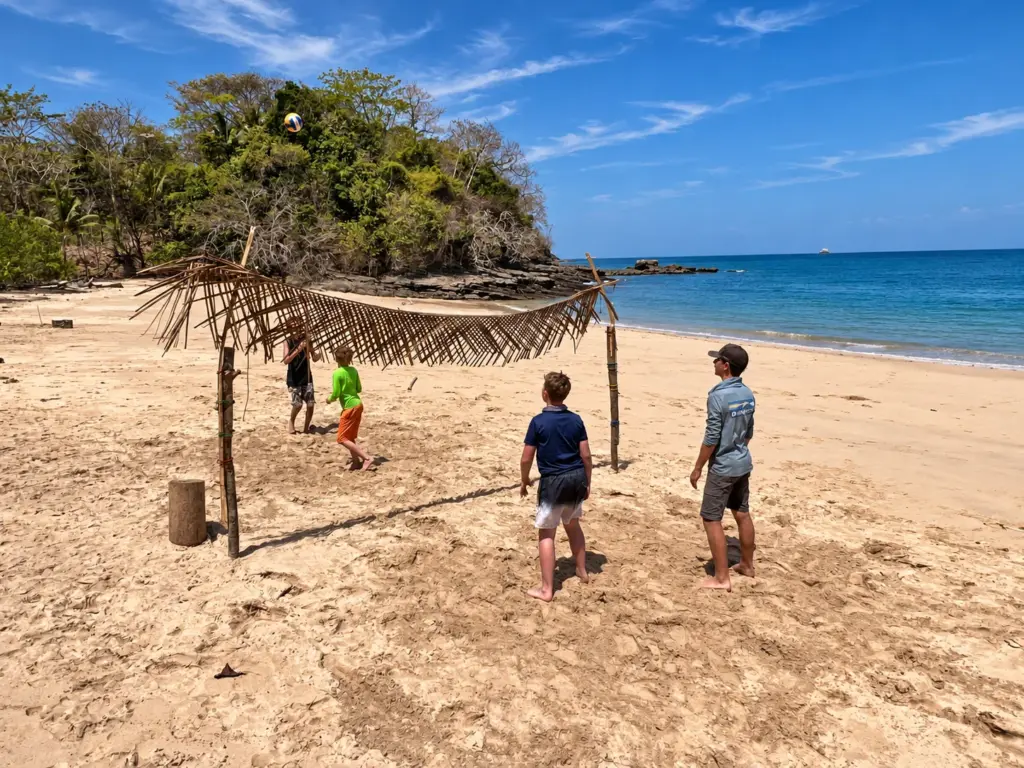
My first survival trip, years before this company existed, was in Belize with an instructor far more interested in kit than in working with nature. I still loved it, and came home thinking that with the right island and the right teachers it could be something else altogether. Nothing is staged, and the island doesn’t care who you are.
What Happens on the Last Night?
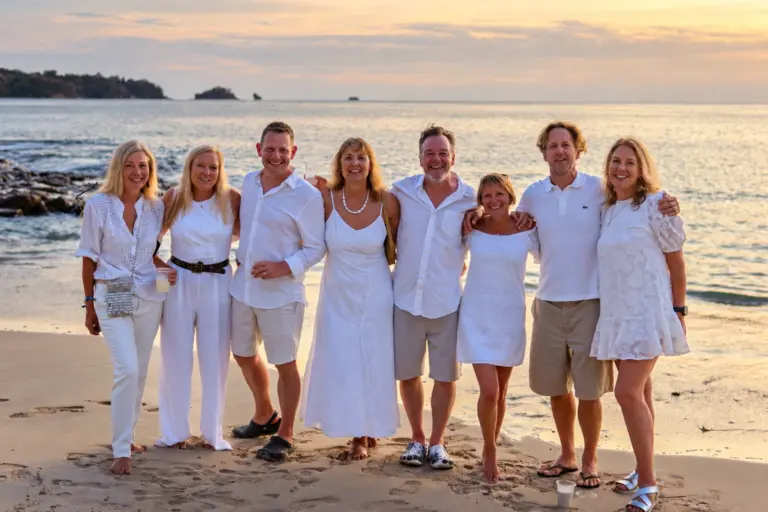
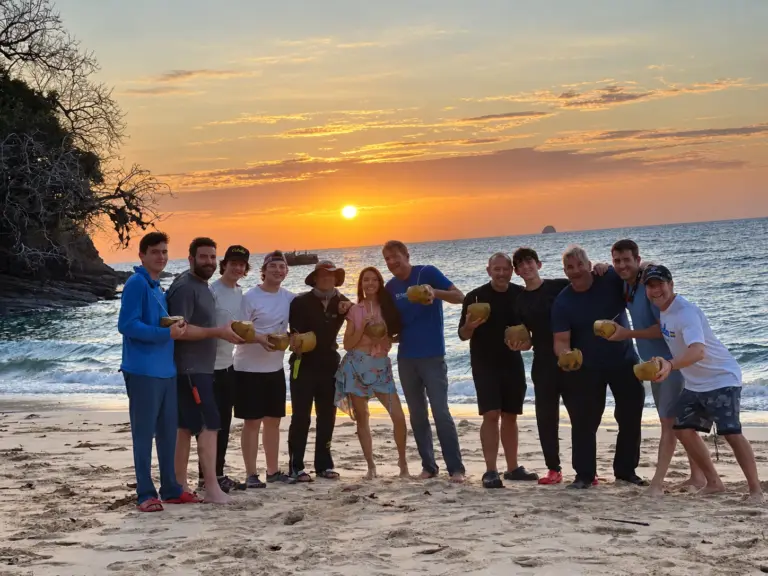
The Celebrate phase starts with the rescue boat. You get a hot shower, a proper bed in a hotel or resort, and a celebration dinner with the people you’ve just survived with. In Panama that’s an Italian restaurant on Contadora Island. The next day you head home.
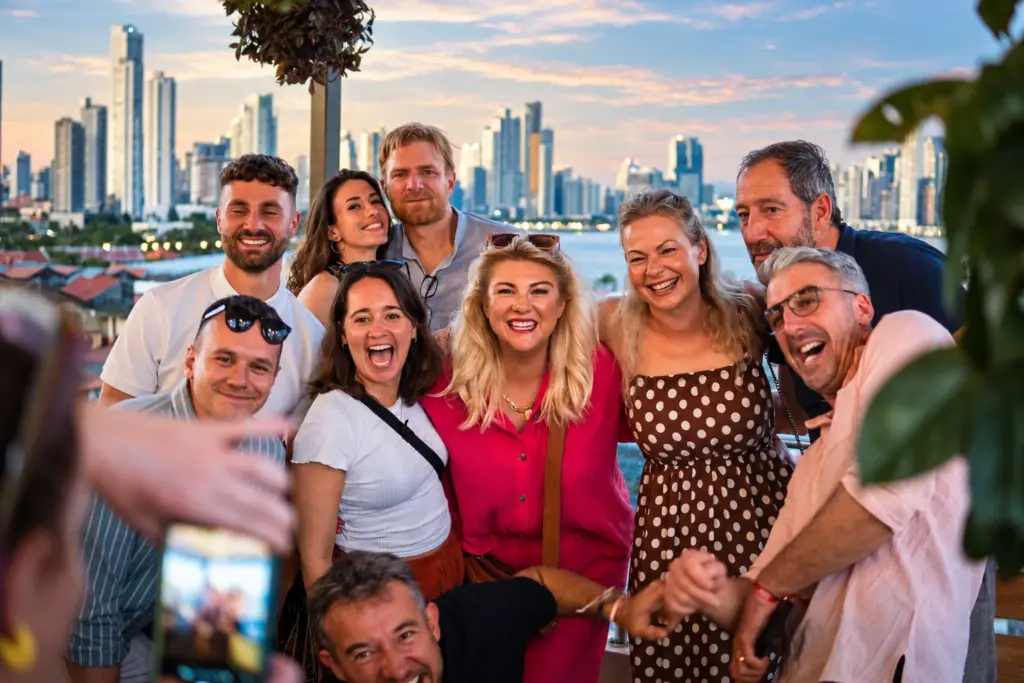
That first shower is close to a religious experience, and I’ve stood in a fair few of them over the years. We’ve written about luxury after survival, because a clean bed genuinely feels different after eight nights in a hammock. But what I notice most on the last night isn’t the pasta.
It’s the people. It’s like their nervous system has recalibrated. They slow down and learn to be more present, and nobody has to teach them that bit. It just happens organically when you slow down in nature for long enough. The group who checked their phones at dinner on day one are now telling the story of the fire that wouldn’t light for the fourth time, and laughing just as hard.
If you’d like to see which island fits, you can see all seven expeditions here.
So, which part are you most curious about: the five days of learning, or the three days of finding out what you’ve learned?
Frequently Asked Questions
Short answers to the questions we hear most before someone books a survival holiday: how long the trip lasts, whether you need experience, how long the survival phase runs, solo options, where you sleep and how safety works. Each expedition page has the full detail for its destination.
Our island survival holidays run ten to twelve days: the Philippines is ten, Panama and the Maldives eleven, and Tonga twelve. Every trip follows the same Learn, Challenge, Celebrate shape.
No. You need to be reasonably fit and up for it. Roughly five days of bushcraft training come first, covering shelter, fire, fishing and foraging.
Three days, or 72 hours, with minimal kit. Shelter, water, fire and food are down to you, and the instructors stay out of sight.
On most trips the survival phase is done as a group. Panama, the Maldives and Tonga each offer two solo spots per departure, first come first served. On the Sweden expedition everyone survives solo.
In a hammock on the island for the training and survival phases. On the Panama and Maldives trips the first night is in a hotel or guesthouse and the last is in a hotel or resort.
Desert Island Survival uses an approach called invisible safety, where support is in place throughout but stays out of the way. Across 500+ castaways the company has never had a major or life threatening incident.
Tom Williams
Founder, Desert Island Survival and winner of Channel 4’s Alone UK