
When’s the Best Time of Year for a Survival Expedition?
The best time of year for a survival expedition depends on the destination. Tropical destinations like the Philippines, Maldives, Panama, and Tonga run from November to May in dry season. Sweden runs from June to early September for long-light summer wilderness. Botswana and Tanzania run from May to September in African dry season. Desert Island Survival schedules each destination inside its best window.
Survival is hard enough. We don’t need to make it harder.
Every Desert Island Survival expedition is timed to the best window of the year. Least rain. Fewest bugs. Kindest sea. The wilderness still gives you plenty to deal with, promise. We just don’t bolt a monsoon on top of it.
How Do You Choose the Right Time of Year for a Survival Expedition?
Three variables decide it. Two of them are ours, one is yours.
- The destination’s natural window: when it’s dry, calm, and kindest to a human trying to live outside.
- Wildlife or seasonal events that only happen in a particular month: humpback migration, honey harvest, the arrival of the flood waters.
- Your own calendar: work commitments, school holidays, time zones you can stomach.
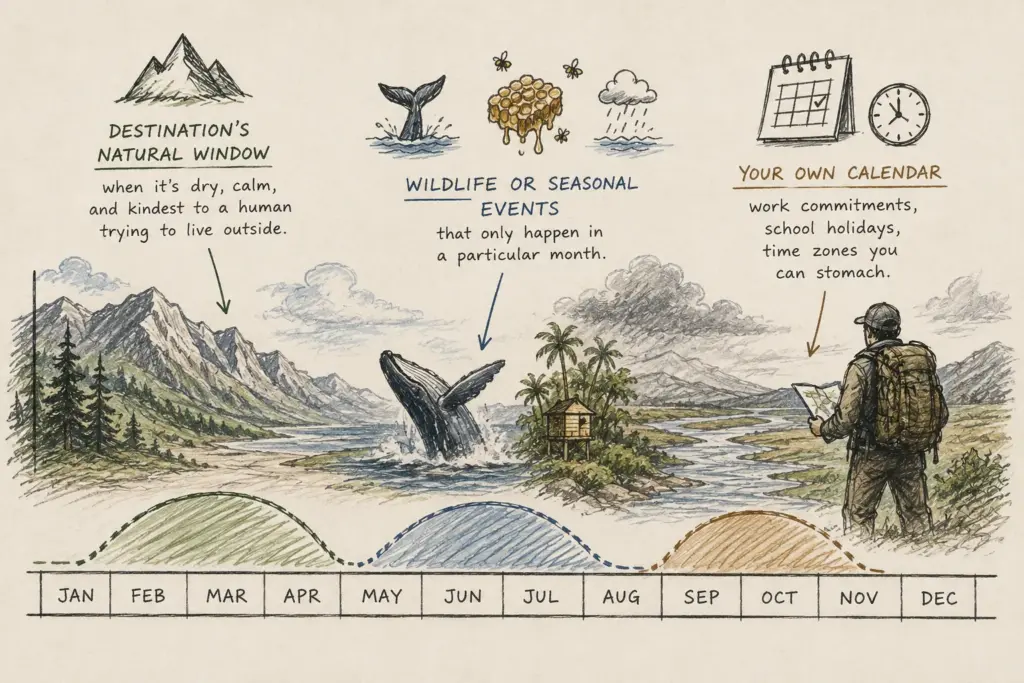
We’ve already filtered for the first two. Every trip on our calendar is scheduled inside its best window. Your job is to match your calendar to ours. If you are still choosing the destination itself, start with our guide to choosing the right survival expedition.
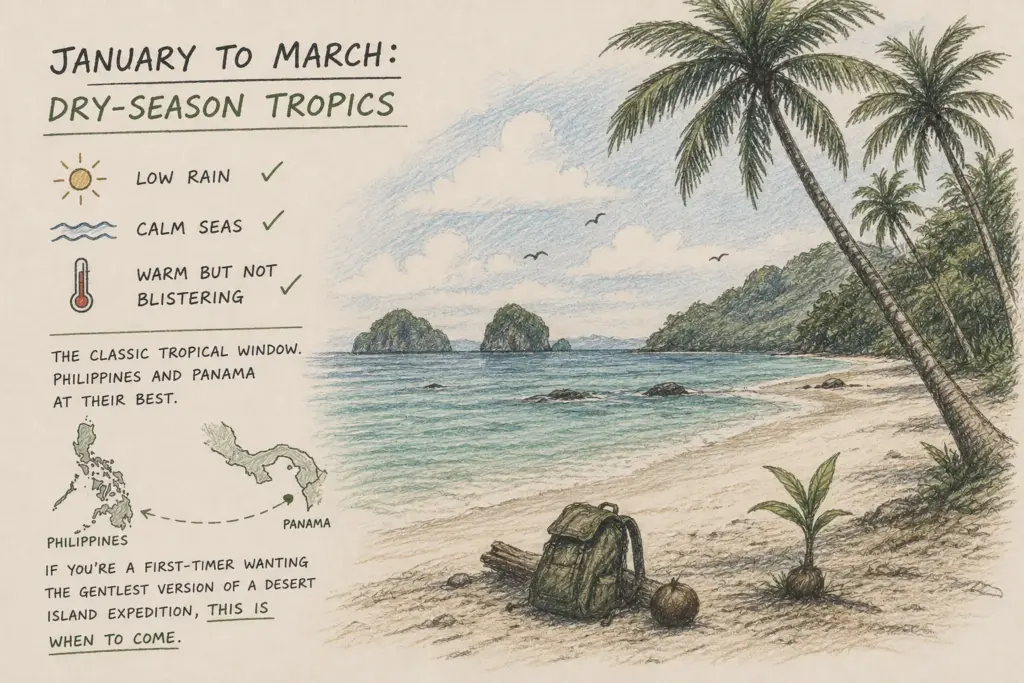
January to March: Dry-Season Tropics
The classic tropical window. Philippines and Panama at their best. Low rain, calm seas, warm but not blistering. If you’re a first-timer wanting the gentlest version of a desert island expedition, this is when to come.
April to May: Shoulder Transition
Still dry across the Philippines, Maldives, and Panama, and often warmer than mid-winter. The shoulder isn’t a compromise here; it’s the back half of the dry season. Reef visibility in the Maldives is excellent right through April. For the Philippines, our Coron timing guide goes deeper on why this window works so well: When is the Best Time to Visit Coron in Palawan?
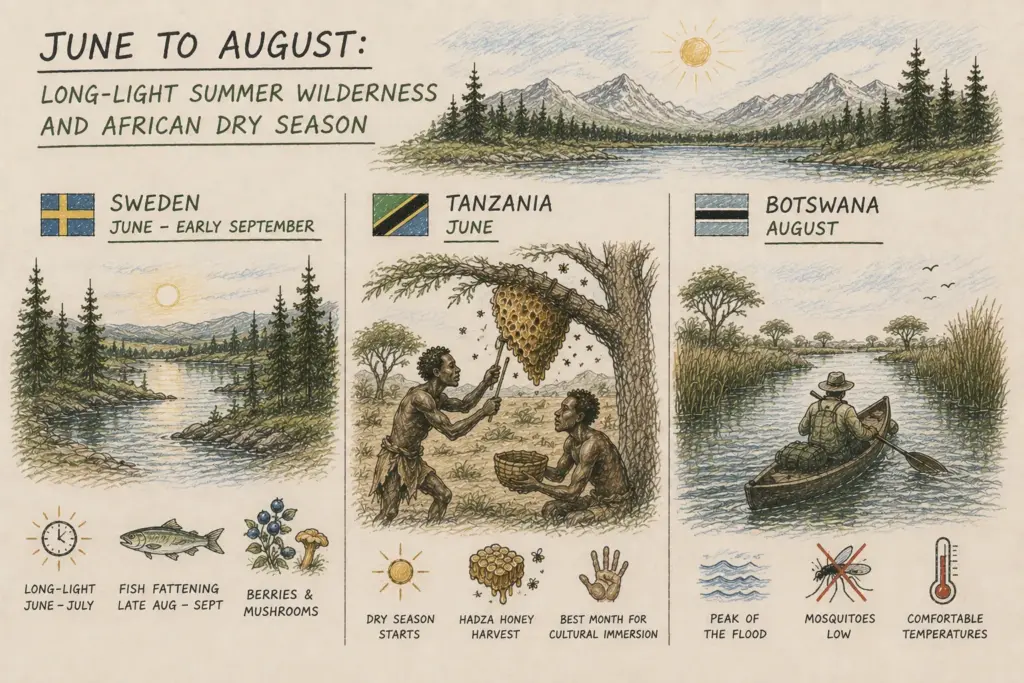
June to August: Long-Light Summer Wilderness and African Dry Season
The big block. Three very different destinations open up at once.
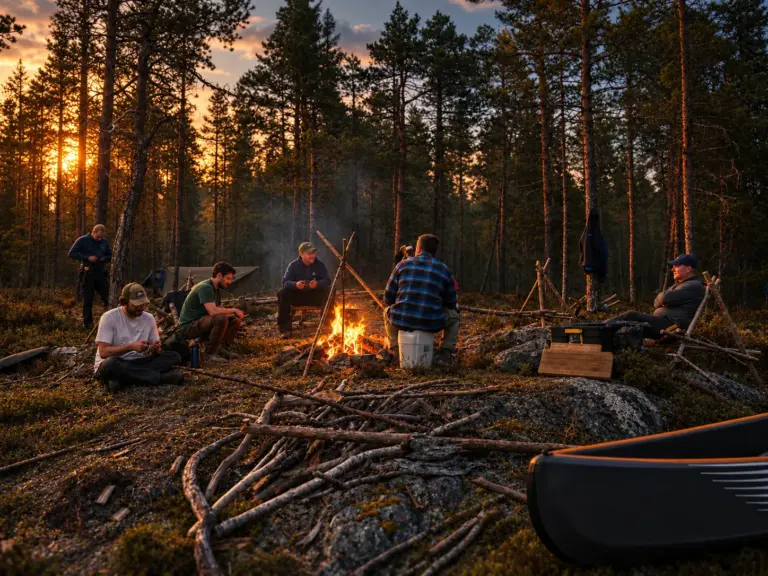
Sweden, June to Early September
Long-light midnight-sun summer in June and July. Tom’s pick is late August into early September, when the fish are fattening up before winter and there are still carpets of berries and chanterelle mushrooms in the forest. Either window works. The second one tastes better. See the current Sweden survival adventure dates.
Tanzania, June
The dry season starts and the Hadza honey harvest is in full swing. It is the single best month to be there if you want the cultural immersion at its sharpest. Explore the Tanzania survival safari.
Botswana, August
Peak of the flood. The water that arrived from the Angolan highlands a few months earlier is now at its highest, which means the kayaks have the depth to move properly through the Delta. Comfortable temperatures. Mosquitos low. We’ll come back to why this is a two-month window in a moment. See the Botswana kayak bushcraft safari.
July to September: South Pacific
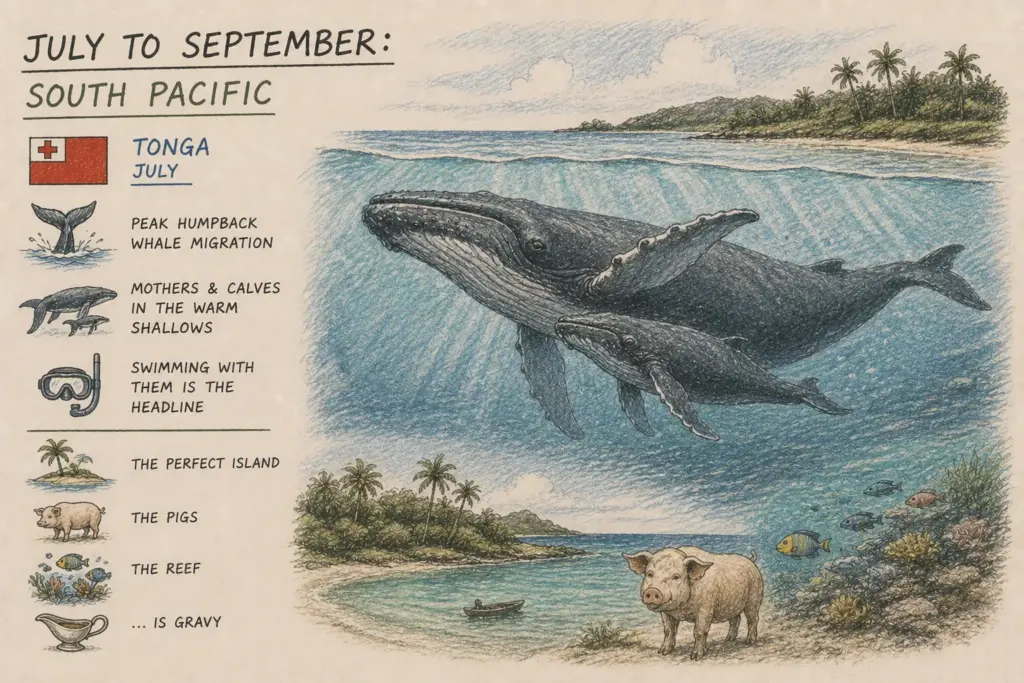
Tonga, July, peak humpback whale migration. Mothers and calves in the warm shallows. Swimming with them is the headline. The rest of the trip, the perfect island, the pigs, the reef, is gravy. If whales are why you’re booking, this is your month. For more seasonal detail, read Tonga in May: The Best Time to Visit.
October to November: Tropical Green Season
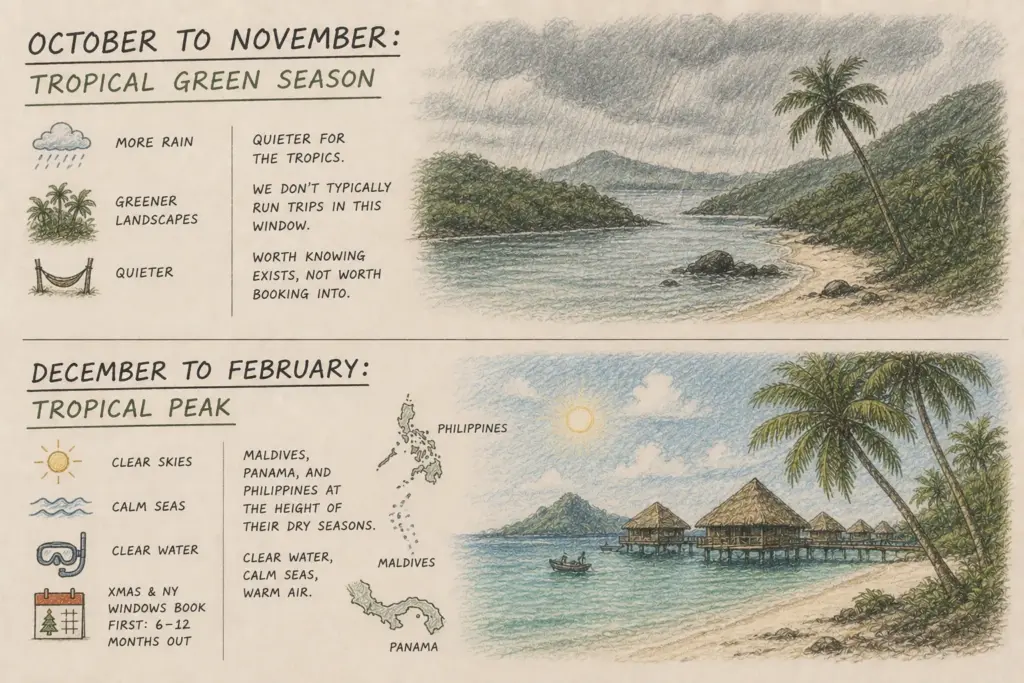
Quieter for the tropics. We don’t typically run trips in this window because the conditions don’t match what we’d want a guest to land in. Worth knowing exists, not worth booking into.
December to February: Tropical Peak
Maldives, Panama, and Philippines at the height of their dry seasons. Clear water, calm seas, warm air. Christmas and New Year windows tend to book first, six to twelve months out.
Quick-Pick by Destination
If you only read one section of this post, read this one.
| Destination | Best month(s) | Why that window |
|---|---|---|
| Philippines | January to April | Dry season. Calm seas, low rainfall. |
| Maldives | January to April | Less rain. Best reef visibility. |
| Panama | January to April | Dry season. Wild terrain at its driest. |
| Tonga | July | Peak humpback whale migration. |
| Sweden | Late August to early September | End-of-summer abundance: fish fattening, berries, and chanterelles everywhere. |
| Tanzania | June | Dry season and Hadza honey harvest. |
| Botswana | August | Peak flood waters from Angolan highlands. Kayaks need depth. |
The Magic Windows
Two trip-and-month combinations are genuinely worth planning your year around.
Sweden, End of Summer
The fish are fattening up before winter. There are still carpets of berries and chanterelle mushrooms. The light is golden rather than blinding. You’re moving through a forest that’s quietly preparing for the cold. It’s the most generous moment the wilderness gives you all year.
Tonga, July, with the Humpbacks
Pacific water, warm enough to swim in without a wetsuit. Mothers and calves in the bays. A calf is roughly a three-ton puppy, and behaves like one. The window is short and the licensing is tight, which is why we time the whole trip around it.
Botswana Delta Wet vs Dry: What Actually Changes
This one’s worth understanding properly, because it’s the most counter-intuitive of all our timings.
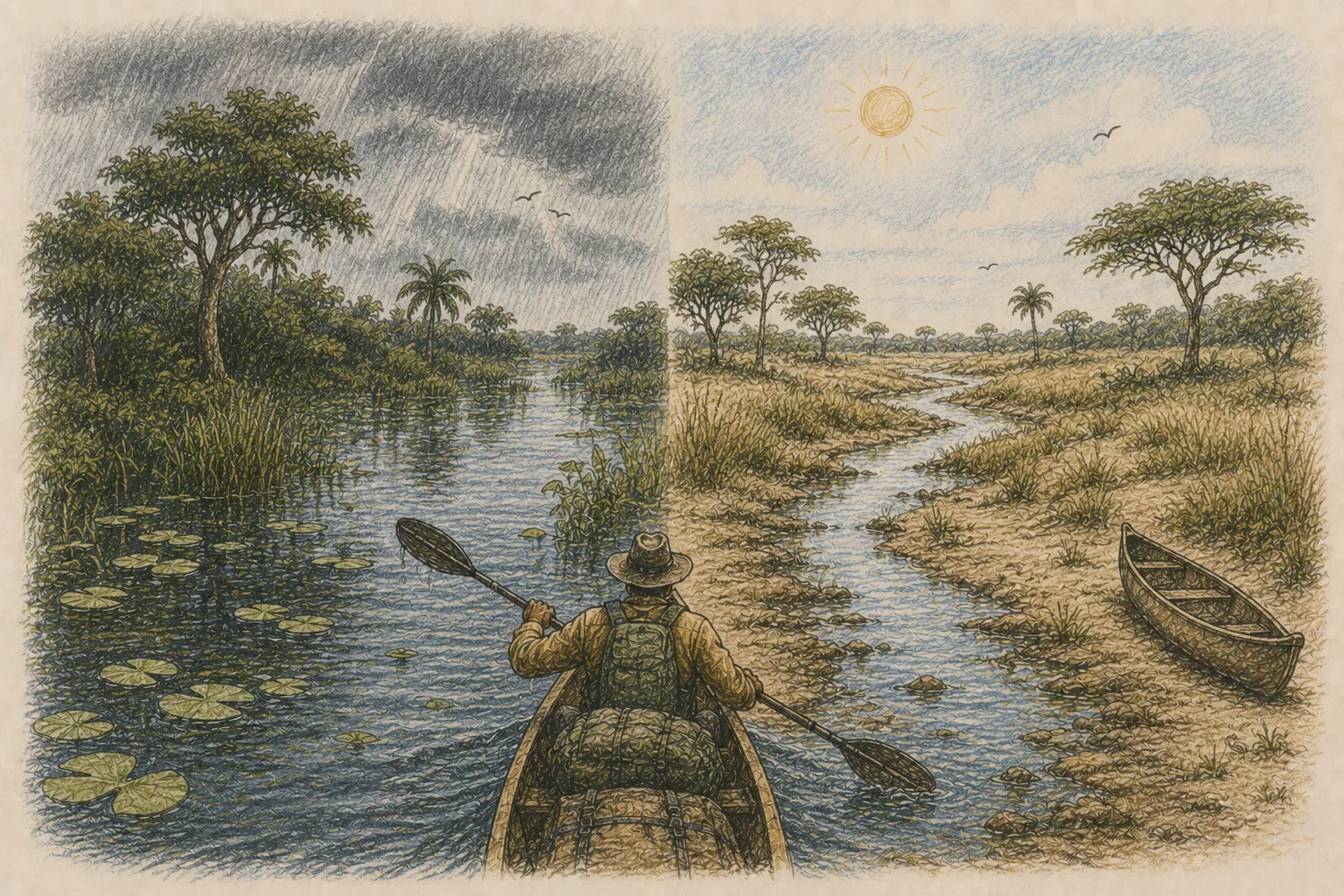
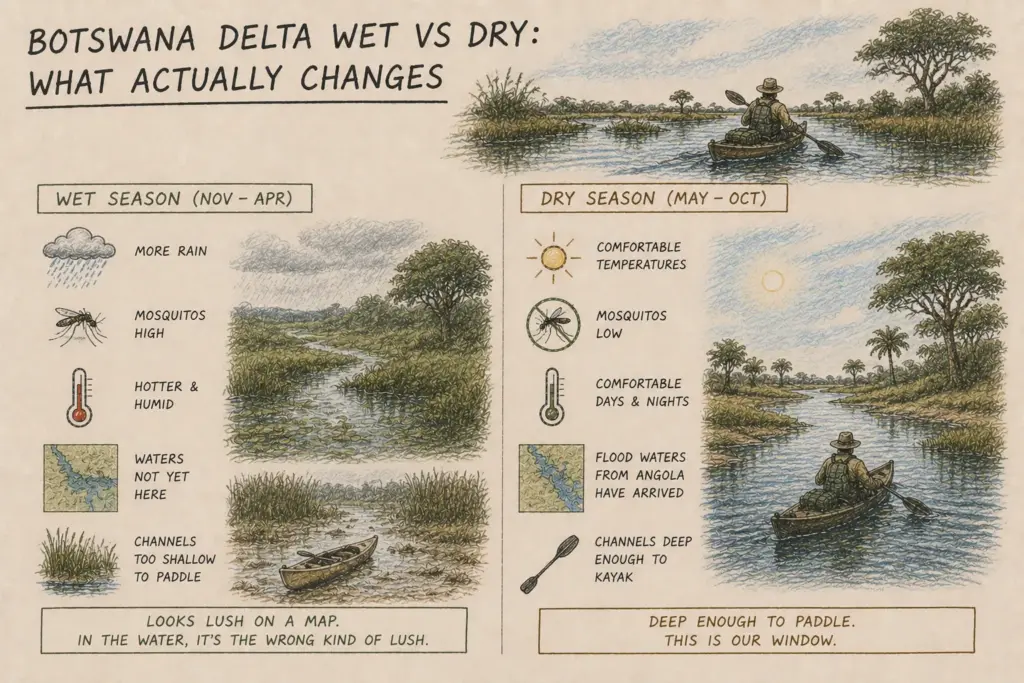
We only go in the dry season, and there’s a specific reason. The temperatures are comfortable. The mosquitos are low. Most importantly, the flood waters have arrived from the Angolan highlands by then, which gives us enough depth of water to actually kayak the Delta. Without the flood, the channels are too shallow to paddle. It’s impossible to run the expedition outside of this two-month window.
Wet season looks lush on a map. In the water, it’s the wrong kind of lush.
Common Timing Mistakes
Honestly, it’s hard to find one. We pick the best months for each destination so you don’t have to second-guess us.
The closest thing to a mistake we see: guests trying to wait twelve months for the next window of a destination that’s already running this year. The trip that’s right for you might be on next month’s calendar.
Find Your Window
The trip that’s right for you might be running next month, or eleven months from now. Both are fine. Our windows are tight on purpose.
Frequently Asked Questions
January to April. Dry, calm, gentle. April is the sweet spot for warmer water and quieter resorts.
January to April. Less rain, best reef visibility, calmest seas.
January to April. Dry season. Primary jungle at its most accessible.
July. Peak humpback whale migration with mothers and calves in the bays.
Late August to early September. End-of-summer abundance: fish, berries, chanterelles. June and July also work for midnight-sun light.
June. Dry season starts, and the Hadza honey harvest is in full swing.
August. Peak flood waters from the Angolan highlands give the kayaks the depth they need.
Because the experience is materially worse. Heavier rain, rougher seas, more biting insects. The trip should fight you, not the weather forecast.
Sweden, from June through early September. Roughly three months of long-light summer.
Botswana. The flood waters only give us a workable two-month window per year.
Tom Williams
Founder, Desert Island Survival