
Maldives Travel Guide: Islands, Atolls and a Real Survival Expedition
The short answer. The best time to visit the Maldives is December to March, in the dry season. We run our survival expedition in the deep south, in Gaafu Dhaalu, on uninhabited islands far from the resorts: eleven days living wild before a five-star finish.
When you think of the Maldives you probably picture an over-water bungalow, a turquoise lagoon and a honeymoon price tag. That version exists. But there’s another Maldives behind it, around 1,190 coral islands scattered across 26 atolls, with some of the richest marine life on the planet, and almost nobody actually meets it.
This guide covers the practical side of visiting the Maldives, when to go, how to get there, what to eat and what to see, the famous spots worth a detour, and then the part we know best: the remote southern atoll where we run our expedition, and what it’s like to skip the resort entirely and survive on an uninhabited island of your own.
How to get to the Maldives
Nearly every visitor arrives by air into Velana International Airport (MLE) in the capital, Male. It’s well connected, with direct flights from much of Europe, the Middle East and Asia, which makes it our closest tropical island for anyone travelling from the UK.
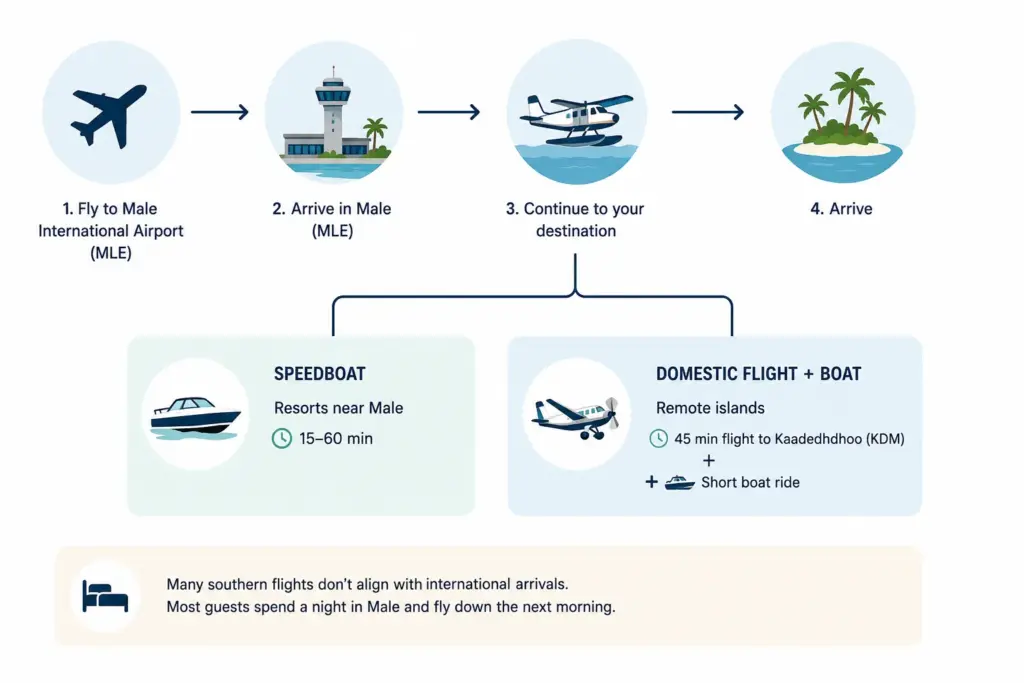
From Male, you transfer onward depending on where you’re headed. Resorts near the capital are a short speedboat ride away, while more remote islands need a domestic flight or a seaplane. For our expedition, you take a 45-minute domestic flight south to Kaadedhdhoo (KDM), in Gaafu Dhaalu in the deep south, then a short boat ride from there.
One practical note worth planning around. Those southern domestic flights don’t always line up with international arrivals, so many of our guests spend a night in Male before flying down the next morning. It’s no bad thing, it gives you a gentle landing and a chance to catch your breath before the adventure starts. We send exact joining instructions once you’ve booked, and we’re happy to point you to a good place to stay. As a rule, we recommend booking flights directly with the airline once you’ve found them, for the better cancellation policy and the upgrade potential. Google Flights is a good place to start.
Best time to visit the Maldives
The Maldives has two seasons. The dry season runs roughly from November to May, with warm, sunny days, clear skies and highs of 29 to 31 degrees. The wet season, May to November, brings more rain and heavier seas, with the southern atolls seeing the most of it.
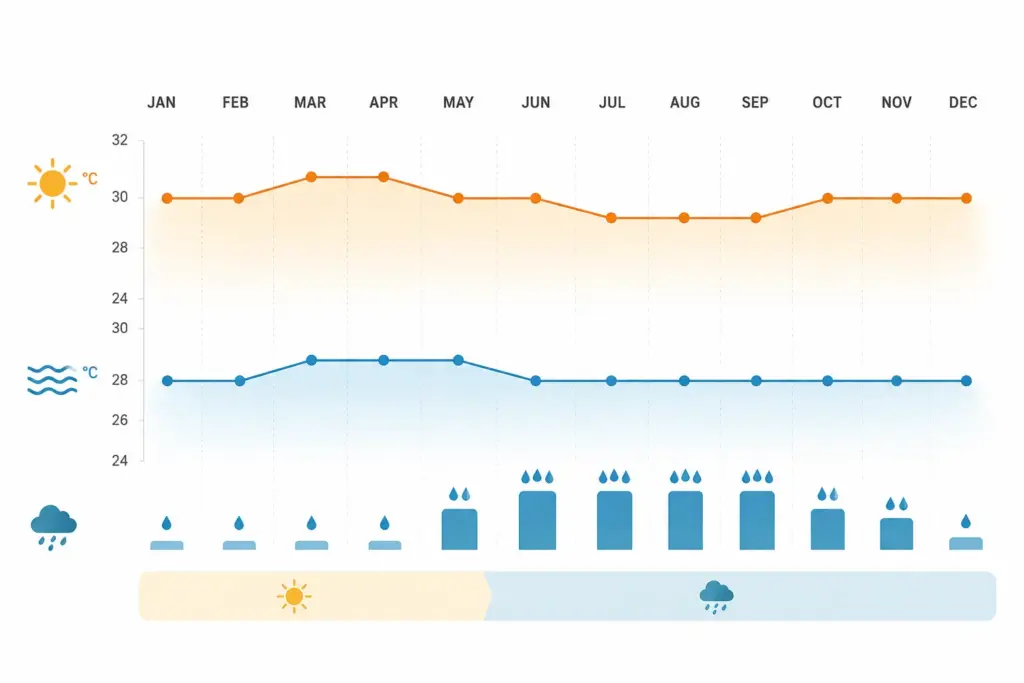
The window most people want is December to March, when the islands are at their most settled and the water is a flat, clear blue. That’s also when we run our main expedition, so you catch the south at its most generous, both for diving and for the fishing and foraging that a survival trip depends on. The sea sits at a comfortable 27 to 29 degrees year-round, so the water is rarely the issue. The sky is.
Our atoll: the deep south (Gaafu Dhaalu)
This is the part of the Maldives we know best, and it’s nothing like the postcard. Our expedition runs from Gaafu Dhaalu, the southern half of Huvadhu Atoll, which is one of the largest coral atolls in the world. It sits in the far south, almost on the equator, separated from the rest of the country by a deep ocean channel.
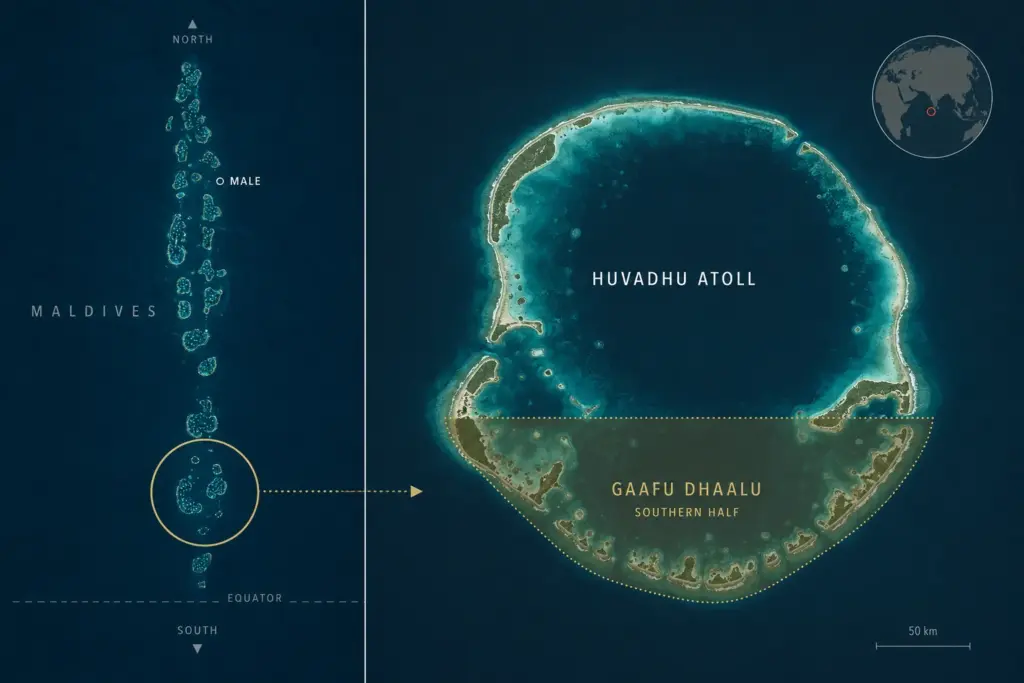
That remoteness is the whole point. There are barely any resorts this far south, the islands see almost no one, and the reefs are all the healthier for it. While most visitors stay clustered around Male in the north, we head the other way, to islands where the only footprints on the beach in the morning are the ones the turtles left overnight. This is our atoll, and the whole trip is built around it.
Things to do in the Maldives
For all its reputation as a place to do nothing, the Maldives rewards anyone who gets in the water or off the beaten track.
Snorkelling and diving
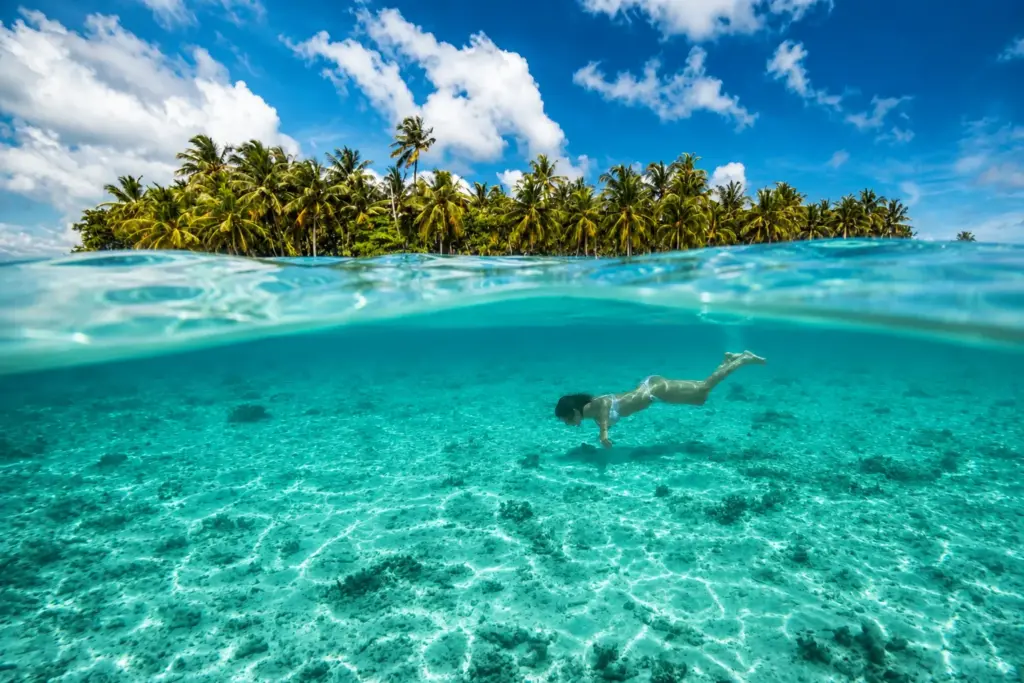
This is the main event. The reefs are healthy and busy, and you don’t need to be a diver to see the best of it. A mask and a slow swim along a house reef will show you reef sharks, turtles and eagle rays without much effort at all, and the quieter southern reefs are some of the most alive in the country.
The famous sites worth a detour
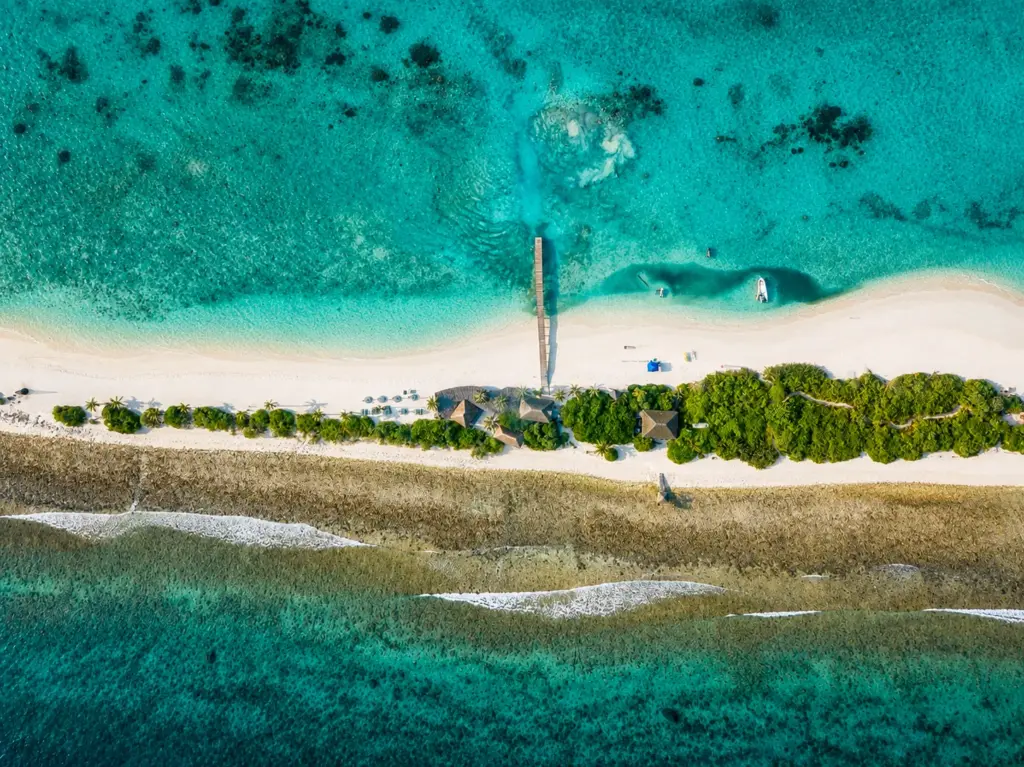
If you’ve got time either side of your trip, the headline spots earn their reputation. Baa Atoll in the north is a UNESCO Biosphere Reserve, where seasonal plankton blooms draw hundreds of manta rays into Hanifaru Bay between May and November. The central atolls, particularly South Ari, are the place to swim with whale sharks year-round. And the islands close to Male, in North Male Atoll, make an easy first or last stop, with house reefs a short speedboat from the airport.
Visit a local island
Beyond the resorts, inhabited local islands let you see everyday Maldivian life, fishermen mending nets at dusk, small cafes serving fresh fish curry, and a pace that has nothing to do with tourism. It’s the cheapest and most genuine way to feel the country, and the southern islands like Thinadhoo are about as far from the tourist trail as you can get.
A desert island survival expedition
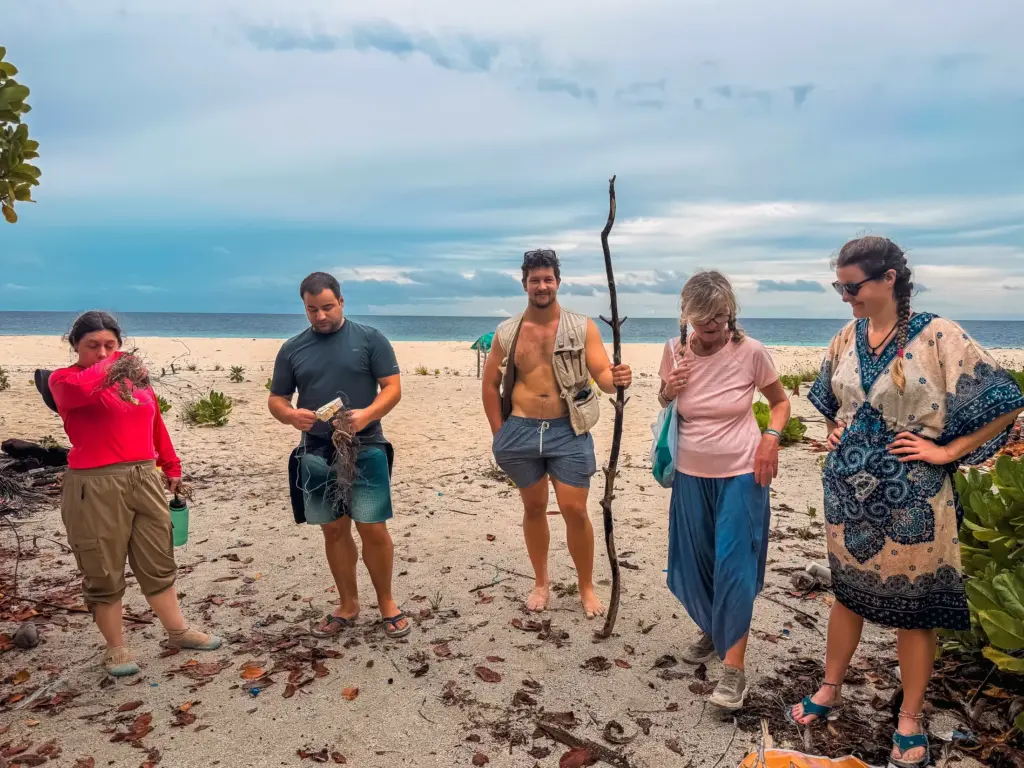
If a sandbank picnic isn’t quite enough, you can go all the way. Our Maldives survival expedition drops you on an uninhabited island in our southern atoll to learn bushcraft from world-class instructors, then leaves you to put it to the test. More on that further down.
Where to stay in the Maldives
Broadly, you have three options, and they cost wildly different amounts.
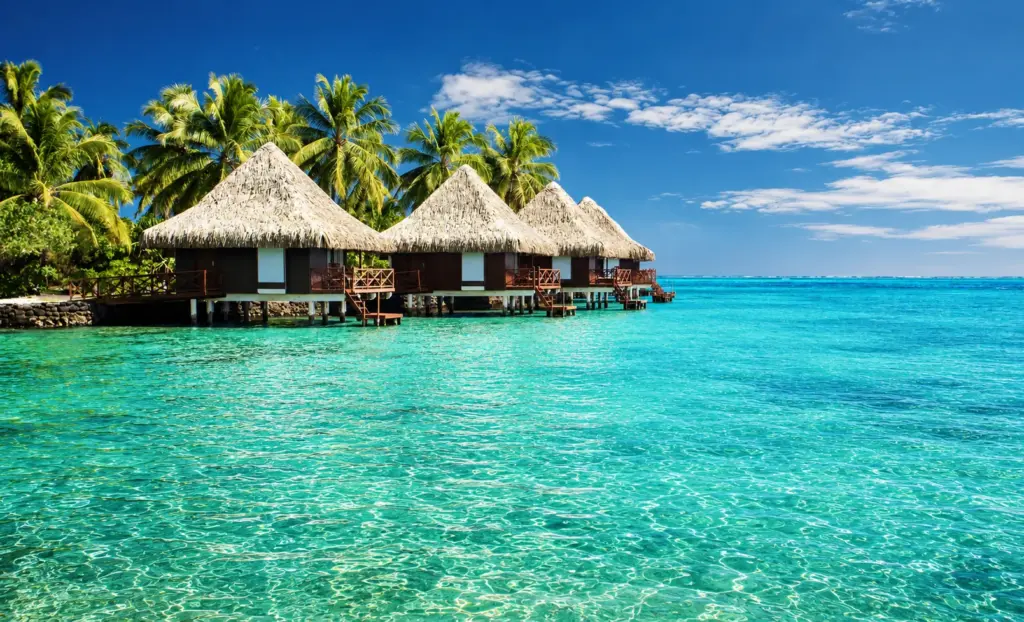
Resort islands are the classic Maldives, one island, one hotel, over-water villas and a house reef. Beautiful, effortless, and expensive. Local islands are far cheaper, with guesthouses on inhabited islands and a more grounded, local feel, and they’re handy for a night in Male either side of a trip. And then there’s our expedition, where the accommodation is a hammock you string up yourself and a shelter you build on an uninhabited island with no one else on it. Most people pick a lane. A few do more than one on the same trip.
Maldivian food and drink
Maldivian cuisine leans hard on three things: fish, coconut and a warm bank of spices borrowed from India and Sri Lanka. Tuna is the staple, often smoked, and it turns up in almost everything.
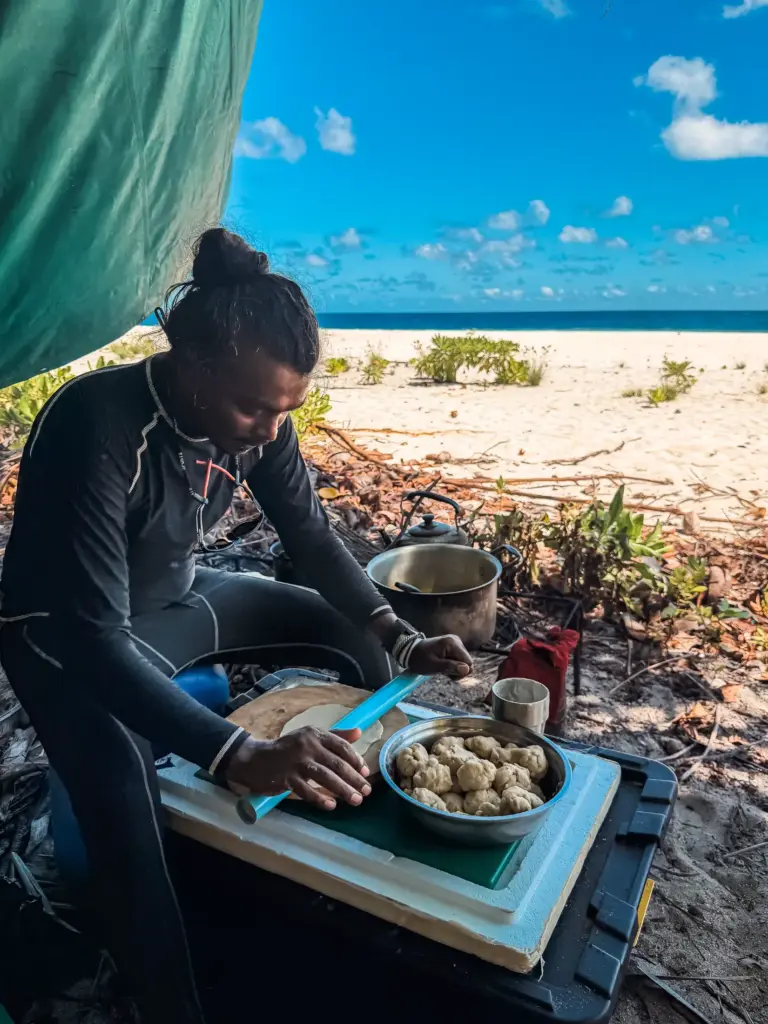
The national dish, mas huni, is a breakfast of shredded smoked tuna mixed with grated coconut, onion, chilli and lime, eaten with warm roshi flatbread and sweet tea. Garudhiya, a clear tuna broth, is the other dish locals will point you to. Look out too for hedhikaa, the short eats served in cafes through the day. One thing worth knowing before you travel: the Maldives is a Muslim country, and alcohol is generally only served on resort islands and liveaboards, not on local islands.
Wildlife in the southern Maldives
The reason to come is below the surface. The Maldives sits on some of the most biodiverse reef systems in the Indian Ocean, and the country is famous for the manta rays of Baa Atoll and the whale sharks of the central atolls. You can chase those headline sites in the north and centre, but you don’t have to, the good stuff is everywhere.
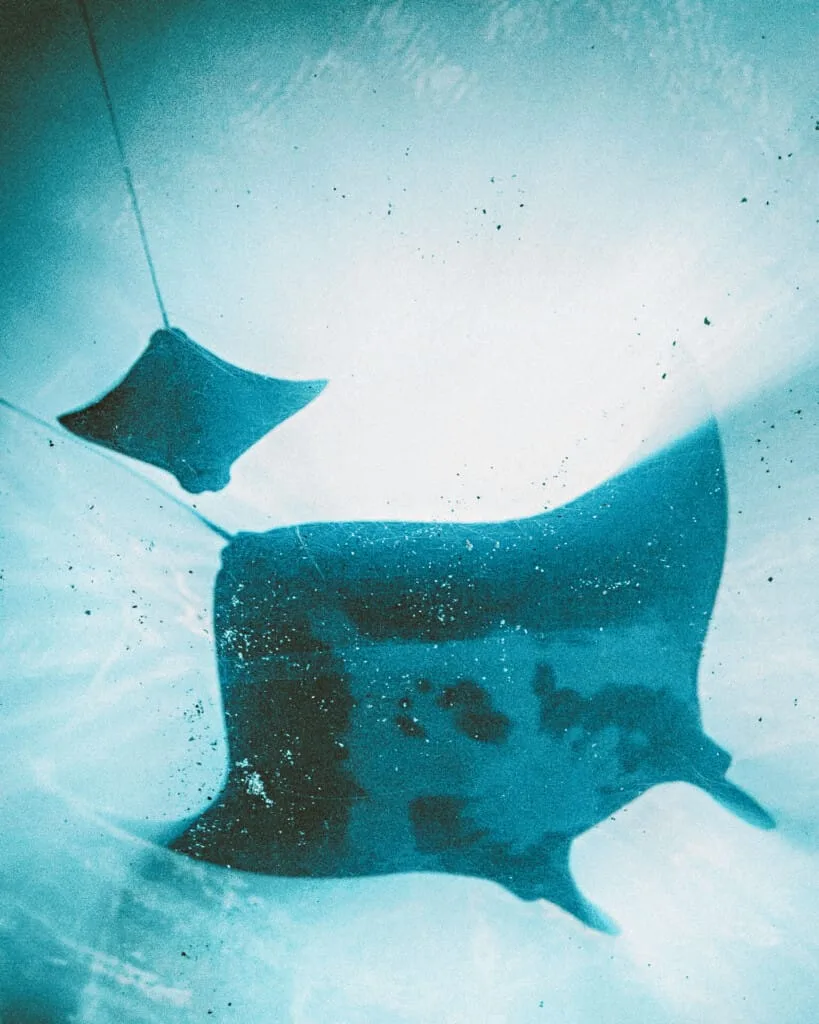
Down in our southern atoll, the reefs are quieter and just as alive. You’ll share the water with reef sharks, turtles, eagle rays and dense schools of snappers and surgeonfish, and the deep channel that wraps the atoll pulls in bigger ocean life from open water. On our very first trip, six dolphins came and swam with us ten minutes after we’d finished building the shelter. On land, the islands are important nesting sites for seabirds, including white terns. The country also fishes responsibly, using pole-and-line and hand-line methods rather than nets, which is a large part of why the reefs are still so alive, and those same hand-line skills are exactly what you’ll learn on the trip.
Interesting facts about the Maldives
- The Maldives is the lowest-lying country on earth, sitting on average around a metre and a half above sea level, with its highest natural point only a couple of metres up.
- It’s made up of around 1,190 coral islands grouped into 26 atolls, yet only about 200 are inhabited.
- Huvadhu Atoll in the south, where we run our trip, is one of the largest coral atolls in the world.
- Over 99 percent of the country is sea, not land.
- The capital, Male, is one of the most densely populated cities in the world, packed onto a tiny island you can walk across in well under an hour.
The Desert Island Survival Maldives expedition
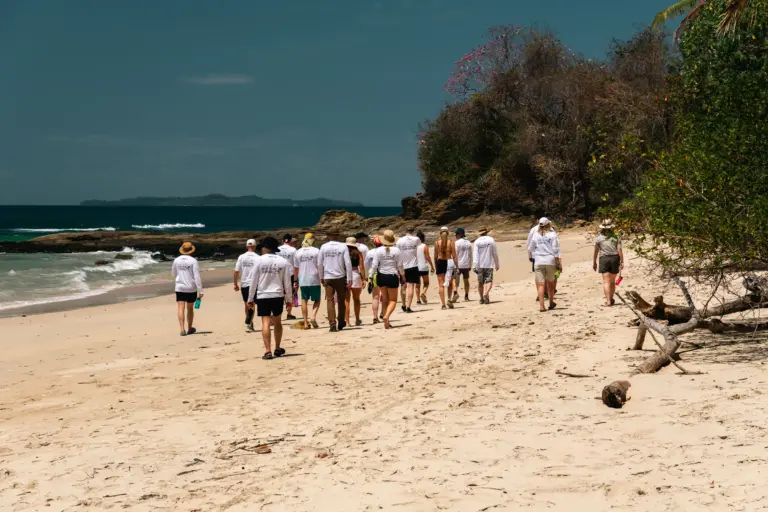
Here’s the version of the Maldives we run, all of it in our southern atoll. Eleven days, eight of them living wild across two uninhabited islands, before a five-star finish. It follows a simple arc: learn, survive, celebrate.
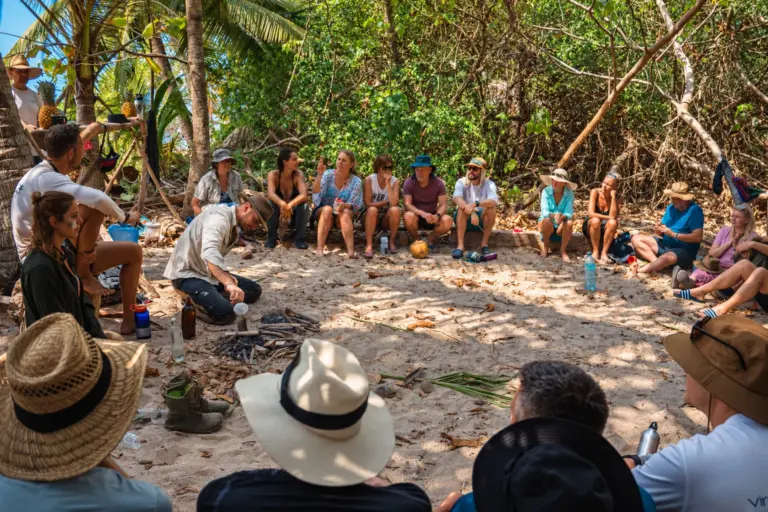
Learn. You spend your first days on a training island with world-class instructors, several of them Alone veterans, picking up fire by friction, hand-line fishing, foraging and shelter-building. By the end of it the phone has been gone long enough that you’ve stopped reaching for it.
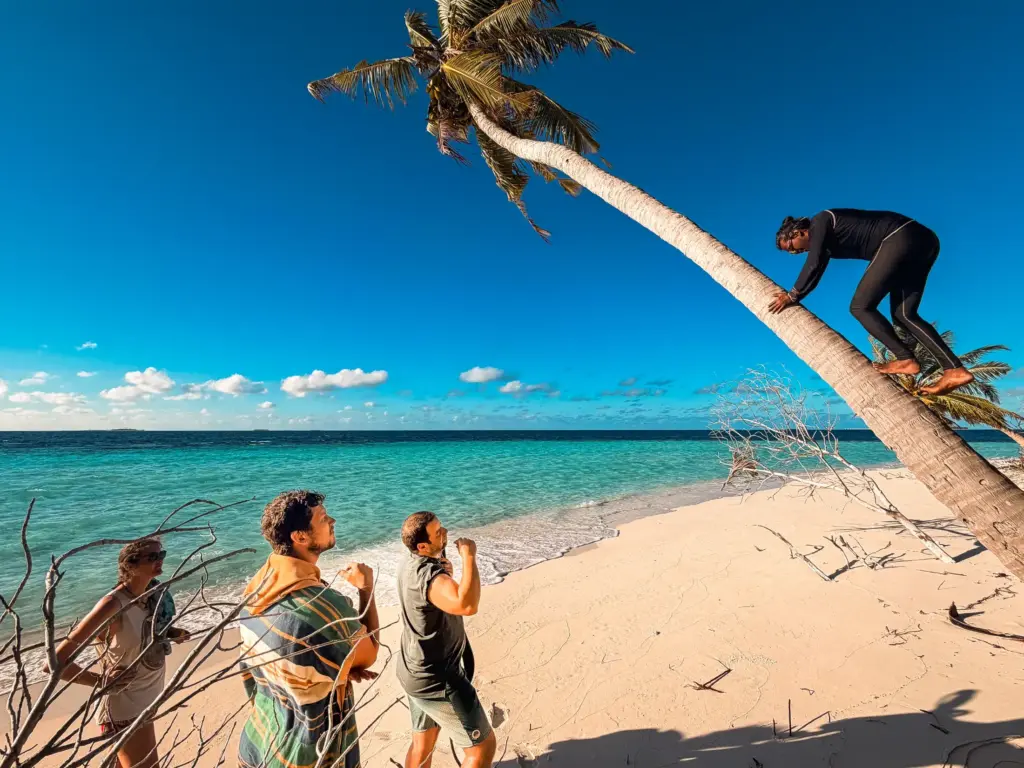
Survive. Then we move you. This is the only Desert Island Survival expedition where the survival phase happens on a brand-new island, separate from where you trained. Suddenly you’re dropped somewhere you don’t know, and you have to read it from scratch. Which way’s the wind coming from. Where the water is. It makes the whole thing feel properly real, and a little harder, which is the point.
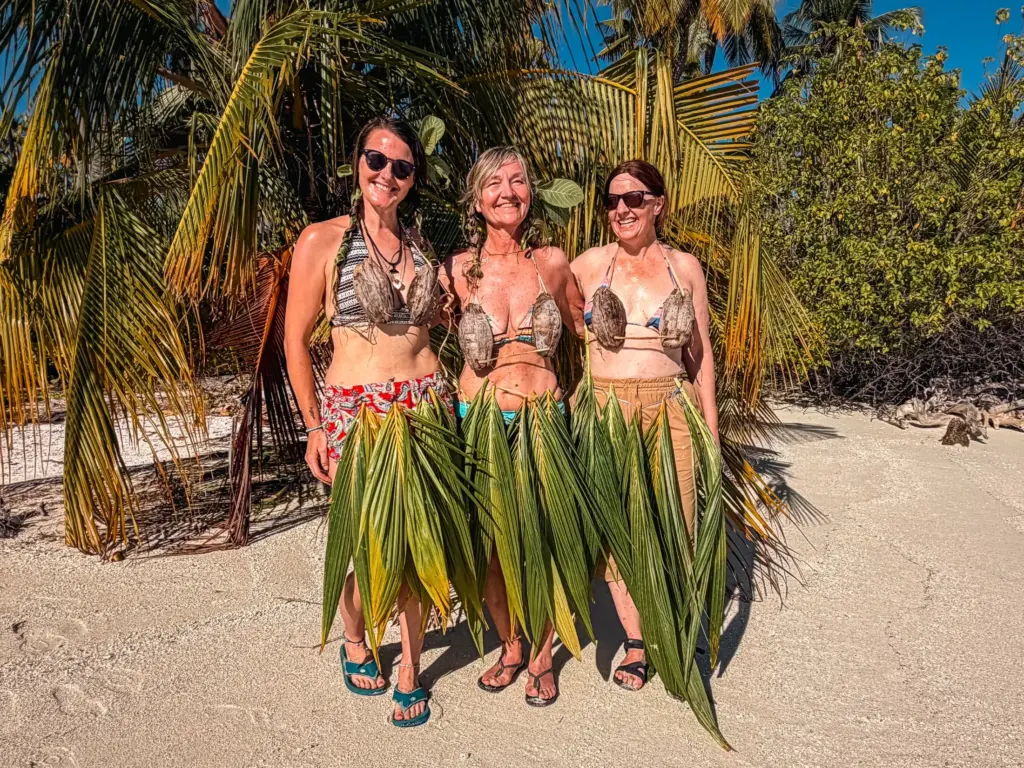
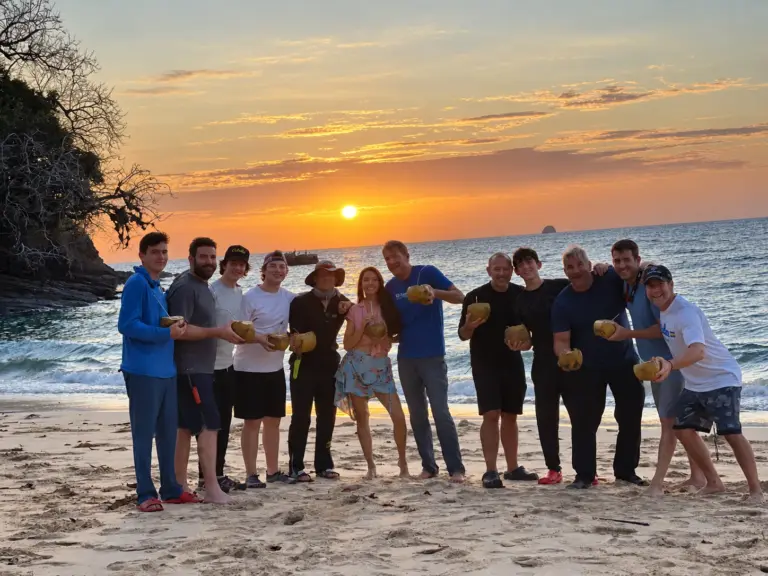
Celebrate. After three days truly castaway, you’re rescued to a five-star resort. That first hit is incredible, and genuinely hilarious. Five stars becomes ten stars, and you get this huge gratitude reset. You can’t feel the luxury until you’ve earned it.
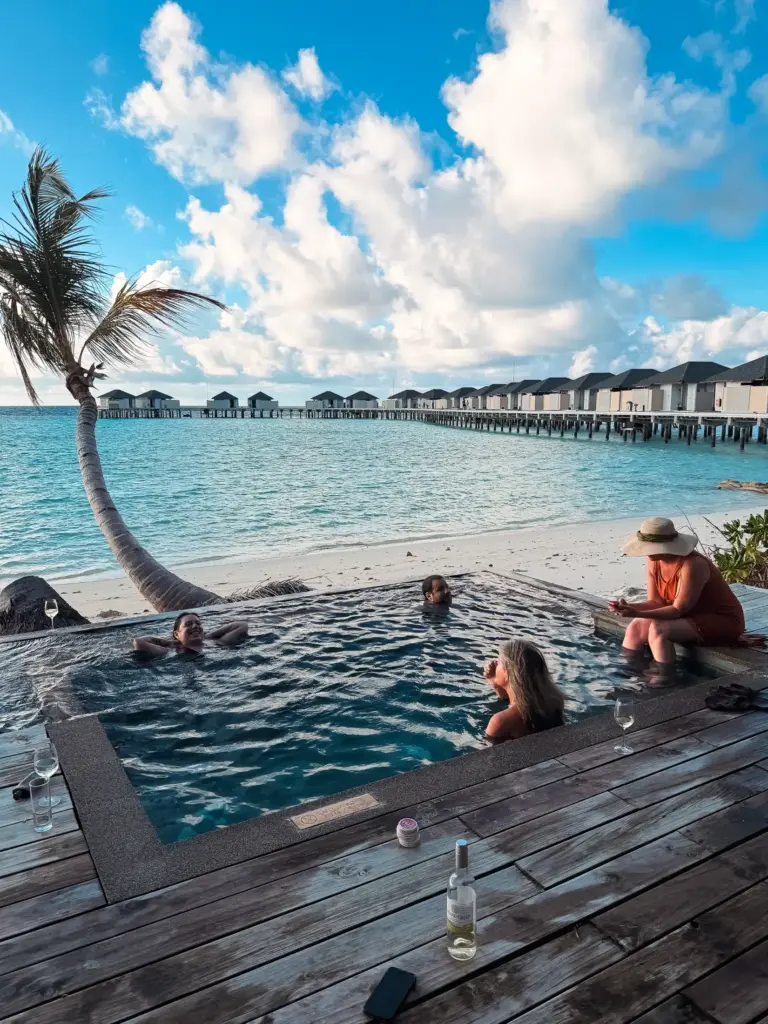
It’s open to anyone reasonably fit, with no experience needed, and the December departure lands right in the best of the dry season. If anything, the Maldives is a touch more demanding than it looks, you can get rain at any time of year, and this far south, right on the equator, the sun is no joke. Take away the over-water bungalows and you’re surviving on any other desert island, just a strikingly beautiful one.
We run the Maldives in December, with the first 2027 dates now open. Spaces are limited and the December departure tends to fill while people are still thinking about it. You can see the dates and detail on the Maldives expedition page, or take the island quiz to see whether this is your island or one of the other six.
Frequently Asked Questions
November to May is the dry season, and December to March is the pick of it, with highs of 29 to 31 degrees and minimal rain.
In the deep south, in Gaafu Dhaalu, part of Huvadhu Atoll. You fly from Male to Kaadedhdhoo, then take a short boat ride to our uninhabited islands. It’s one of the least developed corners of the country, which is exactly why we run it there.
Often, yes. The domestic flights south don’t always line up with international arrivals, so many guests stay a night in Male before flying to Kaadedhdhoo the next morning. We’ll flag this in your joining instructions and help you plan it.
You need to be comfortable in the water, not an athlete. If you can swim and walk, you’re ready. Much of what makes the difference is mindset, not fitness.
Read more
Browse our other guides for the Panama, Philippines, Tonga and Sweden expeditions, or find the one that suits you with the island quiz.
So, could you trade the over-water bungalow for the island it’s hiding behind?