
Can Your Honeymoon Be a Survival Expedition?
Yes, a honeymoon can be a survival expedition. Desert Island Survival has hosted couples across seven remote destinations, including private trips for newlyweds. The mix of shared challenge and total disconnection is what most resort honeymoons fail at.
A honeymoon’s supposed to do one thing. Compress two people into a shared experience and leave them more bonded than the wedding day did.
Most don’t. The resort gives you separate sun loungers, a buffet, and four days of patchy WiFi. The bond you built standing in front of your family quietly leaks out into the swim-up bar.
There’s another way to do it.
Can a honeymoon be a survival expedition?
Yes. And in our experience, it’s one of the most underrated honeymoons a couple can give themselves.
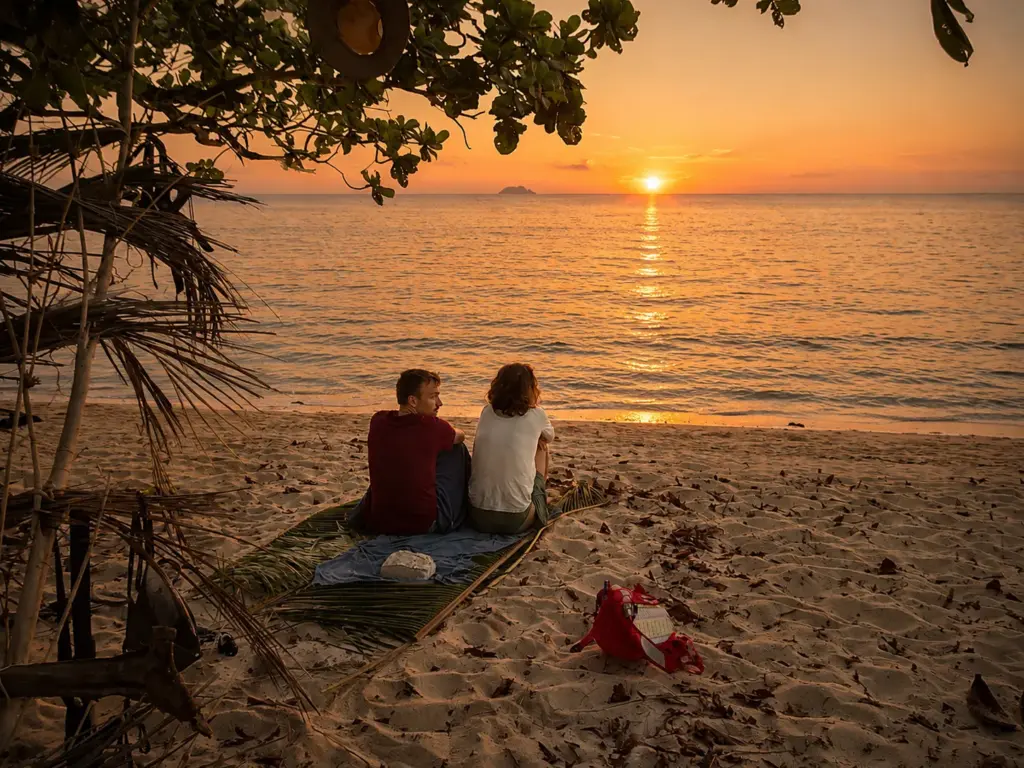
Shared adversity bonds people. A couple who faces something hard together comes out stronger and more resilient on the other side. We see it on every expedition. Castaways arrive as strangers and leave with friendships for life, forged in just ten days. For honeymooners that bond runs deeper still.
And let’s be honest, surviving together on a desert island is a fucking badass way to start a marriage.
Why most honeymoons fade, and what makes some last
The honeymoon industry sells the wrong thing. It sells comfort, when what couples actually need at the start of a marriage is a shared story.
Comfort is forgettable. A buffet is forgettable. The plunge pool you barely used is forgettable. What people remember a decade later is the moment they did something hard together and came through it. That’s the story they tell at dinner parties. That’s the moment they reach back for when the marriage hits its first patch of weather.
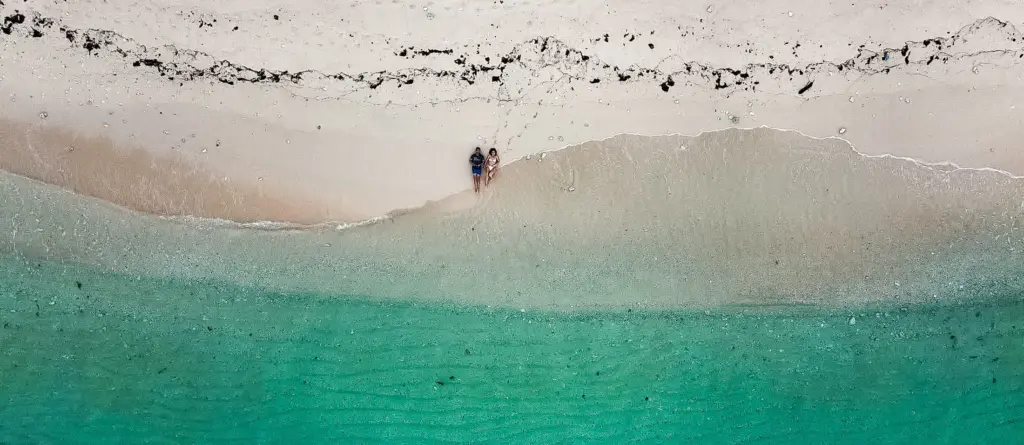
A survival expedition is, structurally, the opposite of a resort. Phones don’t work. Schedules dissolve. The only person you’ve got is the one you married, and the only project for the next ten days is staying fed, warm and dry together. It’s the cleanest version of a honeymoon we’ve found.
Real story: their Philippines honeymoon
This came in three weeks ago. Five stars, verified Google review, written by a couple who chose Palawan over a resort honeymoon. Naomi Allsworth was their lead instructor. Don and Bobit were the local team. We’ve left it verbatim because we couldn’t write it better ourselves.
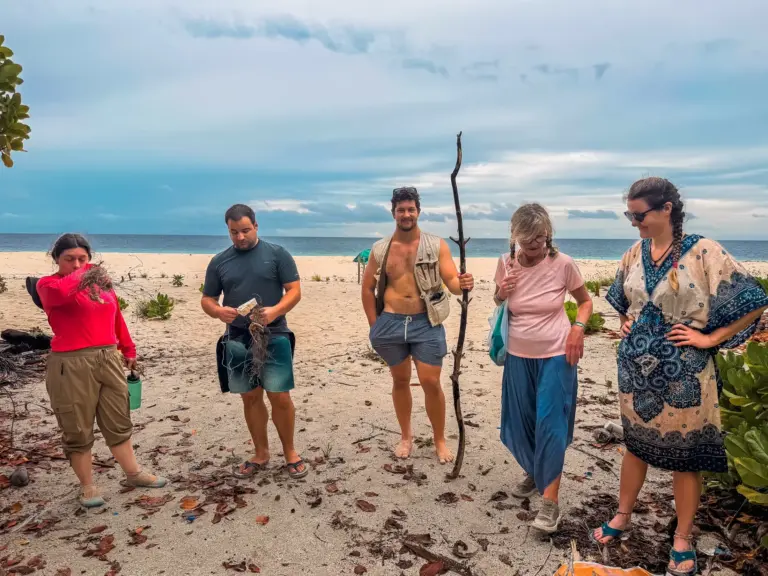
Our honeymoon with Desert Island Survival on a remote island in the Philippines was simply unforgettable! The island itself felt like paradise: white sandy beaches, crystal clear water, lush jungle, and coral reefs right at the shore. There were no dangerous animals, which made it feel both wild and safe.
Our survival guide Naomi was the heart of this experience. She is a highly experienced survival professional with incredible knowledge. She is motivating, relaxed, and always approachable, while radiating confidence and safety. At the same time, she challenges you in the best possible way. Her philosophy is clear: the survival phase is meant to be tough but also fun, and about celebrating small wins.
Thanks to her, we learned to make fire, open coconuts, catch fish, and create our own meals. We could ask her anything at any time, and she always helped us improve our situation. Don, her assistant, taught us spearfishing with great patience and helped build our confidence. Bobit prepared delicious meals during the training phase and is a truly kind person.
The structure with training and survival phase is perfectly designed. You are prepared step by step without it ever feeling like school. The survival phase is challenging but incredibly rewarding. You realize what your body and especially your mind are capable of.
Sleeping in hammocks, surrounded by calming nature sounds, going to bed at sunset and waking up at sunrise. It was pure connection with nature. This experience made us appreciate the simple things in life again and taught us to slow down and live more in the moment.
A truly life changing adventure. We highly recommend it! Thanks for the perfect organisation to the whole Desert Island Survival Team. We felt very well taken care of.
Google review, Philippines honeymoon, 5 stars, May 2026
Three things in there worth pulling out.
- “There were no dangerous animals, which made it feel both wild and safe.” That isn’t an accident. Every destination we run is filtered specifically for the absence of predators that hunt humans.
- “Her philosophy is clear: the survival phase is meant to be tough but also fun, and about celebrating small wins.” That’s the brand in one line.
- “We learned to make fire, open coconuts, catch fish, and create our own meals.” That’s a honeymoon they’ll be telling stories about in twenty years.
What does a survival honeymoon actually involve?
Two phases. Training and survival.
Training, the first three to four days, is where you learn the tools. Fire from nothing. Shelter that keeps the rain off. Water you can drink. Food you can catch. How to open a coconut without losing a finger. It’s hands-on, structured, and the instructors do most of the work whilst you find your feet.
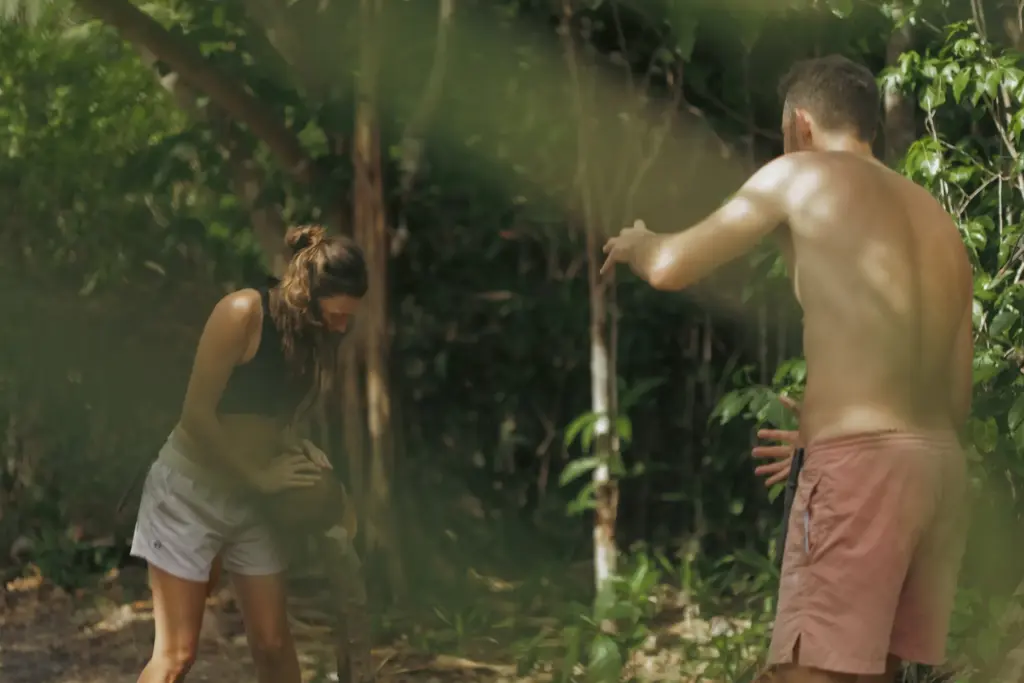
Survival, the back half, is where you apply it. Hammocks slung between palms. Fish on the line by sunset. Coconut milk for breakfast. Fire-keeping rotated through the group. It’s stripped of the school-feel. You’re just living it together.
And that’s the bit honeymooners come back raving about. Not the fire-by-friction or the fish on the line. The fact that the only thing on the calendar is each other and the tide.
7 unusual honeymoons for adventurous couples
Different couples, different terrains. Here’s how we’d match the seven destinations to seven kinds of newlyweds.
1. Maldives: for couples who want paradise plus privacy
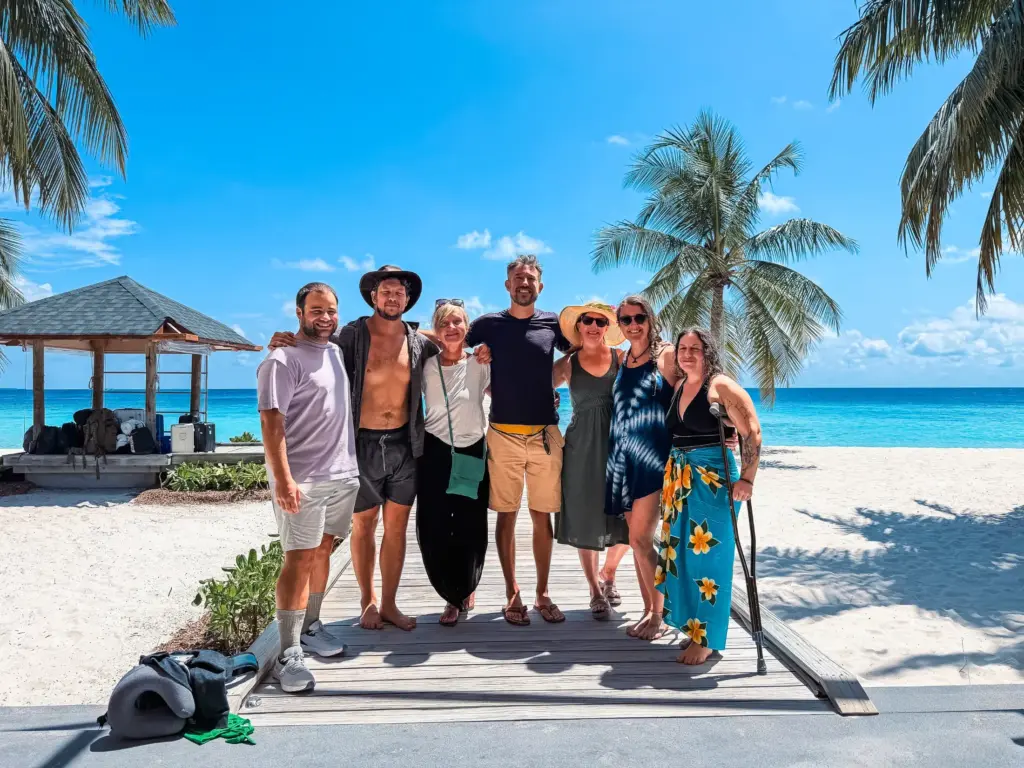
The most natural honeymoon fit in the portfolio. Eleven days through the Southern Atolls, coral reefs every morning, and a finish that’s hard to beat: we give honeymoon couples their own private island together for the final three days. Nobody else. Just you, the lagoon, and whatever skills you’ve picked up over the previous week.
Pick this if you want the wedding-photographer’s paradise, but earned.
2. Botswana: for couples who want a bougie water safari
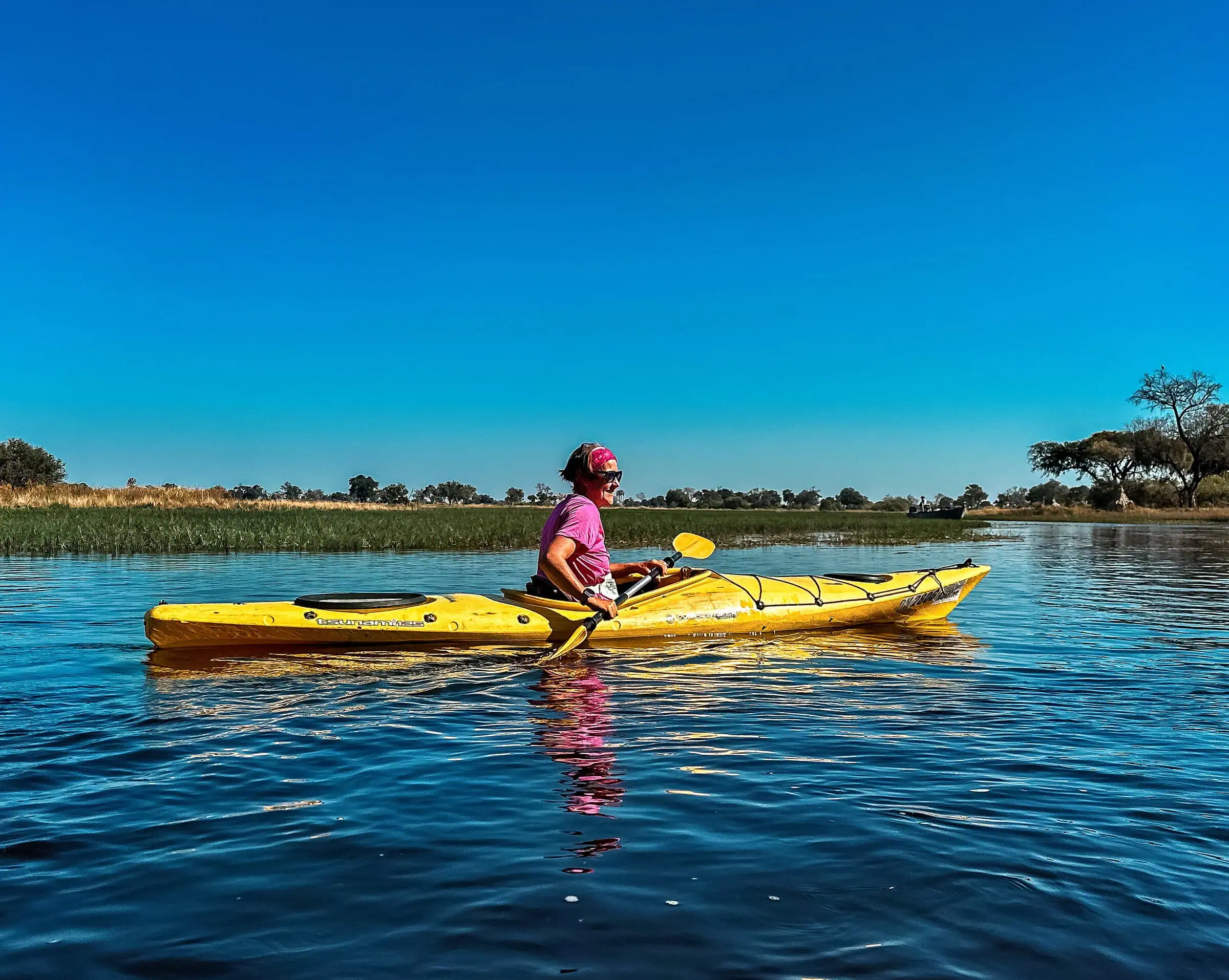
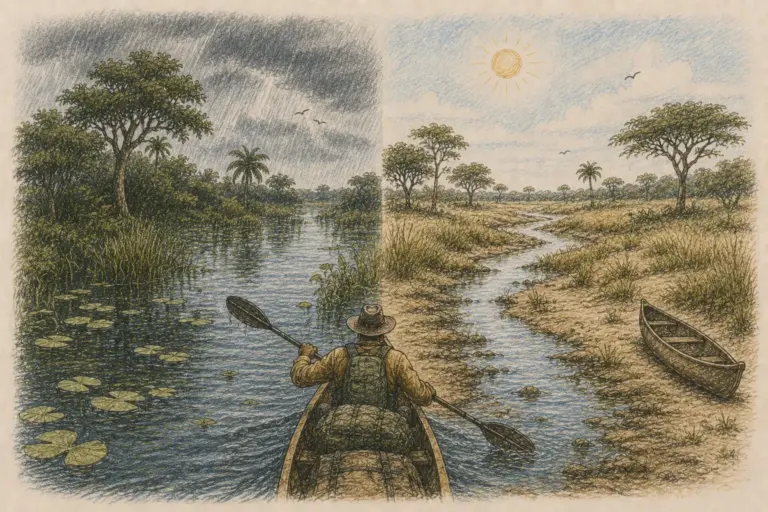
If you want your adventure a little more bougie, this is the call. Twelve days kayaking the Okavango Delta in dry season. Elephants in the middle distance, hippos respected from a distance, fish eagles overhead. Comfortable temperatures, low mosquitos, and the kind of African wildlife immersion most safaris hint at and never deliver.
Pick this if you’d choose Africa over the Indian Ocean and you want a honeymoon that doubles as a once-in-a-lifetime safari.
3. Tanzania: for couples who’d choose a culture over a beach
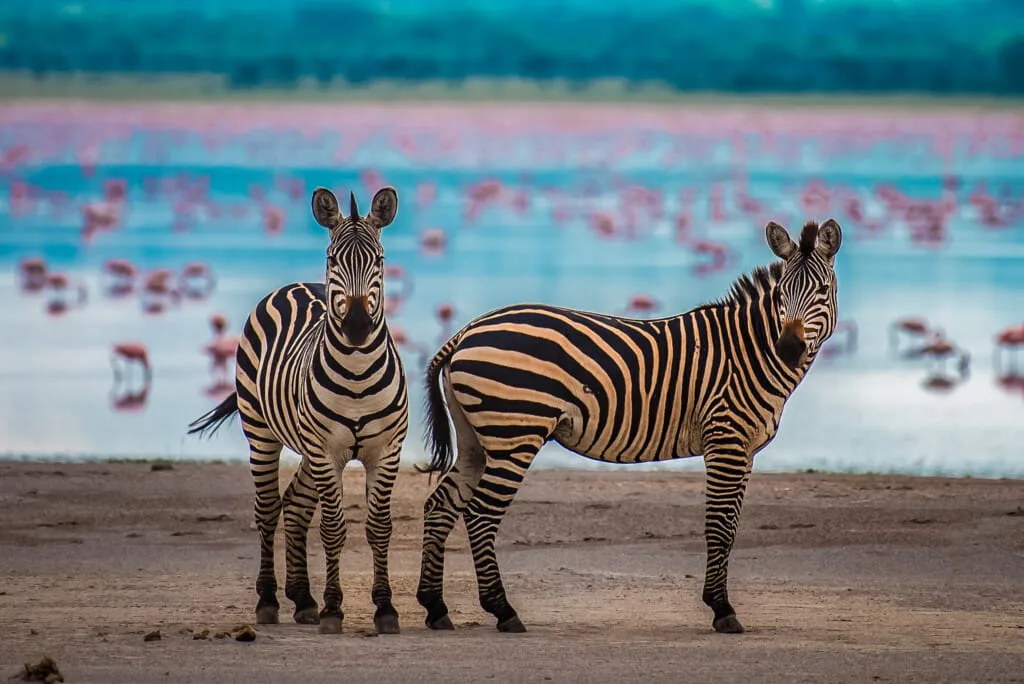
Ten days at Lake Eyasi, living alongside the Hadza, who are among the last true hunter-gatherers on earth. Honey harvest. Tracking. Fire-by-friction taught by people who’ve been doing it for forty thousand years.
Pick this if you want your honeymoon to also be a story you’ll tell your grandchildren.
4. Tonga: for couples who’d swim with humpback whales on day one
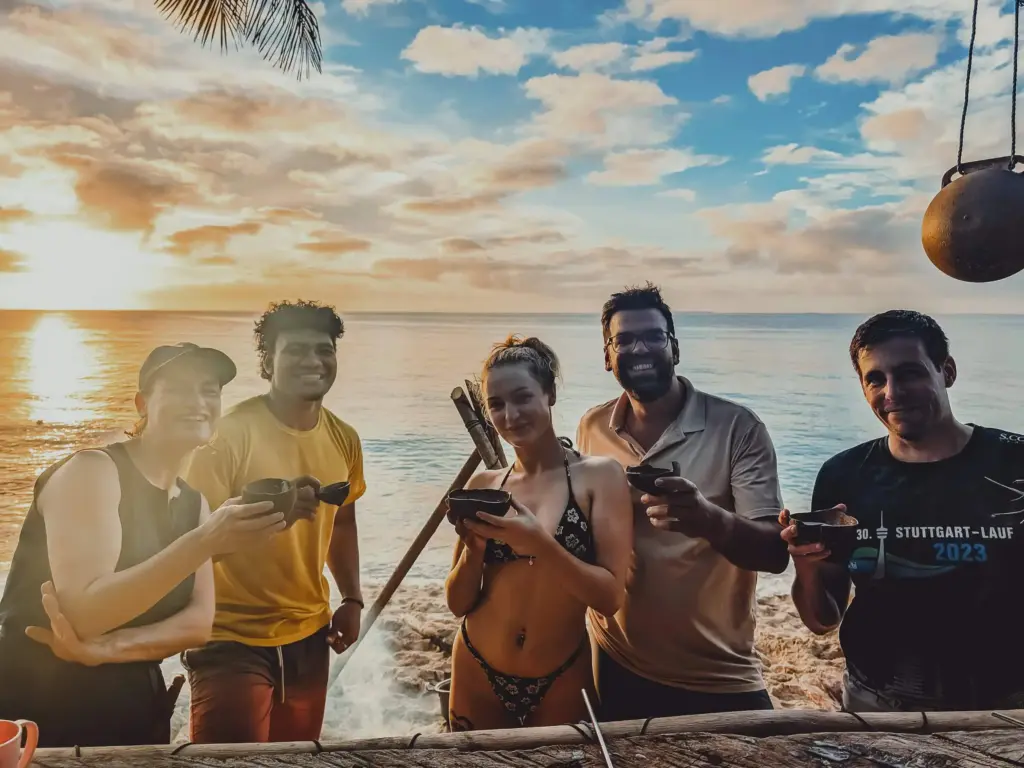
Eleven days in the Ha’apai islands during the July humpback migration. The most perfect island we run, with feral pigs and the chance to swim alongside mothers and calves. A whale calf is roughly a three-ton puppy. You won’t forget it.
Pick this if you’re both ocean people and strong swimmers.
5. Philippines: for first-time-adventure honeymooners
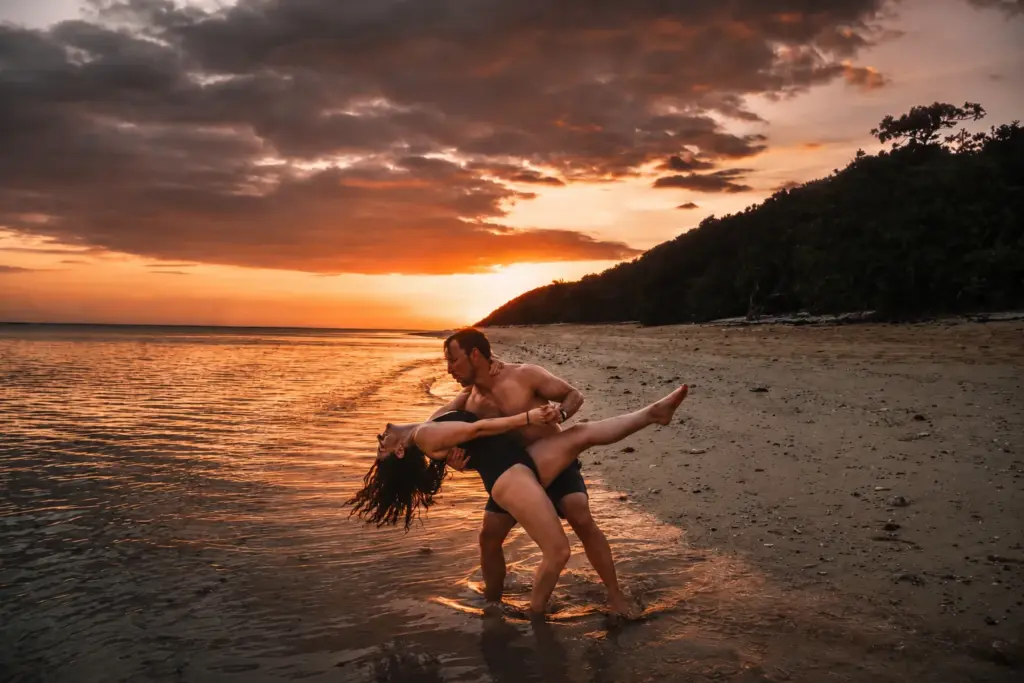
Our most gentle island and the most accessible price point in the tropical portfolio. Ten days in Busuanga Bay, Palawan. Beautiful, accessible, and the destination we’d send a first-timer to with confidence.
Pick this if you want the gentlest entry into a survival honeymoon.
6. Panama: for couples who want wild terrain

Eleven days in the Pearl Islands, primary jungle, properly wild. Phosphorescent plankton at night if you swim out from the beach. Robinson Crusoe energy with a partner.
Pick this if you want a honeymoon that feels more remote than romantic, and you’ve both got a taste for the wild side.
7. Sweden: for couples who watched Alone together
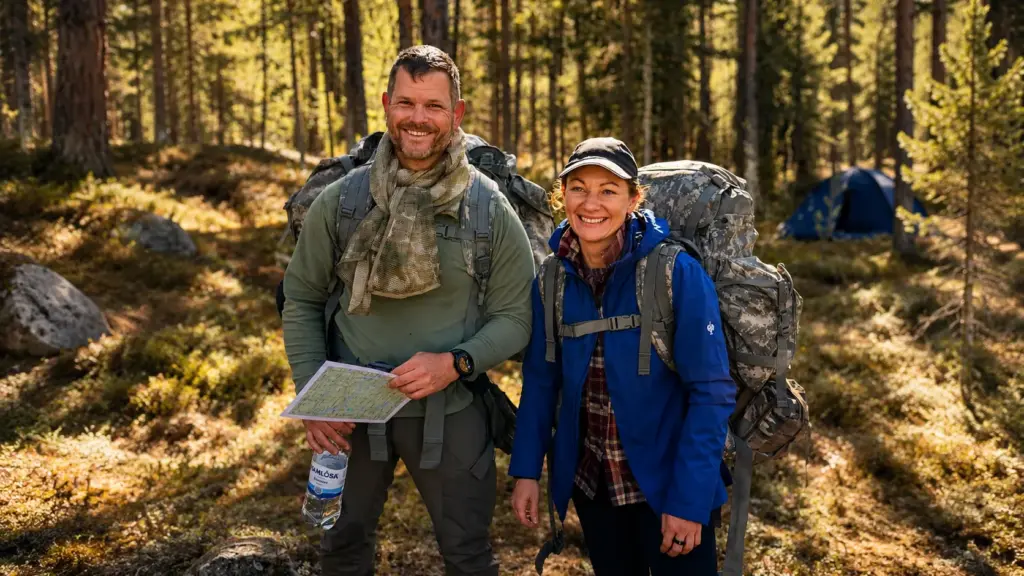
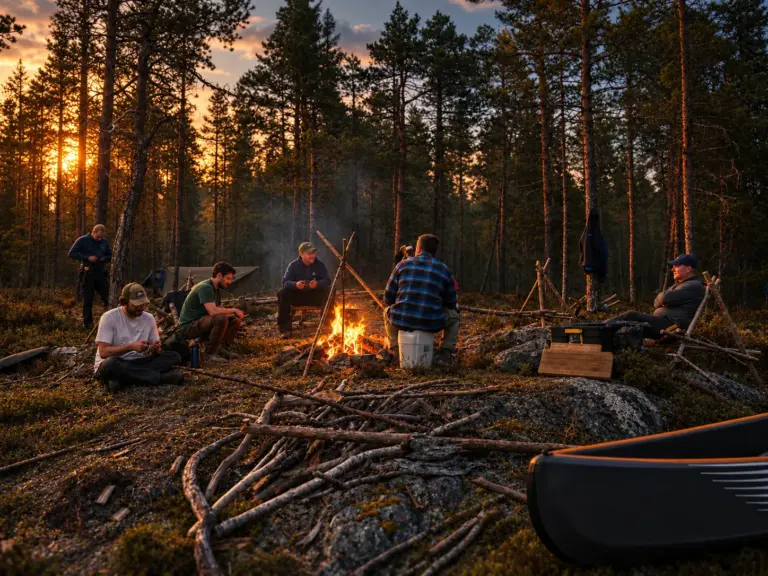
Sweden Solo isn’t a couples honeymoon by design: the trip is group training together followed by a solo survival phase on adjacent plots of forest, so you’d be separated for the most intense half.
Pick this if you want a honeymoon that feels nothing like a honeymoon.
Is a survival honeymoon safe?
Yes. And there’s a specific reason: every destination on our portfolio is hand-picked for the absence of large animals that hunt humans.
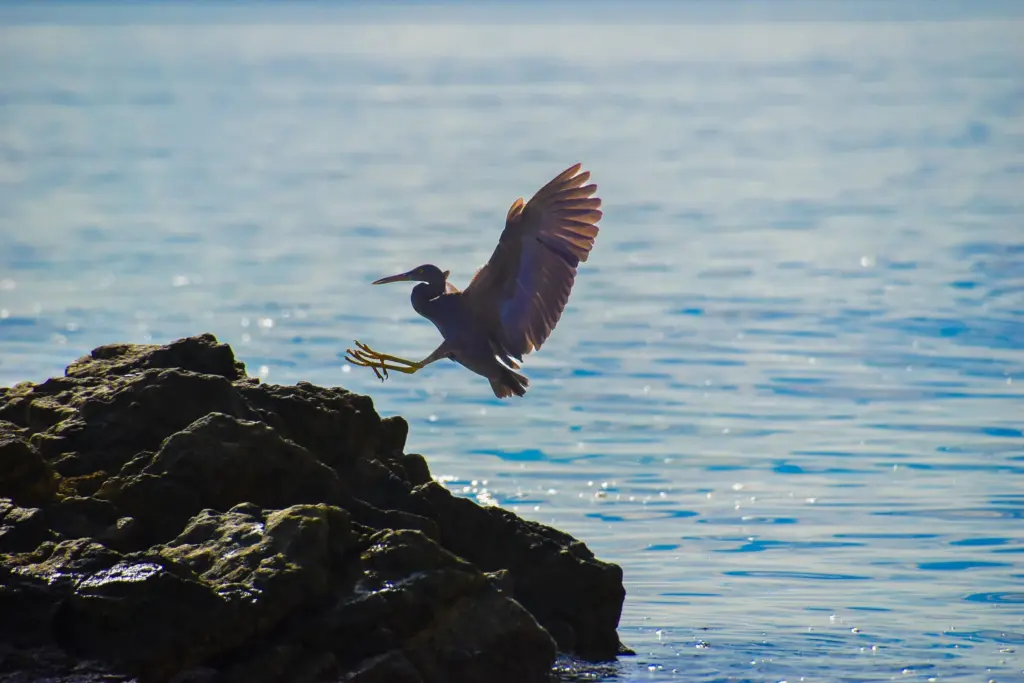
No bears. No lions at night. No snakes-in-the-shelter scenarios. The wildlife you encounter is genuinely wild but not predatory toward you. That’s not luck, it’s a deliberate filter on where we run trips.
On top of that sits the invisible safety layer: world-class instructors, emergency comms, medical kit, evacuation plans, and proximity to a hospital that’s never advertised but always there. We call it the Goldilocks zone. Wild enough to feel real, close enough to be looked after if something goes wrong.
Can you book a private survival honeymoon?
Yes, but it’s not usually what we’d recommend first.
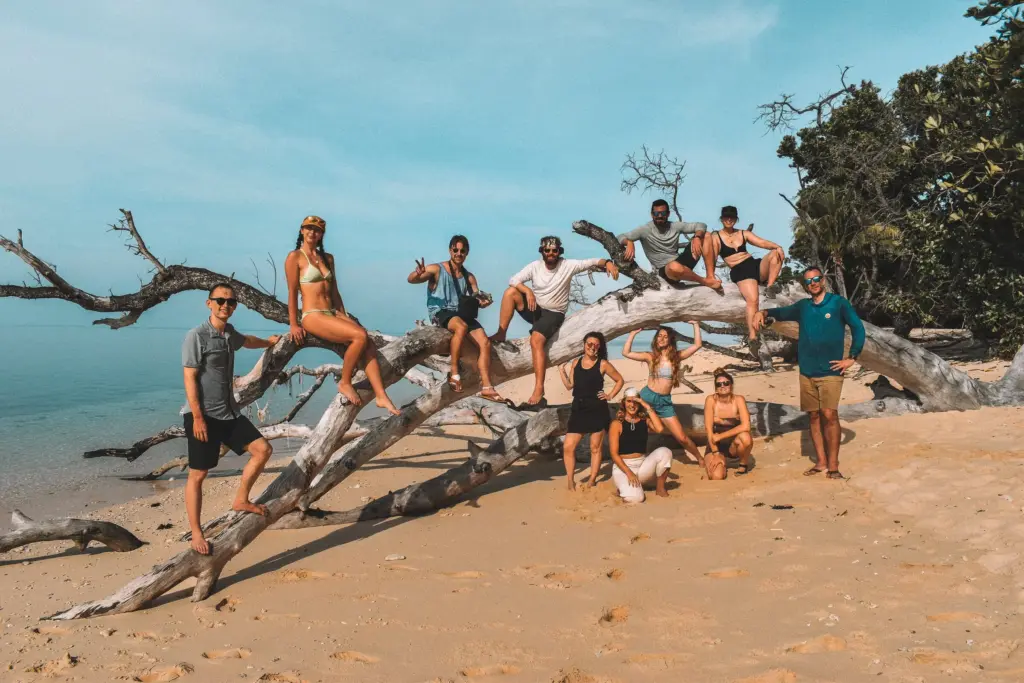
The smarter route for most honeymoon couples is to join a scheduled group expedition and do the solo survival phase together as a pair. You get the energy of a tight tribe in the training phase, the disconnection of just the two of you for the solo half, and the cost stays in scheduled-trip territory rather than private-trip territory.
If you want the whole expedition fully private (your own island, your own instructor team, your own boat and safety cover) you’re looking at around £30,000 for a couple. We don’t publish a fixed price because every private trip is built around what the couple actually wants, but that’s the ballpark to keep in your head before we open the conversation.
If that’s the route you’re leaning toward, head to the Private Adventures page and we’ll take it from there.
How far in advance should you book a survival honeymoon?
Six to twelve months out for the best windows.
Tonga in July, Botswana in August, Sweden late summer, Maldives over Christmas. All of those book early because the windows are tight on purpose. Tom’s most common booking-mistake answer is the same regardless of trip: not booking sooner.
If you’ve just got engaged and the wedding’s a year out, this is the moment to lock the dates.
Frequently Asked Questions
Yes. Every destination is chosen specifically for the absence of large predatory animals, and every trip has invisible safety infrastructure (instructors, comms, evacuation plans, hospital proximity) built in.
Joining a scheduled expedition is the most accessible way in: each guest pays per place, so a honeymoon couple is two places on the same trip. A fully private expedition for two is roughly £30,000, depending on destination and what you build in; the better-value alternative most honeymoon couples choose is to join a scheduled trip and pair up for the solo survival phase.
Yes. Most expeditions weave in a solo or solo-pair phase in the back half. Honeymoon couples can typically be paired for this phase. In the Maldives we give honeymooners their own private island for the final three days as standard.
Yes, and yes you’d want to. Building and sleeping in your own shelter together is one of the moments most couples remember from the trip.
Doesn’t matter. Most guests arrive having done nothing like this before. The instructors meet each person where they are.
No. That’s the point. Emergency comms are run by the instructor team; your phones can come along as cameras, but they won’t be making any calls.
Send them this article. Then send them a postcard from the island.
Why this works
If your wedding cost more than the honeymoon, you can probably afford this one. We’re not Bali. We’re not a resort. We’re ten days where the only thing on your shared calendar is each other and the tide.
That tends to outlast the photo album.
Tom Williams
Founder, Desert Island Survival