
In short: The Tongan castaways were six schoolboys from Nuku’alofa who took a boat in 1965, were wrecked in a storm, and lived for 15 months on the uninhabited island of ‘Ata. Unlike the boys in Lord of the Flies, they worked together, kept one fire burning the whole time, and all six came home alive.
Lord of the Flies is on a lot of school reading lists. A group of stranded boys, no adults, and within a few chapters it all goes very dark.
The trouble is, when it really happened, it went the other way.
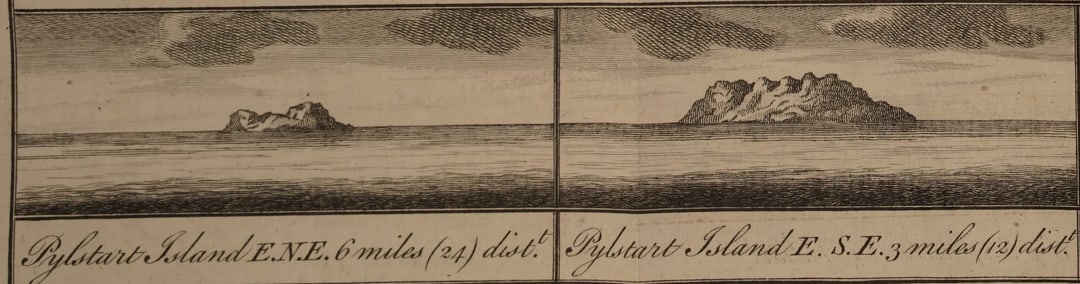
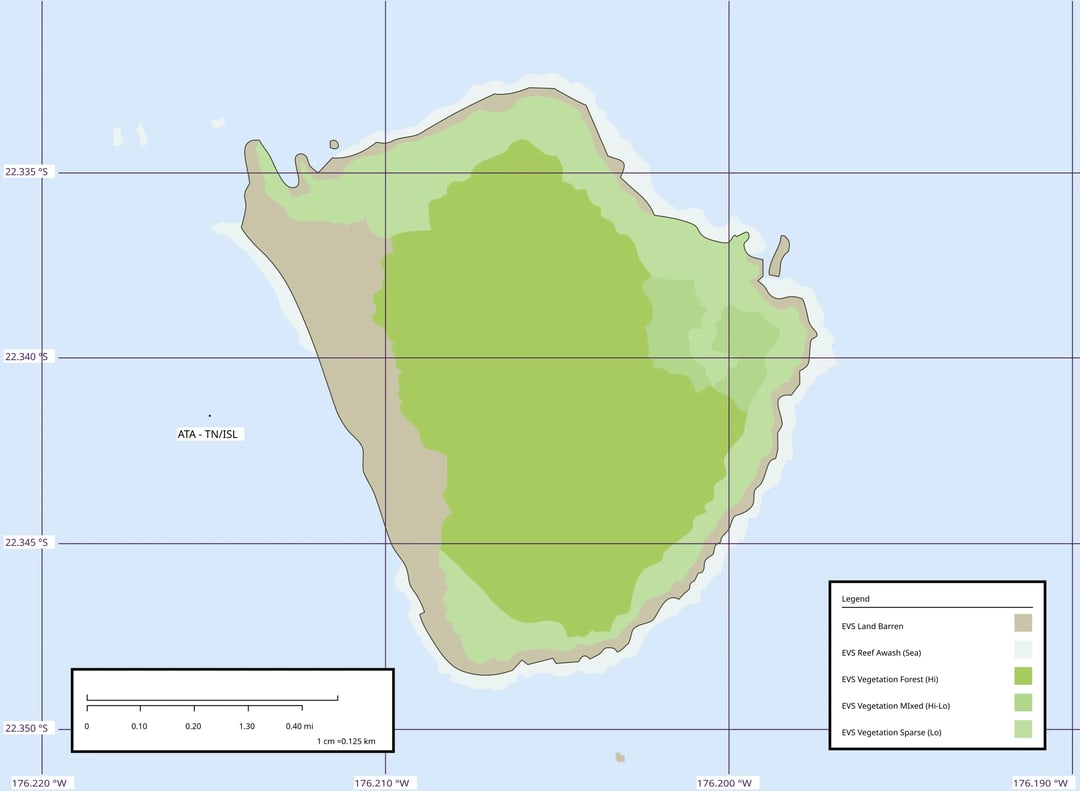
In 1965 six Tongan teenagers spent fifteen months on a deserted island with no cameras, no prize and no rescue plan, and they came off it as friends. ‘Ata sits about 200 miles from where we run our Tonga expeditions, so this story has always felt close to home.
Here’s who they were, how they lived, and what it says about people when the wheels come off.
Who were the Tongan castaways?
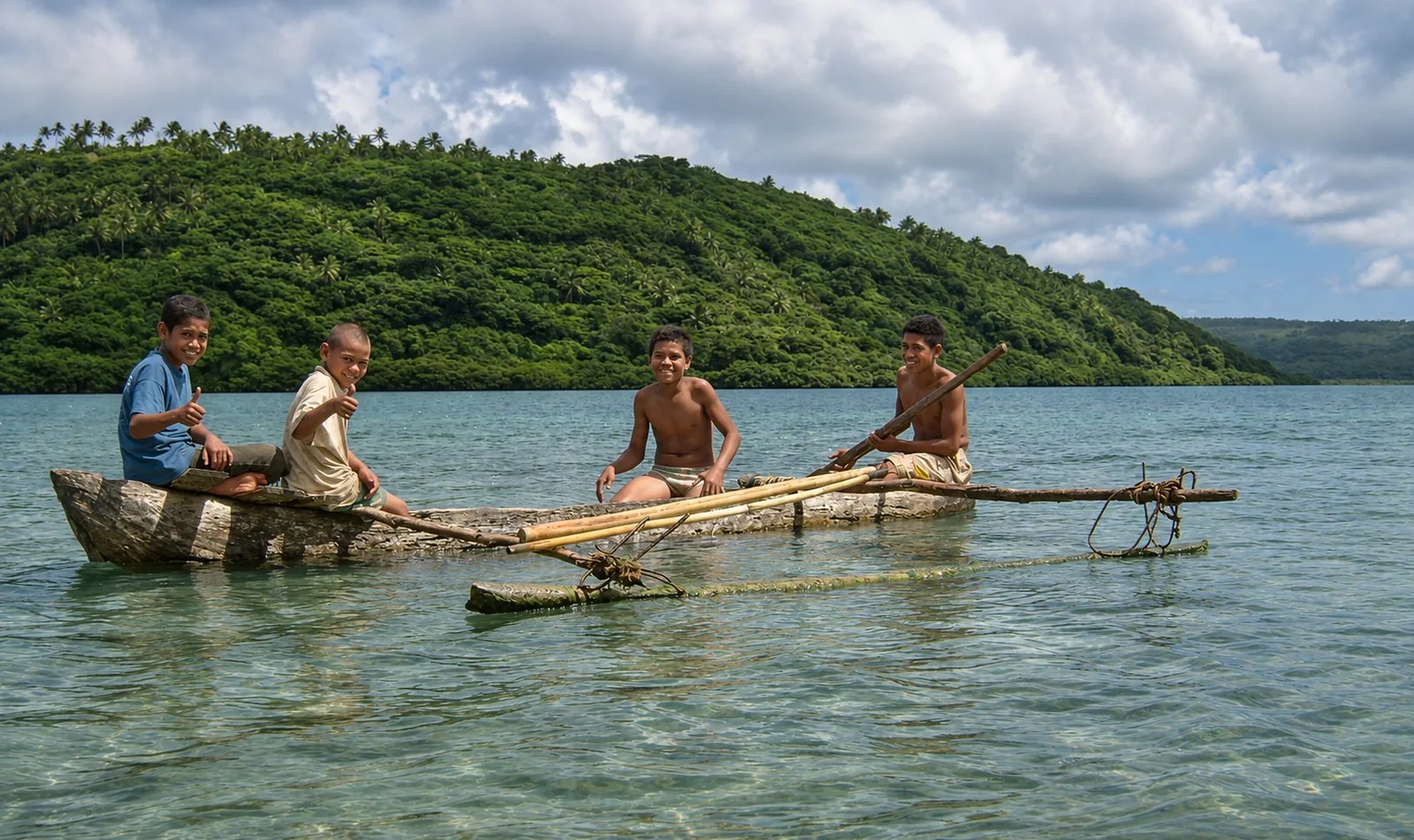
The Tongan castaways were six students from a boarding school in Nuku’alofa, Tonga’s capital, aged between 13 and 16. Tired of school and looking for adventure, they took a boat that wasn’t theirs and set off. A storm wrecked it, and they ended up on ‘Ata, an uninhabited island, where they lived for fifteen months. Their names were:
- Mano Totau
- Sione Fataua
- Stephen Fatai
- Kolo Fekitoa
- David Fifita
- Luke Veikoso
They had no idea anyone would come. As far as their families knew, they were gone.
How did the Tongan castaways end up on ‘Ata?
They ran away. The boys took a boat to escape school for an adventure, and a storm turned it into a shipwreck. What was meant to be freedom became a very hard reality on an island with nobody on it. For the first few months they lived on what they could find and catch.
How did they survive for 15 months?
They covered the same four basics we teach on every island expedition: water, food, fire and shelter. They caught rain in hollowed-out tree trunks, fished and foraged, kept a fire alight for the entire fifteen months, and built shelters from palm fronds and sticks. After about three months they found the ruins of an old village, Kolomaile, with feral chickens, wild taro and bananas.
Water
Fresh water was the hard part. The boys collected rainwater and stored it in hollowed-out tree trunks, which gave them a reservoir between showers. When the rain didn’t come and coconuts were short, they drank the blood of seabirds.
Food
Wild taro became a staple, along with the bananas and feral chickens from the old village. They fished with hooks and spears made from whatever they could find, caught lobster at low tide and trapped birds. A varied diet, once they knew where to look. Hunger is the best sauce, and they had plenty of it.
Fire
They started their first fire with a fire plough cut from sea hibiscus, rubbing a stick along a groove until the wood dust smouldered. Then they kept that fire going for the whole fifteen months.
We teach friction fire on all our island trips, and a first ember from a fire plough is hard graft on a good day. Keeping one alive for fifteen months is something else. It cooked their food, kept them warm and, in the end, it’s what got them found. If you fancy trying it yourself, here’s our guide to making a fire in the wild.

Shelter
Using palm fronds and sturdy sticks, the boys built shelters without proper tools. They kept them dry through tropical storms and gave them somewhere that felt like home at the end of each day.
How did six boys stay a team on a deserted island?
They agreed to work together, and then they made it a routine. The boys worked in pairs on a rota for gardening, cooking and keeping watch over the fire. They settled arguments by cooling off at opposite ends of the beach and coming back to talk. They sang, prayed together and held to their own rules on hygiene and on how to treat each other.
- Jobs in pairs. Gardening, kitchen duty and guard duty were shared out, so each boy had a role and nobody carried it alone.
- Two leaders. The eldest two took on the group’s spiritual needs and its practical ones between them.
- Cooling off. When a row broke out, the boys went to separate ends of the beach and came back when they’d calmed down.
- Ritual. They prayed and sang together, and even held funerals for the birds they killed for food.
- Rules. They set up a latrine area and kept strict rules on cleanliness.
None of that is a survival skill in the way fire is. But it’s how six boys stayed a team for fifteen months.
Who rescued the Tongan castaways?
An Australian fishing boat captain, Peter Warner, found them in September 1966. Sailing past ‘Ata, he spotted burned patches on an island that was meant to be empty, and the glow of a fire. When his crew went ashore, they found six boys, alive and well, who had long been given up for dead.
Warner took them back to Tonga, where they were welcomed home as heroes, and the story went round the world. He stayed part of their lives long after the rescue. That fire they never let go out is what caught his eye.
Is Lord of the Flies based on a true story?
No. William Golding’s Lord of the Flies is a novel, and nobody really tested it. The Tongan castaways are the closest real case we know of, and they did the opposite: they cooperated, looked after each other and all came home. The historian Rutger Bregman tells their story in his book Humankind, which is well worth a read.
Golding imagined what stranded boys might do. Mano, Sione, Stephen, Kolo, David and Luke actually did it, and their version is a lot kinder.
What does the Tongan castaways’ story say about surviving together?
That the group matters as much as the skills. The boys knew how to fish, make fire and build shelter, but what got them through fifteen months was the rota, the rituals and the habit of walking away from a row before it got worse.
Our hunter-gatherer ancestors lived in small groups like that for a very long time.
Can you survive on a Tongan island today?
Yes, with instructors, a support team and a much better boat. Our Tonga expedition runs in the Ha’apai islands, one of the least-visited island groups in the Pacific, and the date to look at is our 23 July 2027 departure. Over twelve days you learn first, then put it to the test, then celebrate properly.
You spend six days of hands-on training on a remote island with world-class instructors: friction fire, fishing, spearfishing and moonlit lobster dives, with nights in hammocks and kava ceremonies with local people. Then come three days of survival with your tribe, building shelter, catching food and living as castaways. You stay in contact with the team throughout. After that, it’s a hot shower, a celebration, and swimming with humpback whales.
No experience needed. If you can swim and walk, you’re ready, and we teach you the rest. For the practical side of getting there, see our Tonga travel guide. Questions about whether it suits you? WhatsApp us.
Where do you start?
A few options, depending on how far down the rabbit hole you want to go:
- Read Humankind by Rutger Bregman for the full account of the Tongan boys.
- Meet a few more of history’s famous castaways, or the man behind the real Robinson Crusoe.
- Find out which of our expeditions suits you with the island quiz below.
- Or come to Tonga and try it with a tribe of your own.
Fifteen months, one fire. Would you have kept it going?
Frequently Asked Questions
Who were the Tongan castaways?
Six boys from a boarding school in Nuku’alofa, Tonga, aged 13 to 16: Mano Totau, Sione Fataua, Stephen Fatai, Kolo Fekitoa, David Fifita and Luke Veikoso. They took a boat in 1965, were wrecked in a storm and lived on the uninhabited island of ‘Ata.
How long were the Tongan castaways stranded?
Fifteen months. They were wrecked on ‘Ata in 1965 and rescued in September 1966 by Peter Warner, an Australian fishing boat captain.
How did the Tongan castaways survive?
They caught rainwater in hollowed-out tree trunks, ate wild taro, fish, lobster, birds, bananas and feral chickens, built shelters from palm fronds and sticks, and kept one fire burning for the whole fifteen months.
How did they make fire?
With a fire plough made from sea hibiscus wood, rubbing a stick along a groove until the wood dust smouldered into an ember. They never let the fire go out after that.
Is Lord of the Flies a true story?
No. Lord of the Flies is a novel by William Golding. The Tongan castaways are the closest real case, and they did the opposite: they cooperated, looked after each other and all six came home alive.
Can you visit an island like ‘Ata?
Our Tonga expedition runs in the Ha’apai islands, about 200 miles from ‘Ata. You train for six days with our instructors, then spend three days surviving with your group on a remote island. No experience needed.
Tom Williams
Founder, Desert Island Survival and winner of Channel 4’s Alone UK