

How to Catch Fish Without Gear: Island Survival Fishing Guide
You see ancestrally we figured this out, in fact, the earliest evidence for fishing can be traced back 70,000 years and likely was the catalyst for the very first human settlements. Of course, we have to consider, back then our oceans looked entirely different, great shoals of fish would have boiled at the surface, you could have almost walked on their backs across the ocean. Still, we are going to share many of the ways both ancestrally and improvising with today’s rubbish you can catch a fish.
How to Catch a Fish With Your Hands – The Age-Old Technique of Noodling
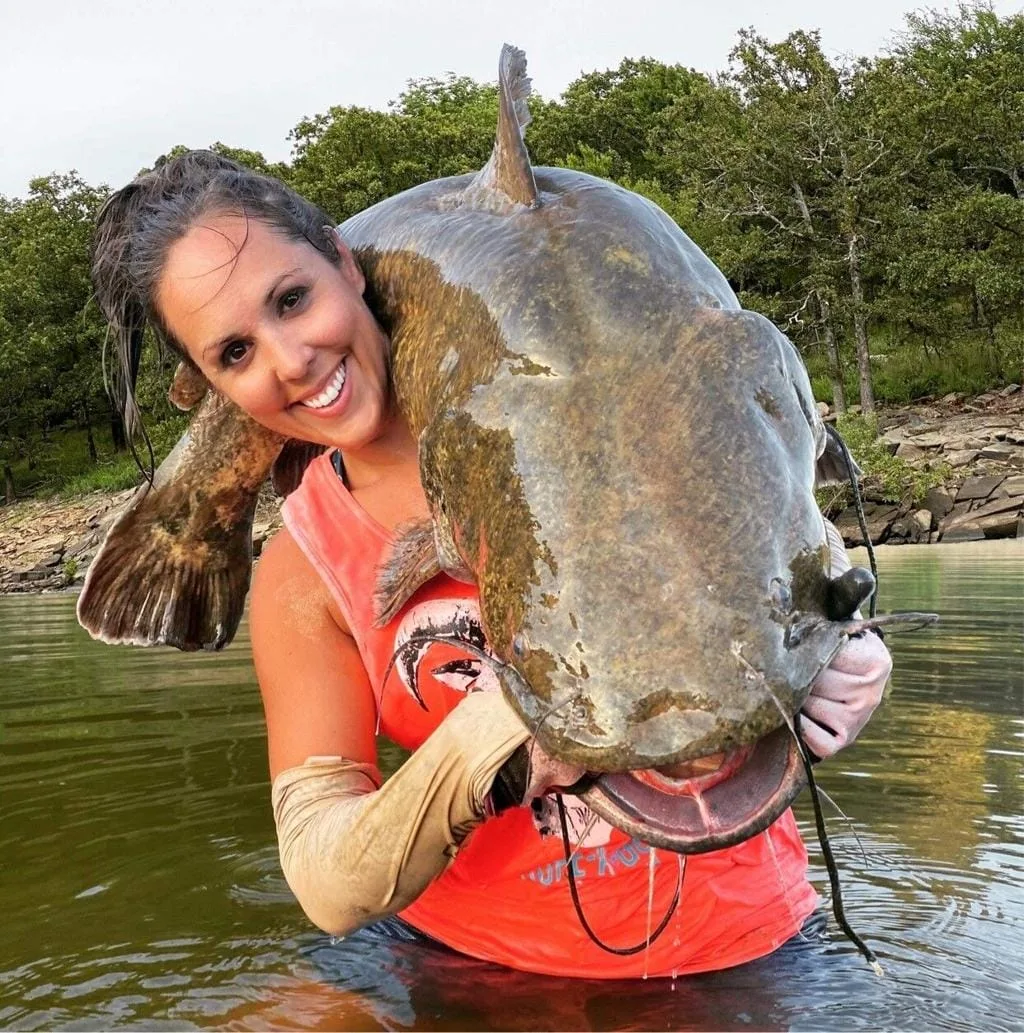
Get those mitts out. Hand fishing, also known as noodling or grabbling, is a long-used technique for catching fish that requires patience, stealth, and a healthy dose of courage. This method is particularly effective for catching catfish in shallow river or lake beds and very popular today in the south of the USA. Begin by slowly wading into the water, taking care not to alarm the fish with sudden movements or splashes.
Once you’ve located a fish – this is where your patience pays off – gently lower your hand into the water, palm up and fingers slightly curled. Try to make your hand seem like an enticing dinner to the fish. When (confidence is key) the fish swims to your hand, thrust your hand down its throat and grip its gills. But be careful – you need to be targeting fish with cardiform teeth, which is basically a sandpaper matt. Get the wrong species and this would be unpleasant.
Trout Tickling is a similar technique for catching fish with just your bare hands. Except trout have teeth so one approaches this differently. Trout tickling is the art of rubbing the underbelly of a trout with your fingers; incredibly, the trout goes into a trance after a minute or so and can then be flicked onto the nearest bit of dry land. Good luck.
Fish Without a Hook – Turn a Water Bottle into a Fish Trap
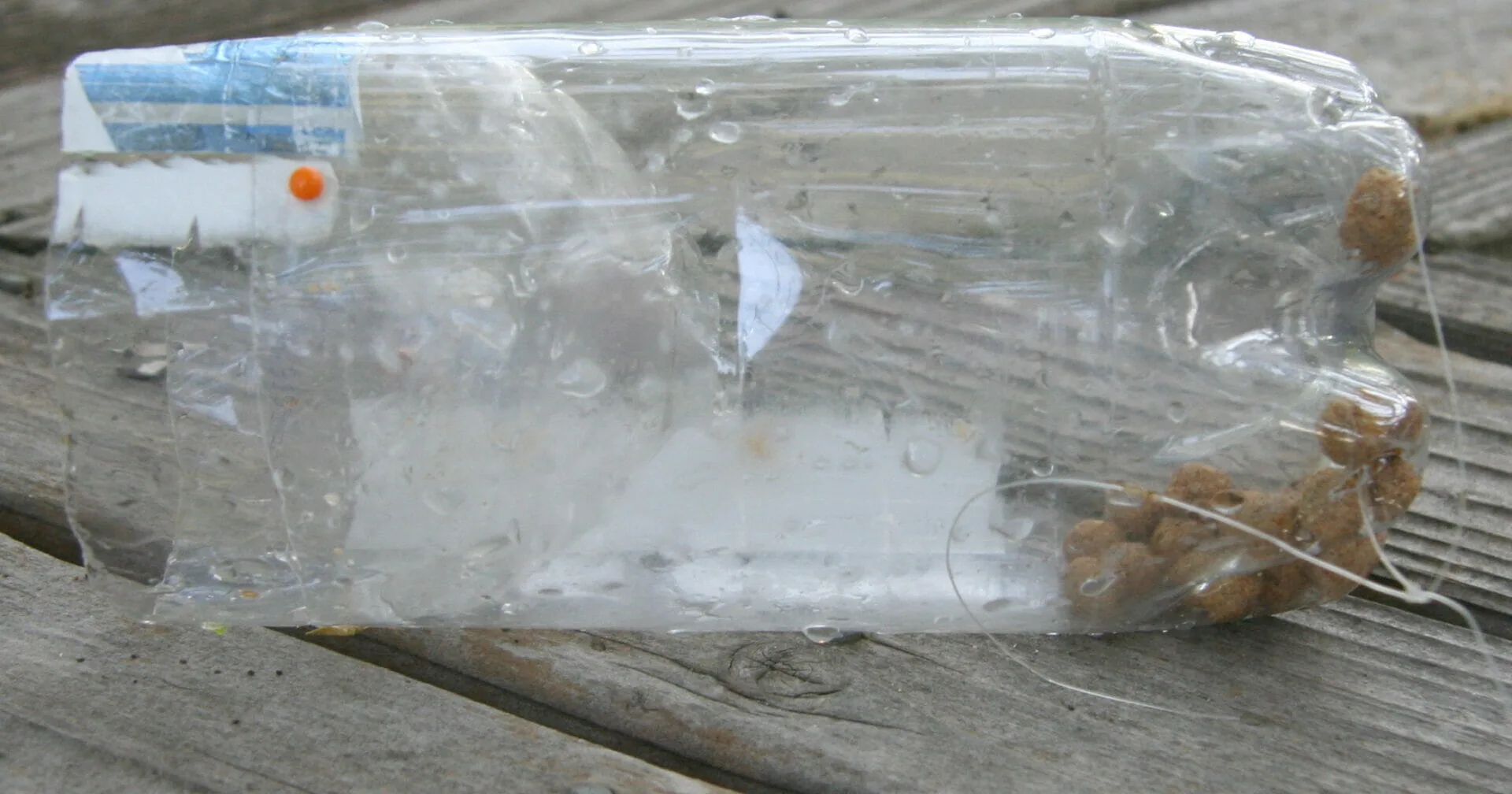
In the same style as a woven fish trap (see below), you can turn a plastic water bottle into an efficient fish trap. Start by cutting off the top third of the bottle with your nearest sharp tool. Next, invert the cut piece and insert it back into the bottle, creating a funnel effect. Secure the two pieces together with twine or strong grass, ensuring there are no gaps for the fish to escape.
Place your bait – this could be food scraps, molluscs, insects, or in a proper survival situation even faeces – into the bottle via the funnel and position your bottle trap in the river, lake, or rock pool, preferably near the bank where small fish congregate. Weigh it down with something rock-like to prevent it from floating away, and leave the trap overnight. The fish will swim into the bottle, attracted by the bait, but will find it difficult to escape due to the funnel design.
How to Make a Fishing Hook in the Wild
Traditionally all fishing hooks were of course made from bone, thorns, or wood. This can be a traditional J hook shape, or a gorge hook – which is far easier to carve but less effective, relying on the fish to swallow the hook. A gorge hook is a thin spike sharpened at both ends which lodges in the throat of the fish after it swallows the bait.
Today, there are a number of man-made items which can be fashioned into a hook, such as wire, can ring pulls and safety pins. A safety pin is a resourceful way to catch fish when you don’t have traditional gear. To start, unfasten the safety pin and straighten it out as much as possible. Using a hard rock or other flat, solid surface, carefully sharpen one end of the pin until it becomes a point. Bend the sharpened end slightly to form a hook shape.
For your line, you can use tree roots, tree bark, long strong grass, seaweed, or even a shoelace. Tie one end to the safety pin hook, ensuring it’s secure. Attach your bait – worms, insects, or bits of food – to the hook, then lower the line into the water. When you feel a bite, gently pull the line up.

Desert Island Fishing – Fabricating that Fishing Line
If you know how to make cordage from natural fibres, then you can weave a fishing line. On desert islands you have the benefit that there are no cold snaps and so the plants’ sap is always running, meaning cordage harvesting is possible all year round. Some of the better plants we have found for making a fine, yet strong cordage include snake plant (mother-in-law’s tongue), hibiscus and sisal. If you are trying this in Europe, nettle, bramble and blackberry all work well. As your cordage runs short, splice in new segments to make a longer line.
Cordage can also be achieved from scraps of clothing. Start by tearing a long strip from your garment, taking care to maintain a uniform thickness. Next, locate a suitable piece of wood to act as your fishing rod – it should be long enough to reach far into the water but light enough to handle comfortably. Securely tie one end of your clothing strip to the end of the rod. Then attach your hook – this can be a sharpened bone, a thorn, ring-pull or a safety pin.
How to Catch Fish with an Improvised Net
In the wild, you’ll often find resources that can help you catch more fish without traditional fishing gear. Indigenous communities have woven their nets from natural cordage for millennia. Further to the other cordage providers mentioned, trees with good bark (harvest in spring and summer) include willow, cedar and basswood. You will need to bend a frame into place and then tie off long strips. It’s a little hard to explain in text so watch Clay Hayes from Alone explain how he made his here:
Perfect for sweeping a dip net through shallow water to catch small fish.
If you happen to have a piece of clothing or any material that’s mesh-like and flexible, you can fashion a simple dip net. Attach the corners of the material to four sturdy sticks, creating a bag-like net. Place the net in the water, ensuring it’s open wide and deep enough for fish to swim in. Once you spot fish swimming into the net, swiftly lift it out of the water. This method is great for catching smaller fish in larger quantities.
Spearfishing with a Sharpened Stick: A Primitive Technique
Likely the first-ever fishing technique (short of throwing rocks at fish to stun them) and just about as basic as it gets is spearfishing with a sharpened stick. This technique can be very effective, especially in clear, shallow waters where you can see the fish. First, find a straight, sturdy stick a little longer than your body. Using a rock or other hard surface, sharpen one end to a point and then split it into four prongs. Insert thick twigs into the splits and tie them above and below with natural cordage. Pass the ends through the flame of a fire to harden them.
Carefully wade into the water, holding your spear at the ready. When you spot a fish, aim and thrust quickly and forcefully. The key here is stealth, speed and accuracy. We have had the most success with this technique walking the seashore and catching stingray. It is also very effective for catching crabs.
Fishing without Gear – Fish Stupefying Plants and Poisons
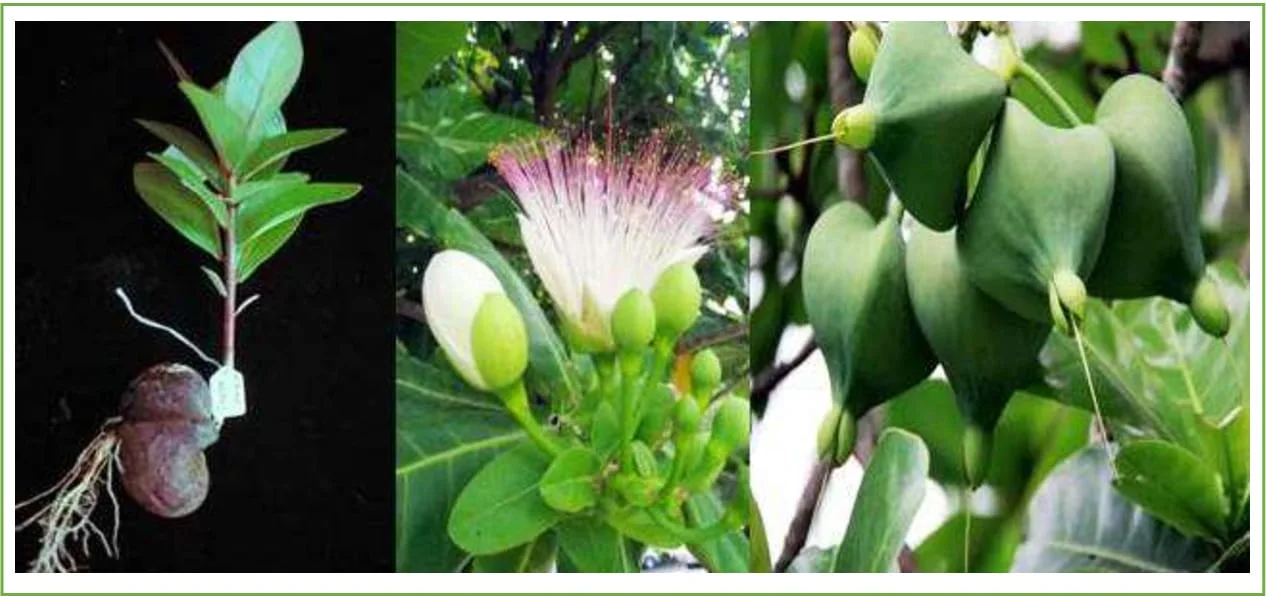
We are venturing into highly specialist techniques now. Our ancestors knew the personalities of their plants very well and many tribes still apply this technique today. Specific plants and vines possess toxins to prevent them from being eaten; when mixed into a pulp and added to a contained water area such as a creek, most species don’t in fact poison the fish but constrict the capillaries in their gills, allowing them to be easily caught by hand. There are countless effective species for this, but one of the most widely used will be recognised by our past castaways, as it is commonplace on our Philippines desert island. Barringtonia asiatica, widely referred to as the fish poison tree – you can see its very distinct pods and stunning flowers that carpet the ground below.
Survival Fish Trap – Fishing with a Woven Basket
Basket traps are another effective way to catch fish without gear. What we love about these traps is that it’s a passive technique, meaning it can be fishing for you whilst you are off doing other tasks such as cutting wood. For this method, you’ll need to weave a basket using flexible twigs, long grass, or reeds. Fresh willow stems or tropical vines are good options. The basket should be wide at the top and narrow at the bottom, almost conical in shape, with a small opening at the pointy end.
Submerge the basket in the water, add bait and secure it with rocks to prevent it from being swept away. If you are working in a tidal region, consider tethering it to a rock. Fish will swim into the basket out of curiosity or in pursuit of the bait. Easy to swim in, less easy to swim out – trapping them inside.

How to Make a Bushcraft Fishing Rod from Sticks and Twine
You can create a good, workable fishing rod from simple materials found in nature. Find a long, sturdy green stick to serve as the main body or “pole” of your rod. It should be about as long as your arm for optimal control, strong enough to withstand the weight of a fish but flexible enough not to break under strain. Deadwood or overly brittle sticks won’t work here; where possible, look for green, flexible branches from trees like willow or hickory.
Next, you’ll need a line. As we have discussed, yarn or long strong grass twisted together will create a rudimentary fishing line – alternatively, clothing twine or threads. Aim for at least a few metres to give yourself enough room to cast. Securely tie one end of the line to the tip of the stick, reinforcing the knot with sap or resin if available. On the other end, attach one of your makeshift hooks. The key is to ensure the hook is sharp enough to pierce the fish’s mouth and secure enough not to slip off the line.
Your primitive fishing rod is almost ready. Add bait to your hook and you’re ready to go. Allow Clay Hayes to show his excellent approach here:
How to Catch Fish Without a Rod – Tidal Fish Trapping
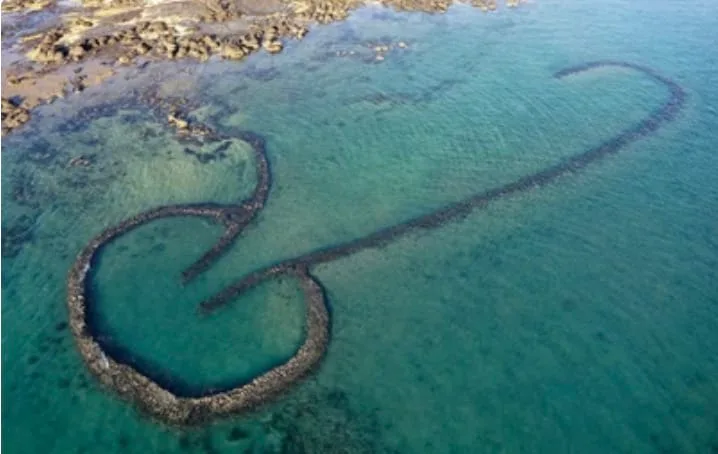
Creating a tidal fish trap is an ingenious method that leverages the natural rhythms of the sea. It’s more labour-intensive than a stick and some cordage but offers an efficient passive way to catch fish for years to come. Ancient tidal fish traps over 10,000 years old have been found across the world.
This trap is best built at low tide. Locate a part of the beach where the water is shallow and the tide comes in strong. Build a semicircular wall with large rocks, starting and ending at the water’s edge. The wall should be tall enough to sit above the water line at high tide.
When the tide comes in, fish will swim over the rock barrier into the enclosed area. As the tide recedes, the fish will be trapped within. Make sure to check the trap as the tide drops to gather your catch before they find a way over the rocks.
What to Do After You Catch a Fish?
Fantastic, you’ve caught a fish. What’s next? Properly cleaning and preparing your fish is your first step towards your meal by the campfire. Not sure where to start? Just visit our guide on How to Cook in the Wild for practical tips on preparing your catch.
And, of course, you’ll need a fire for cooking. If you’re a bit rusty on your fire-making skills, brush up with our straightforward article on How to Make a Fire. Armed with these skills, you’re ready to savour your catch in the great outdoors.
Conclusion: The Challenge and Minimalism of Fishing without Modern Gear
Mastering the art of fishing without gear isn’t just about survival; it’s about trying techniques that have been with us for millennia. From fishing with bare hands to fashioning a makeshift fishing rod, these methods underscore the power of innovation and resourcefulness.
Though it’s important to add: this is not plain sailing. Our ancestors employed these techniques in a time when our oceans were teeming with life. It is a sobering fact that these days 90% of the fish are no longer in the ocean.
Why not build a primitive fishing kit and bring it to one of our remote island locations where the fish remain plentiful?
Want to learn more bushcraft skills? Check out our guides on:
- What you’d have to bring to a desert island to survive
- Why coconuts are so important
- Where you would sleep if marooned on a desert island
- What you would drink when marooned
Want to join one of our expeditions to try for yourself? Complete the quiz to find out which of our bushcraft expeditions would be perfect for you.
Frequently Asked Questions
Yes – noodling and trout tickling are well-documented techniques used for centuries. Noodling is most effective for catfish in shallow water, while trout tickling requires patience but genuinely works. Both demand slow, deliberate movement to avoid startling the fish.
A safety pin is probably the most reliable modern improvisation – it’s already shaped like a hook and just needs straightening and resharpening. If you have nothing man-made, bone and hardwood thorns carved to a J-hook or gorge shape have been used successfully for tens of thousands of years.
A basic semicircular rock trap can be built in a couple of hours at low tide, depending on how many rocks are available nearby. The harder part is timing: you need to build it low enough that the incoming tide carries fish over the wall, then check it as the tide drops.
In survival terms, yes – especially for targets like stingray and crab in shallow, clear water where you can see exactly what you’re aiming at. Accuracy improves quickly with practice. The primitive multi-pronged spear described here increases your chance of a hit compared to a single point.
Smaller fish and juveniles are the primary target – anything that can fit through the bottle neck. In tropical environments this includes small reef fish and fry that gather near the shore or in rock pools. Multiple traps set overnight will outperform active fishing methods for this size of catch.