
How to Cook in the Wild
Ditch the Kitchen
Start with What Is Around You
Before you cook anything, take stock of your surroundings. Your environment dictates your menu, your fuel, and your method.
A forest gives you edible plants, small game, and insects. It also provides ample opportunity to smoke meat over a fire, which when done properly can be incredibly satisfying. A coastal setting is different altogether. You are looking at fish, shellfish, seaweed, and coconut if you are lucky. The key is reading what the land and sea are offering you.
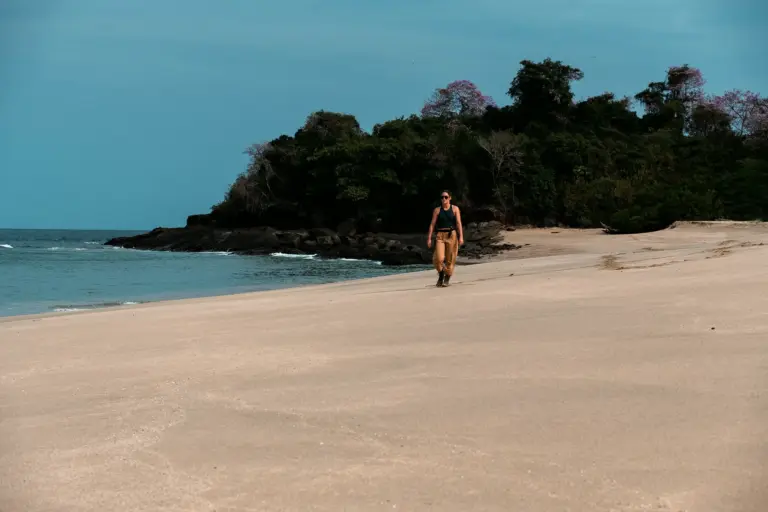
A beach or a desert island, on the other hand, provides an abundance of aquatic species, from fish to crustaceans. Beach locations are ideal for grilling fish over hot coals or roast on a flat rock.
Catching Your Own Dinner: Fishing in the Wild
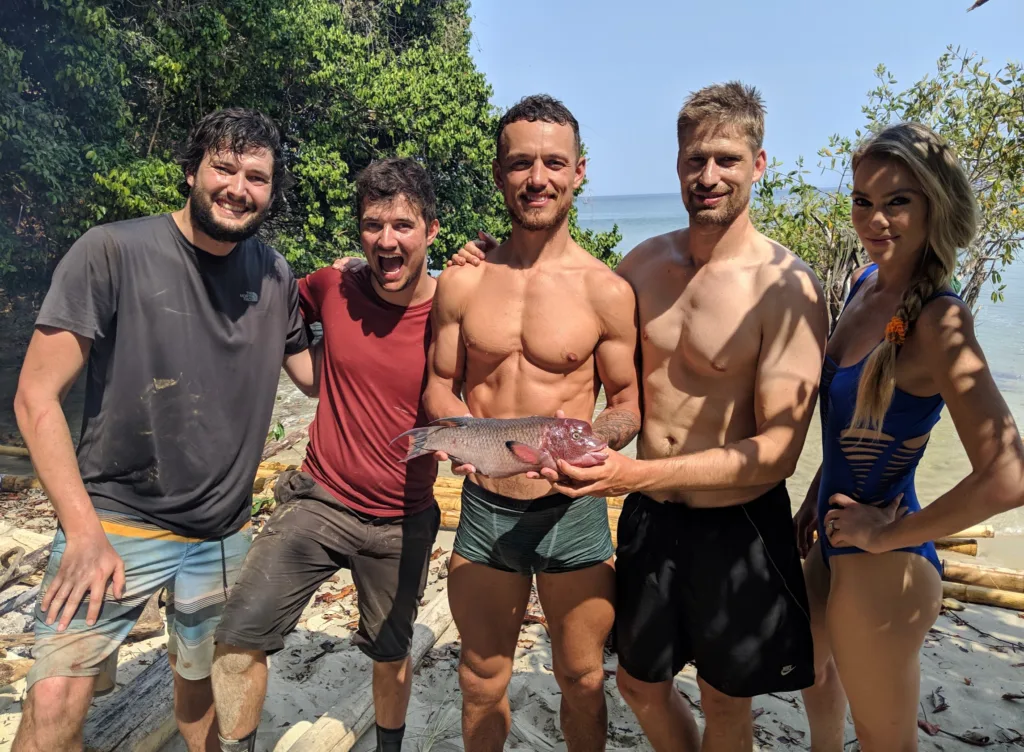
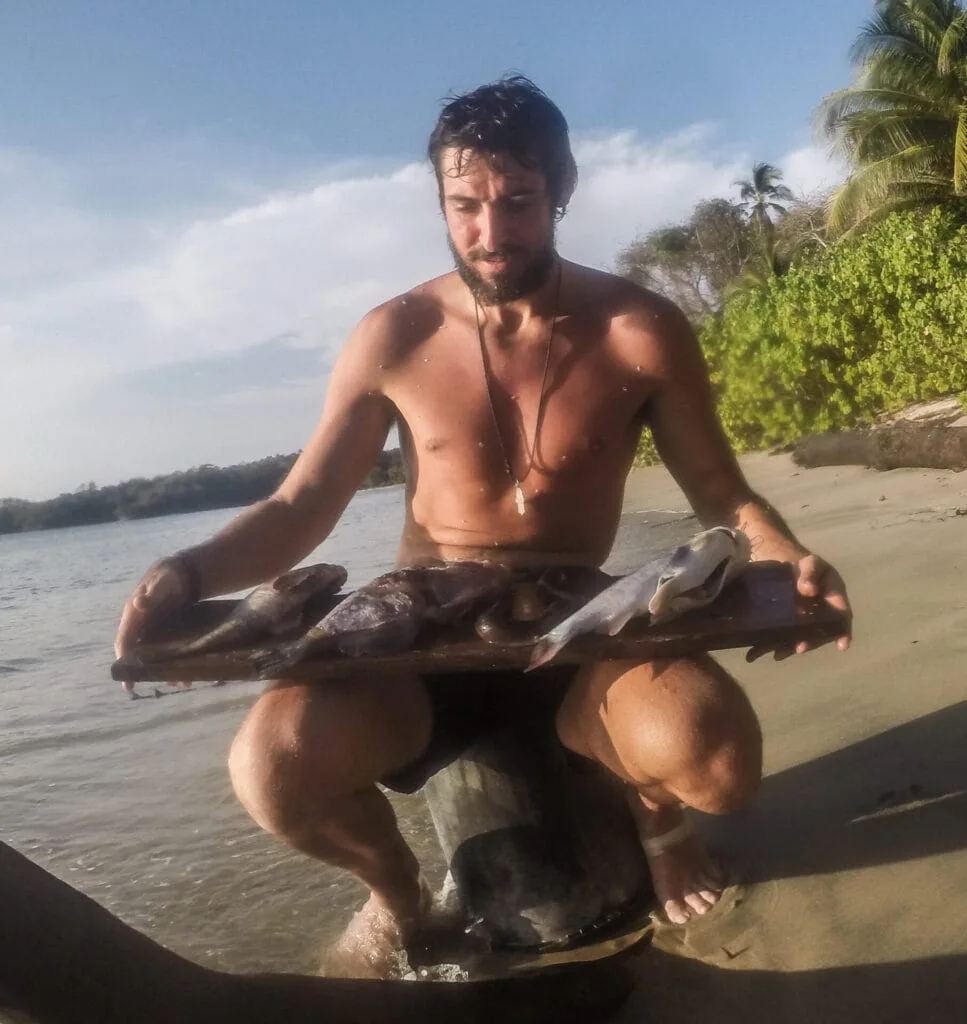
When it comes to survival in the wilderness, nothing beats the fresh catch of the day. If you find yourself near a river, lake, or sea, fishing becomes an essential skill. From crafting a simple spear to constructing a makeshift fish trap, primitive fishing methods can yield a substantial food source.
You might spend hours waiting for a fish to take the bait, or for a school to swim into your trap. Patience is everything out here. We have an extensive post on fishing without gear if you want the full breakdown.
Foraging for Greens
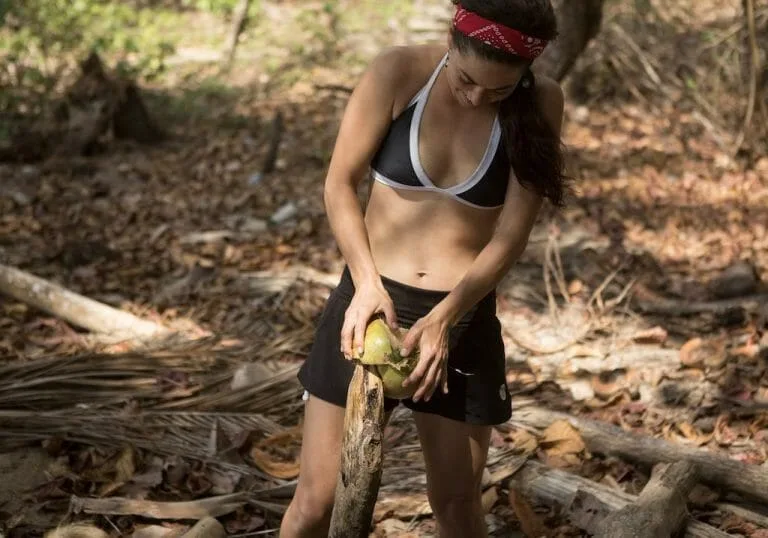
Survival is not just about hunting small animals or catching fish and insects. In many situations, the bulk of your meals will come from plants, such as coconut if you are marooned on a desert island.
Many plants offer solid nutritional benefits, often with fewer calories than meat. Aquatic grass can add volume to your meals, while certain plants and mushrooms provide a surprising amount of protein, as long as you know what you are looking for.
Only consume food if you have a good water supply. Remember what we spoke about in your survival guide focusing on water?
Don’t just eat anything you find. For example, our island in Panama has an apple (the Manchineel pictured below) which is the most deadly tree on the planet. Even sitting under it a rainstorm will blister your skin.
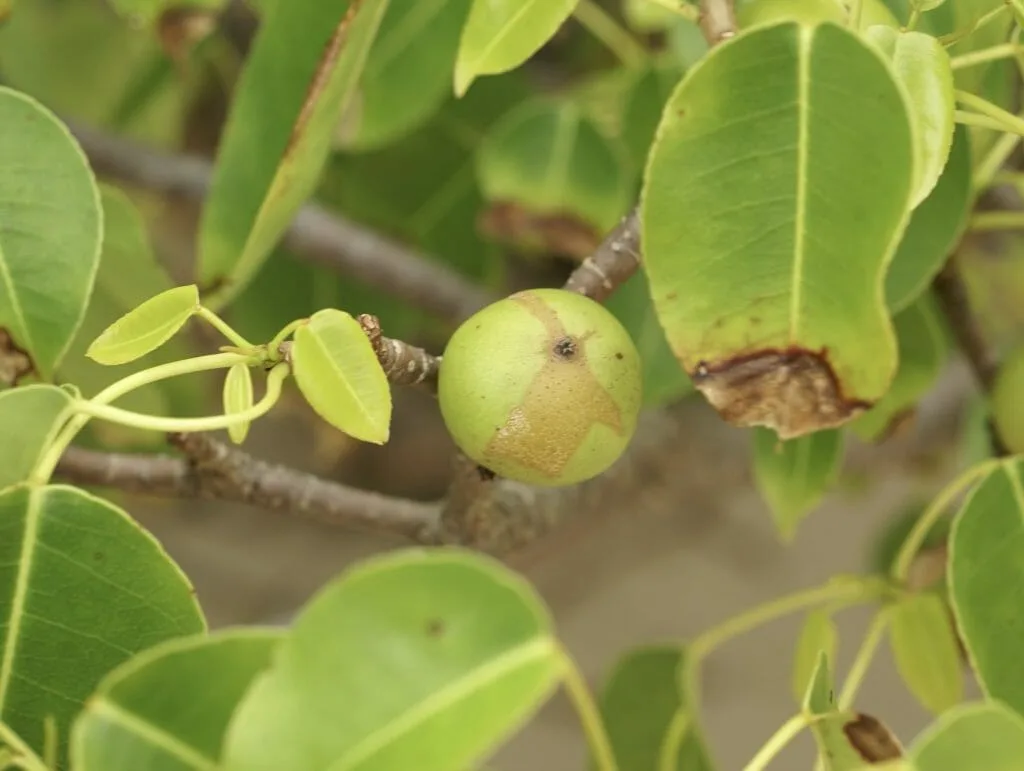
There is a long-winded test that can be done when working out whether something is edible: touch it on your inner arm and wait three hours. Then touch it to your lip and wait three hours. Touch your tongue and wait another three hours. Eat a tiny amount and wait three hours. And keep going like that. It is time-consuming, but it could save your life.
Preparing your Fire: More than Just Heat
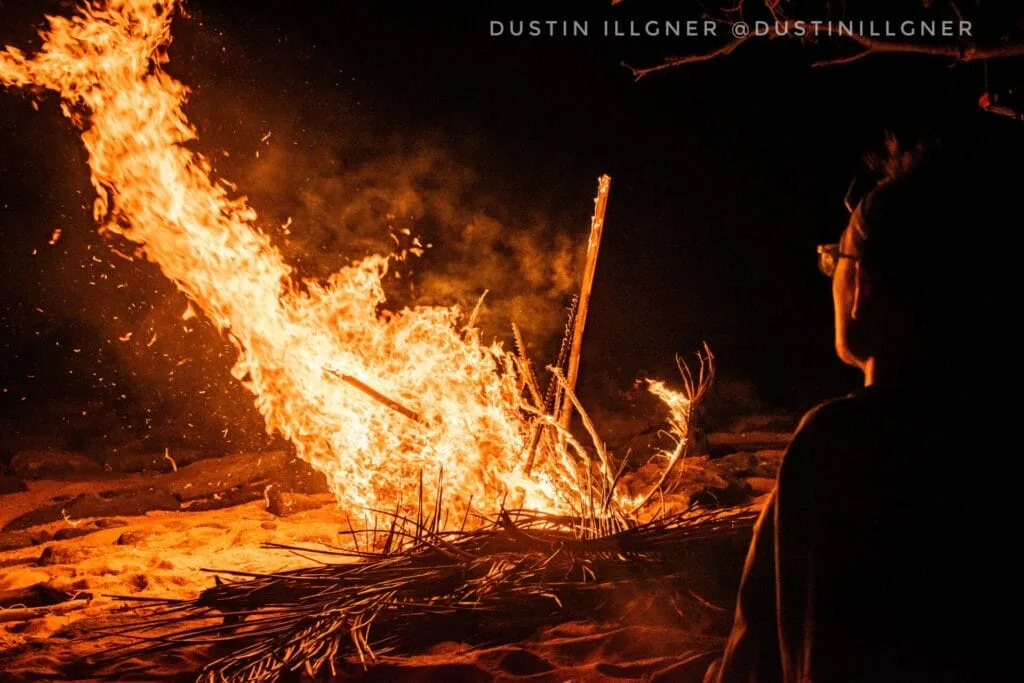
The most basic requirement for cooking is fire. In a survival situation, a well-maintained fire serves multiple purposes: it provides heat, a way to boil water, and an essential cooking source.
When preparing your fire, ensure it’s a safe distance away from trees or bushes to prevent a wildfire. Once the fire is established, let it burn until you have a good bed of glowing coals. Coals provide a steady and manageable source of heat, perfect for most cooking tasks. It’s best to boil water on a flame and cook food on coals.
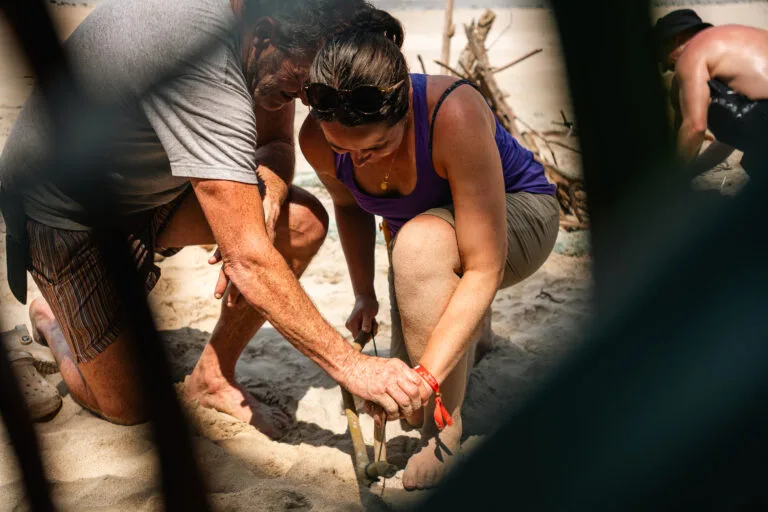
Learn several different techniques of how to start a fire in the outdoors.
Wilderness Cooking without Pots and Pans
What if you don’t have a pot or any other cooking gear with you? The outdoor provides if you know where to look.
Cooking in Clay
If the ground around you is muddy or if there are clay deposits, you can use this to your advantage. Wrap your meal in leaves (make sure they’re non-toxic) and cover it in clay. Place your clay-wrapped meal into the fire and let it cook. The clay acts as an airtight container, trapping heat and cooking the meal evenly.
Cooking Underground: Nature’s Oven
This technique is popular in Polynesian cultures where it is called an ‘Umu’ and is frequently used today for celebrations, such as slow cooking a whole pig.
To prepare an earth oven you must first collect a number of large (but manageable) rocks. Build a large fire and heat the rocks until they glow red. At the same time, dig a large hole. Once the rocks are hot, use a stick to push them into the bottom of the hole and cover them in a layer of dirt. Add a layer of vegetation and then add your meat and vegetables. Cover with more vegetation and finally a thick layer of dirt to trap the heat. Leave it for several hours and you will have perfectly slow-cooked food.
Leaf-Wrapped Delicacies: Straight to the Coals
Wrapping food in leaves is an excellent way to cook directly on the coals without getting your food ashy. This technique works great for fish or tender cuts of meat. The leaves add an extra layer of flavour and keep your food moist. Once wrapped take some bark or natural cordage (we at DIS love hibiscus bark) and tie the leaves.
Again, it’s vital to identify non-toxic leaves. On the island we typically use almond.
Hot Coals: The Outdoorsman’s Stove
Cooking meat directly on hot coals is a simple yet effective method, especially for small game. Simply place the meat directly onto the hot coals. Be prepared for it to cook quickly, so keep a close watch. The meat will be ready when it’s firm to touch and no longer pink inside. Be cautious of overcooking, as this can make the meat tough rather than tender.
Using Hot Rocks: Nature’s Griddle
Flat rocks can serve as a natural griddle. Place a flat rock on top of hot coals and allow it to heat up. Once heated, you can cook your meat or vegetables directly on the surface of the hot rock. Flat rock cooking works best for thin pieces of meat or fish, ensuring it’s cooked thoroughly.
Missing the Kitchen Comforts?
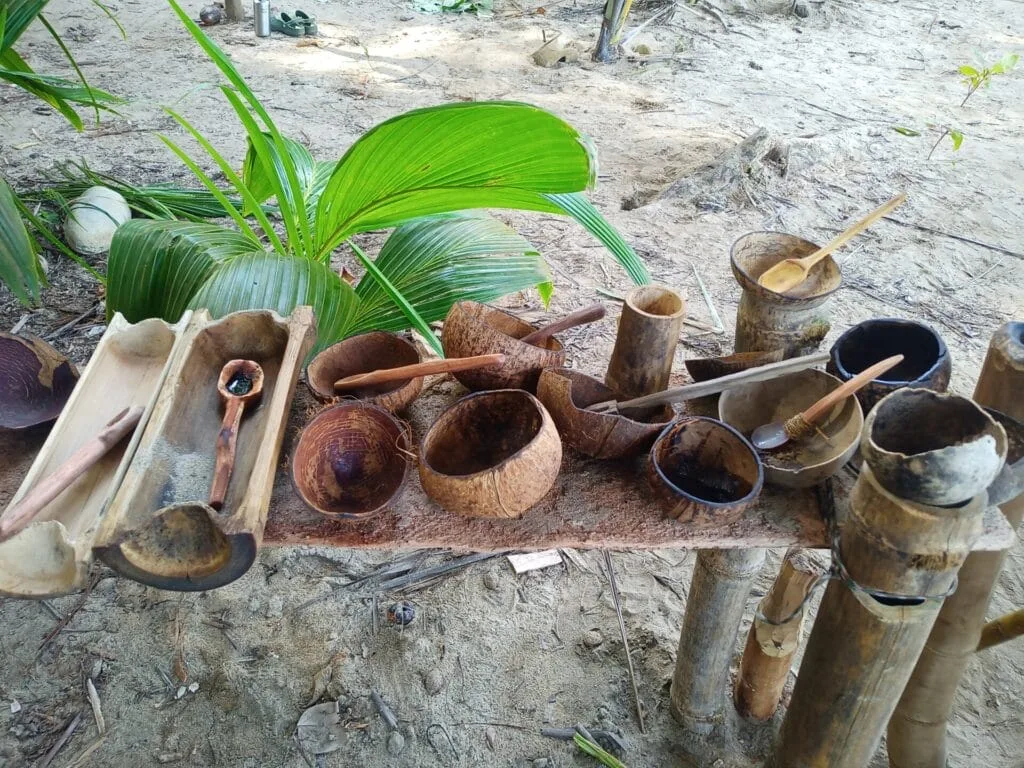
Even in the wild you can build a functional kitchen from the materials around you. Get creative and use what is available. The fact you made these tools yourself makes them all the more satisfying.
Depending on your environment, you can use natural materials. If you are on a desert island, you will find plenty of useful things washed up on the beach. Have a proper look around before you start.
A Sea-washed Spoon
Among the items that the ocean sweeps onto the beach, you are likely to find pieces of driftwood. These can be carved into basic utensils using sharp rocks found on the shore.
A thick, sturdy piece of driftwood can be turned into a useful spoon, perfect for stirring your coconut bowl soup or for handling hot rocks.
Coconut Bowl Craft
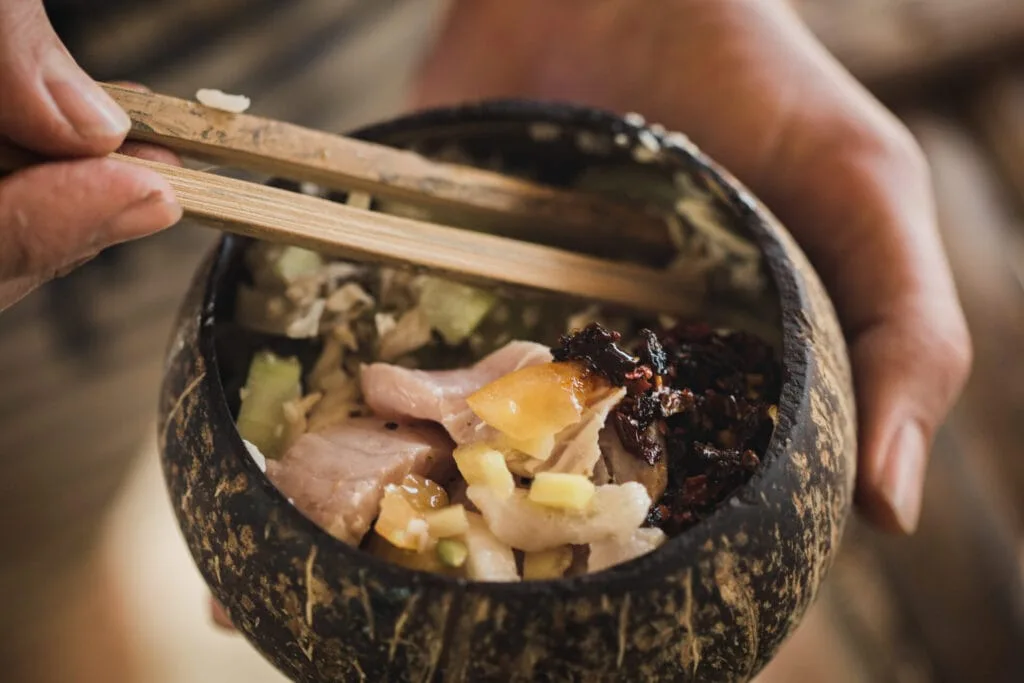
Coconuts are the Swiss Army knives of tropical survival. Aside from being a source of hydration and food, they also make excellent bowls. By splitting a coconut in half, you can make two bowls that are hardy and reusable (though one half will have a hole in.).
Beach-Found Knife
If you don’t have a knife with you, you’ll have to get creative and make a knife, or something that works similarly.
In many cases, the ocean also washes up discarded items that can be repurposed. Broken pieces of glass, if handled with caution, can serve as a sharp tool for slicing meat or cutting through plant materials.
You could also come across metal scraps that, when sharpened against a rock, could function as a makeshift knife.
My favourite easy way to make a knife is to break clam shells to create razor-sharp edged knives. Lash these to a sturdy stick to create an axe. However, anything with a sharp edge will do as a knife, so if there are no shells available, bamboo can work very well as well as bone ground to a point. Also keep an eye out for a sharp rock such as flint which can be knapped.
Unconventional Pots: Coconut Shells and Washed-Up Cans
When surviving on a beach or island, using the resources washed ashore alongside those naturally available can make all the difference.
Roasting Over the Fire
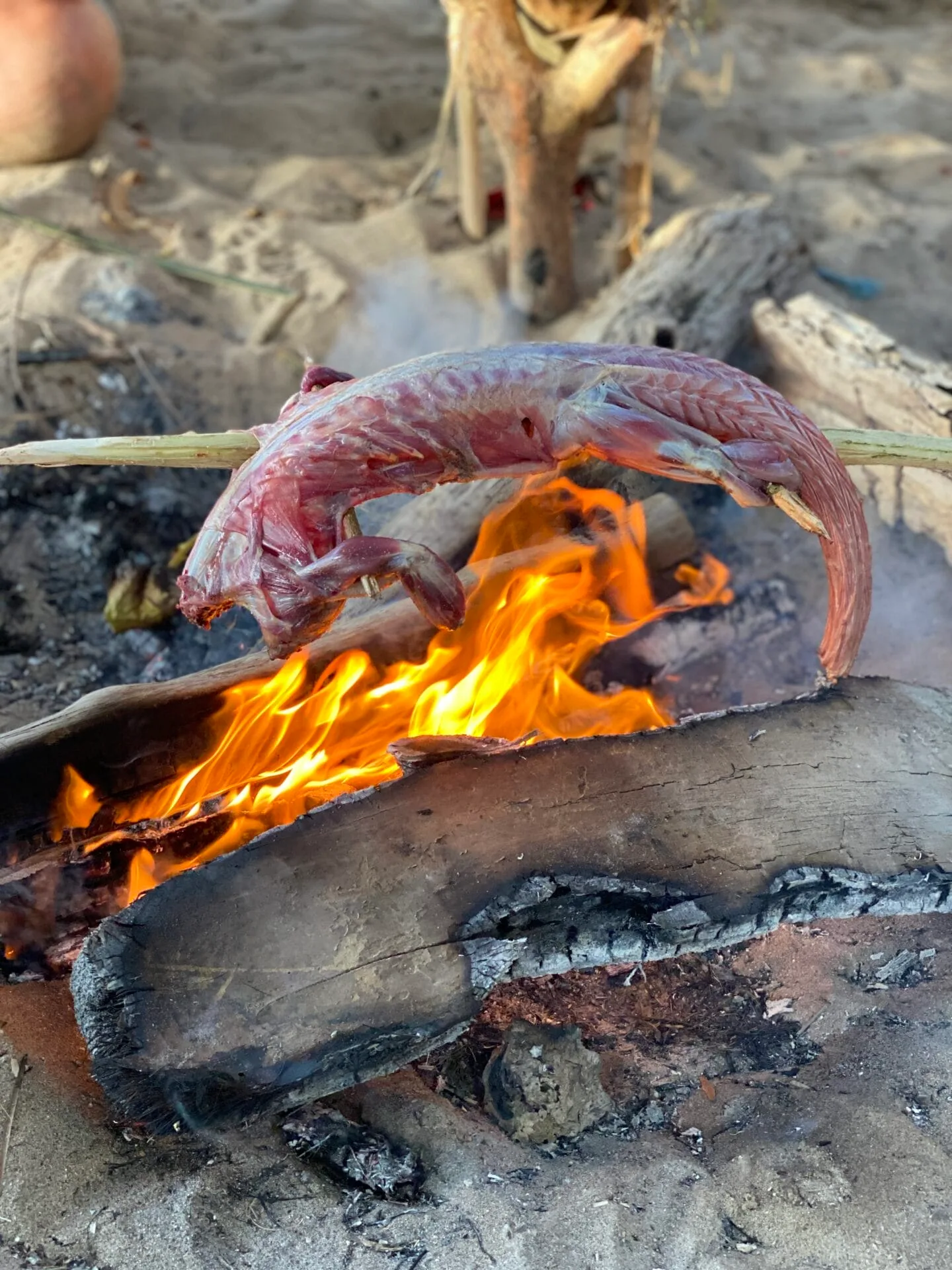
One of the most basic and time-tested methods of cooking in the wild is roasting over the fire. This can be done by skewering the food on a stick and holding it over the flames, or by placing it on a grill made from green branches.
Stone Boiling
If you have access to a metal cooking pot or you have managed to improvise one, stone boiling is another excellent cooking technique. It involves heating rocks in a fire until they’re extremely hot. Then, using sticks or other tools, you remove the hot rocks and place them into your improvised pot filled with water. This method is great for boiling water or making a warming soup out of the different food you’ve gathered.
But stone boiling isn’t just for soup. It’s also an effective method to cook grains, vegetables, and even meat. The hot rocks transfer heat to the water, cooking whatever is inside your makeshift pot. This method ensures even, medium-high heat that can cook most foods efficiently.
Bamboo Cooking Pot
If you are fortunate enough to have the wonderful resource of bamboo you can easily create cooking pots. Simply cut the wildest, greenest bamboo you can find and cut it below two the upper and lower nodes.
On the desert island we like to cook up a fish curry in bamboo pots. We fill the bamboo with coconut cream, spices, fish and veg and close up the top with folded palm fronds. Finally, we place the dense node end of the bamboo directly on the coals being mindful to not expose it to flames. This is also a great way to cook rice. For this rice technique keep the whole segment of bamboo intact and make a small keyhole to pour the rice and water in.
The Art of Smoking Fish and Meat
Smoking fish or meat over a fire is a longer, more time-consuming process, but it’s worth the effort. This technique both cooks and preserves the meat creating food security. Not only does smoking give the meat a distinctive flavour, but it also helps to keep away insects and other animals.
Cooking on a Spit
We’ve all seen meat cooked on a spit, in the wild it’s not so different. Cut straight green wood and thread it through your food. You can split the wood and put second sticks at 90 degrees, this stops the meat sagging the same direction when turned. Cut two ‘Y’ sticks on either side of the fire and cook away, turning periodically. Be sure to cook over heated coals, not flame.
Take Aways (Not That Kind)
Surviving in the wild takes adaptability, resourcefulness, and knowledge. From knowing how to start a fire and maintain hot coals, to improvising a cooking pot or making a simple soup, every skill you pick up increases your chances.
Food is more than just sustenance out here. It is comfort, morale, and a way to feel human in the harshest conditions. Learning to prepare a meal in the wild does not just help you survive. It helps you thrive.
Experiment with different methods and find what works for you. Survival does not mean you cannot enjoy your meals.
FAQ
Want to learn these skills on a desert island with us? Answer a few questions and find out which island would be perfect for your training. Or start with our guide to 7 bushcraft skills that change how you travel.