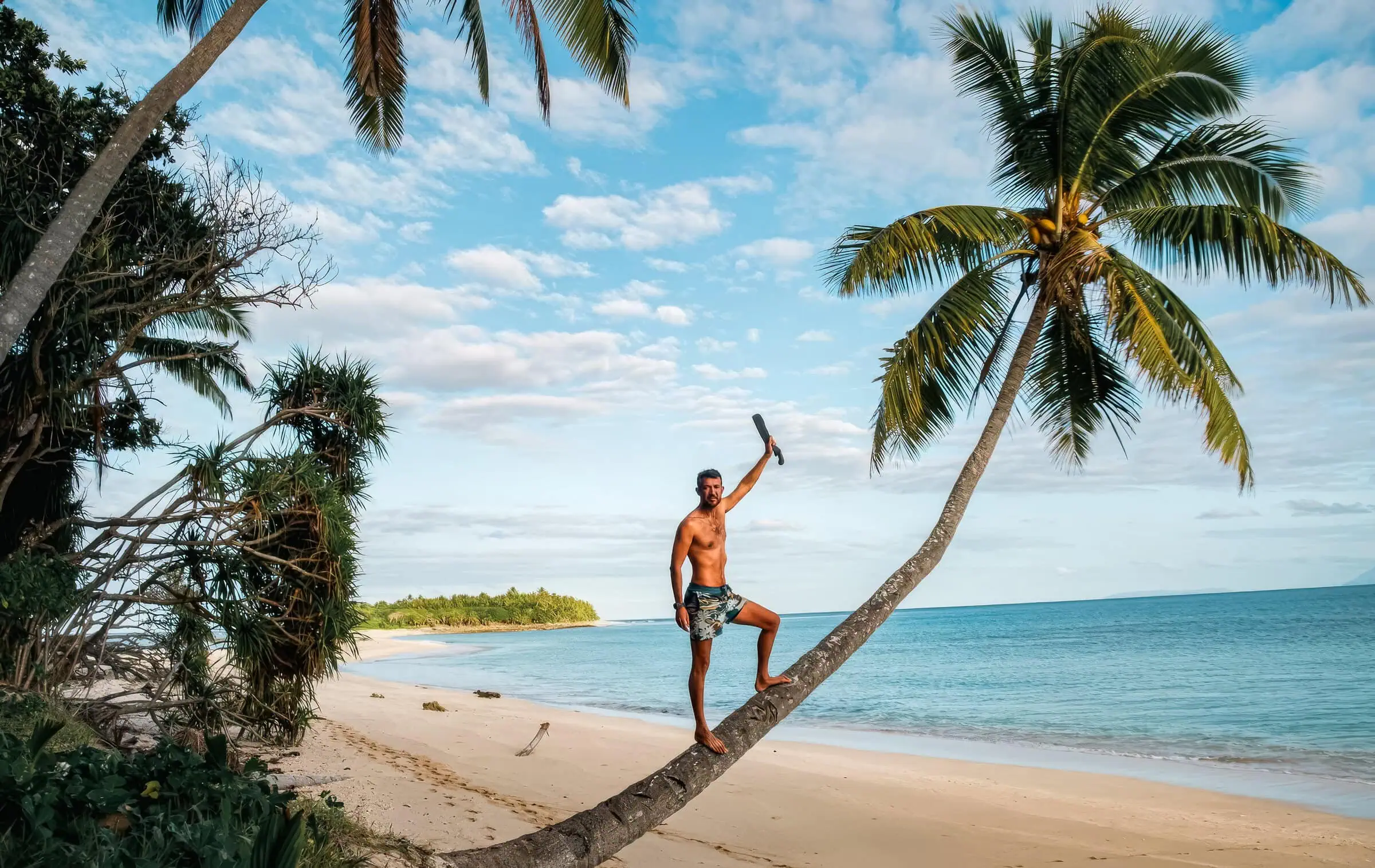
We collect you in Ha’apai, where pigs and chickens outnumber cars, then head straight out by speedboat to your island. Five days of bushcraft with world-class instructors: friction fire, fishing, moonlit lobster dives and spearfishing, with nights in hammocks, fireside, and kava ceremonies under the stars.
Survive · Days 6–8
Then comes the survival phase: three raw days, just you and your tribe, building shelter, catching food, and living as true castaways.
Celebrate · Days 9–11
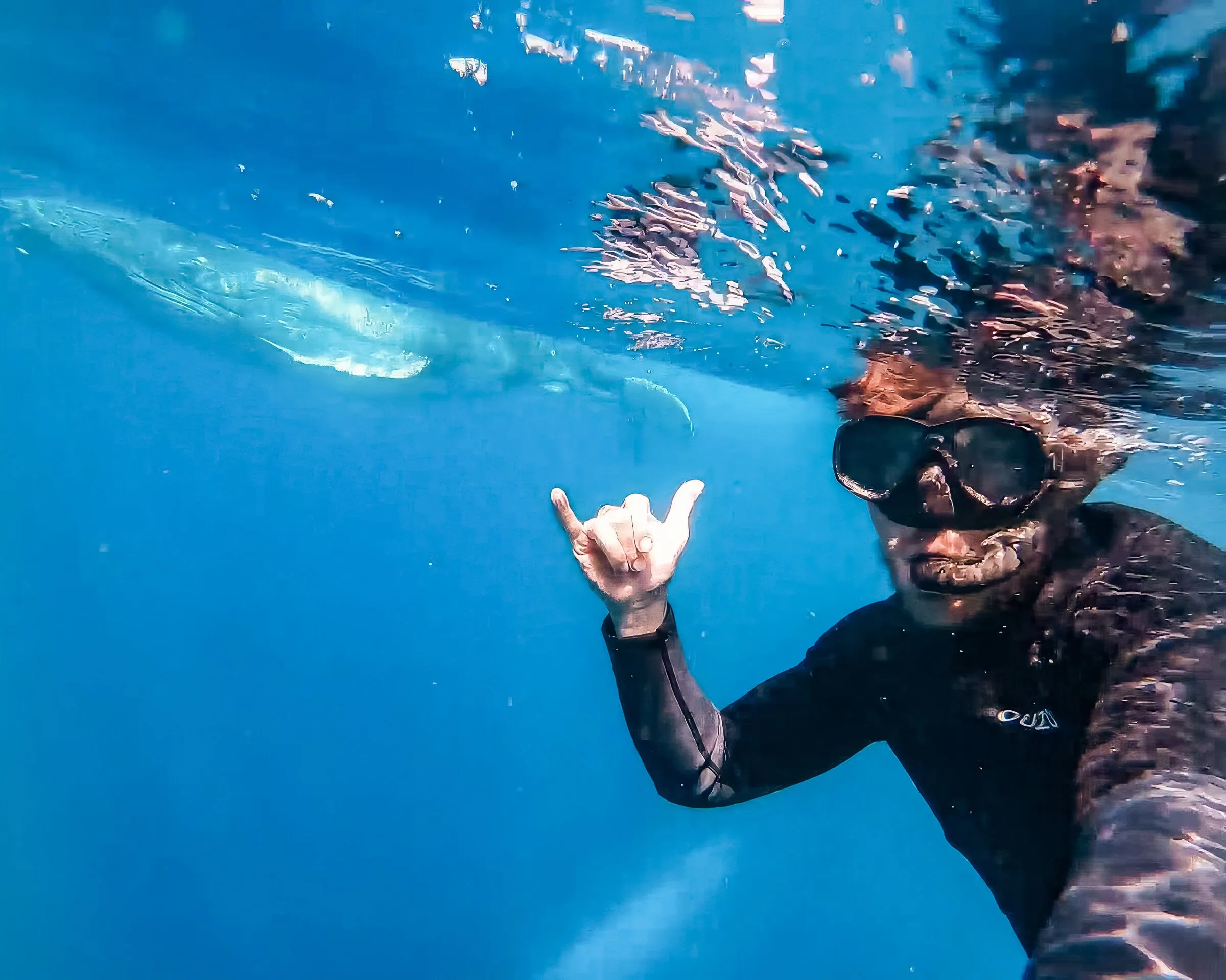
You’re rescued and brought back to Fanifo Lofa, a lodge that feels like ten stars after days in the wild, for a banquet and a beach bonfire. Then the finale: swimming alongside humpback whales, before you depart with a suntan and a tremendous sense of achievement.
Ha’apai (HPA), Tonga. Via Nuku’alofa (Tongatapu) and a domestic flight or ferry.
Length
11 days / 10 nights. Bushcraft, survival, culture and a whale swim.
Group Size
8-10 people. An intimate, supportive tribe.
Difficulty
Tough but achievable. If you can swim and walk, you’re ready. No experience needed.
What You’ll Actually Do
Swim with humpback whales in the wild.
Join traditional kava ceremonies with locals.
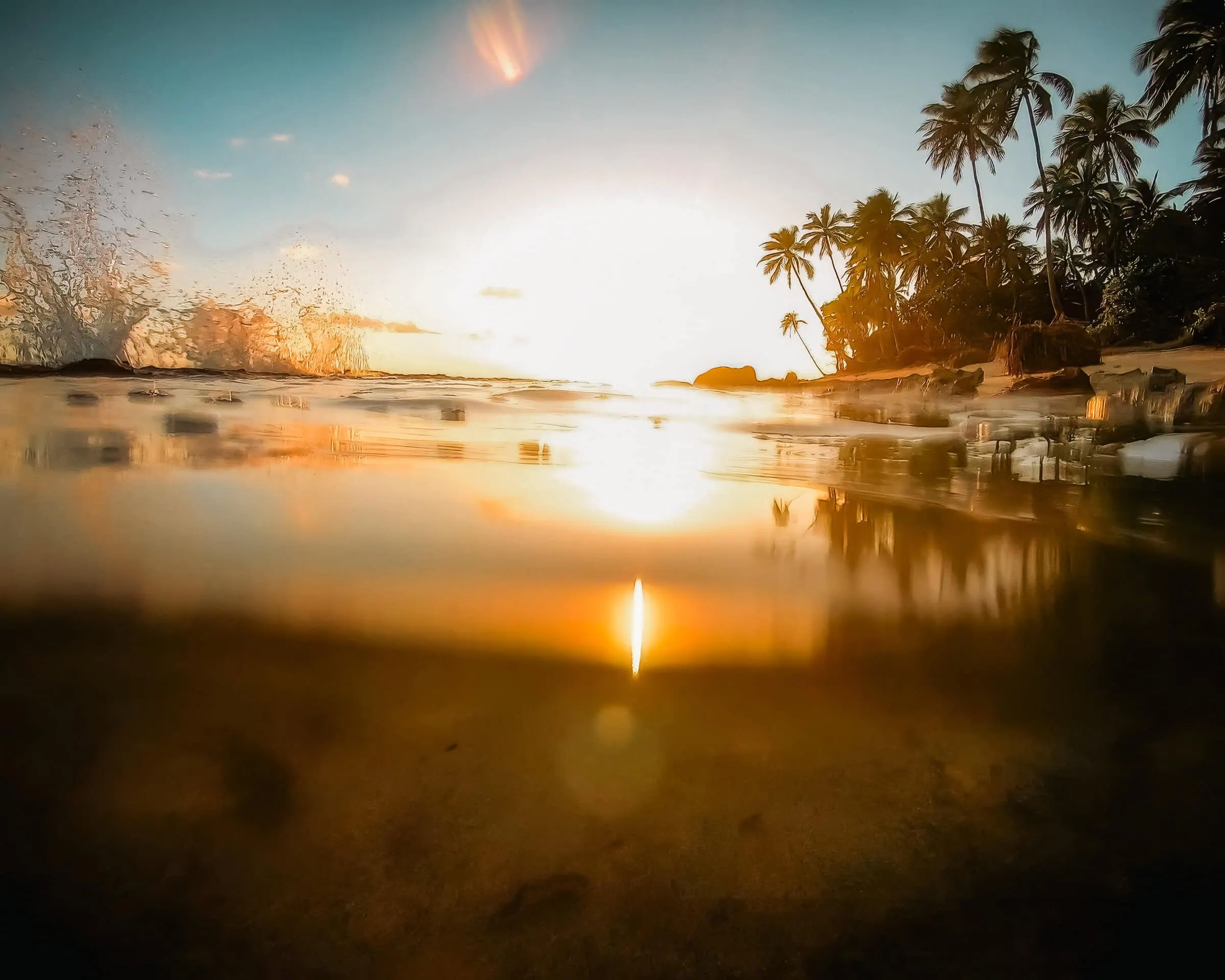
Sleep in hammocks under skies blazing with stars.
Dive for lobster and feast by firelight.
Experience total isolation on a Polynesian desert island.
…and you’ll do all of it with world-class instructors, several of them Alone veterans. Meet the team →
The Day-by-Day
Day 1: Arrival in Ha’apai. We collect you at the airport, where pigs and chickens outnumber cars, then speedboat out to your island. Briefing, camp, hammocks, fire.
Day 2: Building shelter. A proper roof over your head, the first real graft of the trip.
Day 3: Foraging the reef and palms. Coconuts, a handline catch, fish you prepare and cook, and spearfishing on the reef. Fresh green coconuts to finish.
Day 4: The shift. Out here, one of the most remote places on earth, the outside world goes quiet faster than you’d think.
Day 5: Fire and tide. Friction fire in the morning, working the shoreline for supper, and a moonlit lobster dive after dark.
Day 6-8: The survival phase begins. You will head with your tribe to a different part of the island. You will get a handful of tools. Shelter, water, fire, food, in that order.
Day 9: Rescue. The boats arrive laden with cold drinks. A big breakfast, and a celebration that night.
Day 10: Swimming with humpbacks. The finale: out into the Pacific for the once-in-a-lifetime chance to swim alongside humpback whales.
Day 11: Departure. Home with a suntan, a sense of achievement, and stories for any dinner party.
This is the shape of the expedition, not a fixed timetable. The exact training days flex with the weather and conditions, that’s part of the adventure.
Is This For You? Is It Safe?
NO EXPERIENCE NEEDED
The first five days are survival-light, building your skills and confidence before the real test. It is a genuine challenge, and that is exactly the point: most people call it a reset like nothing else.
YOUR SAFETY COMES FIRST
Sites are handpicked to avoid real hazards, every instructor is wilderness-first-aid certified, we run on a system of informed consent, and you stay in contact with the team throughout.
CHANGED YOUR MIND?
A 7-day cool-off with a full refund, flexible rescheduling up to 90 days before departure, and our safety promise.
What’s Included
1 uninhabited private island
5 days of survival training by a world-class bushcraft guide
General kit (hammocks, camping gear, machetes, etc.)
An adventure of fun, untouched nature, bushcraft and a survival challenge. We meet you in Ha’apai and head straight out by 90-minute speedboat to a remote, untouched island. Five nights of training, diving for lobster by moonlight, survival-light with all the kit. Then the 72-hour survival phase. After 3 days you’re rescued back to Fanifo Lofa for the best shower of your life and a survival banquet.
This is our standout choice, a true gem in our selection. Complete isolation and the untouched, pristine wilderness make it into our winner.
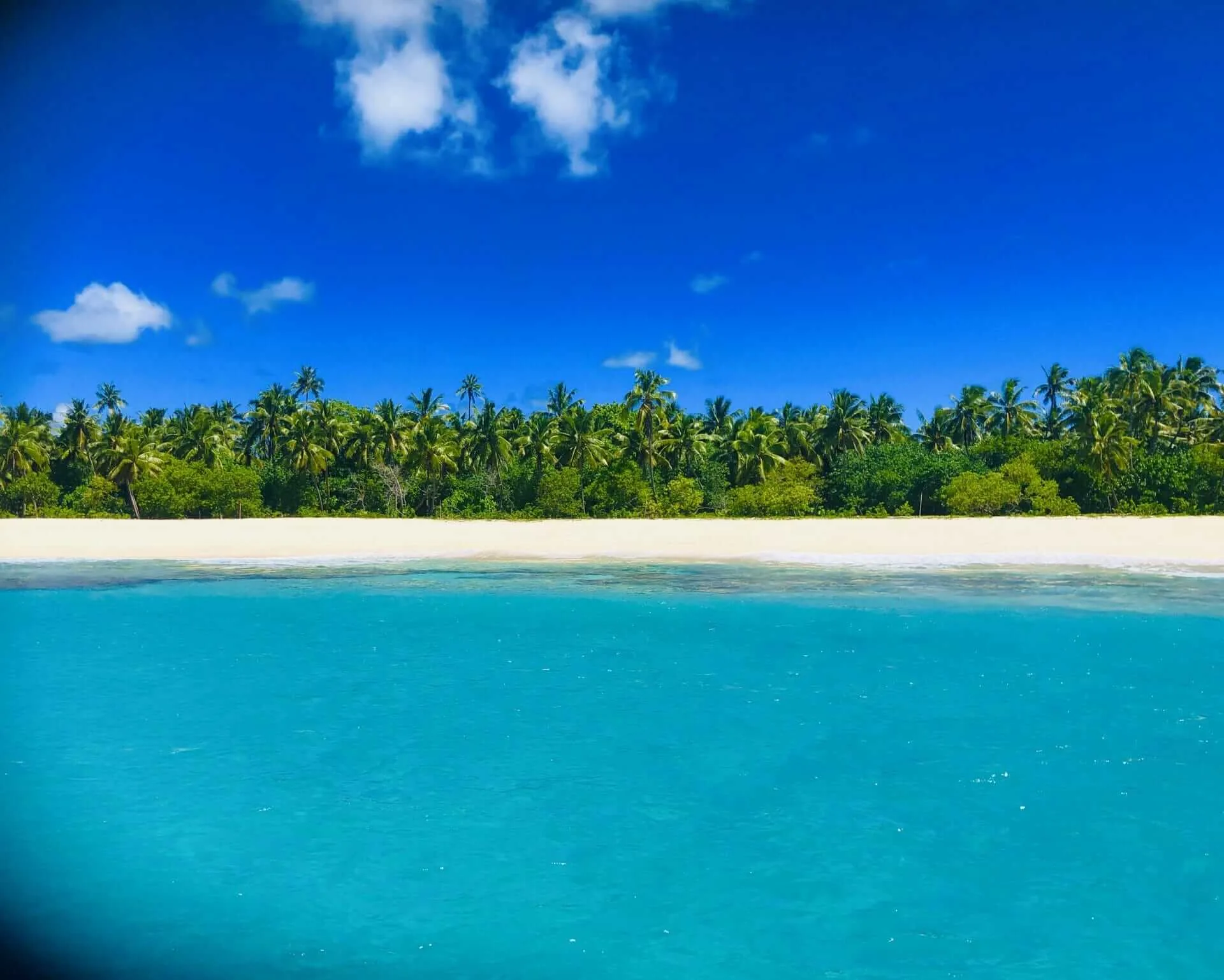
Set out on an unparalleled adventure travel experience in Tonga, where the land’s unspoiled beauty comes alive. Pristine coral reefs fringe perfect white talc beaches, caressed by a spectrum of blues, offering an exceptional setting for your adventure holidays in Tonga.
It is a dream come to life, a postcard desert island that epitomises the essence of pristine wilderness, making it an unrivalled choice for our authentic bushcraft adventure. Yes, this is a long way for most of you, but we are certain it is worth it for this exceptional castaway holiday.
Arguably the world’s most pristine coral reefs fringe perfect white talc beaches, lapped by more shades of blue than we knew existed, encapsulating the quintessence of Tonga experiences.
Experience a Polynesian adventure tour that’s more than just a holiday; it’s an remarkable adventure where you can live out your castaway fantasy in Tonga’s untouched paradise.
SHELTER
Hammock and tarp setup and care
Shelter building
Palm thatching
Machete and knife safety, sharpening and skills
Fire
Fire theory
Friction fire skills (bow drill and hand drill)
Water
Transpiration bags
Solar still
Evaporation techniques
Boiling water in bottles over fire
FOOD
Fishing with hand line
Coconut opening & cream extraction
Tree climbing
Hawaiian sling (hand spear)
Primitive cooking and fish preparation
Trap building
Wild edible identification
OTHER
Psychology discussion and case studies
Astro-navigation
Tonga is isolated; arrive at least 2 days early. There is no way to sugar coat it. We recommend you arrive at least 2 days early in Tonga to make sure you are not caught up because of flight cancellations and to deal better with the jet leg.
Get to Nuku’alofa via Fua’amotu (TBU) from Nadi, Auckland or Sydney. From Tongatapu to Ha’apai, fly to Salote Pilolevu Airport or take the ~12-hour ferry. On the return, spend a night in Tongatapu to buffer against weather delays.
We also recommend you download Hopper’ for your phone and enter your dates. They will tell you when the best time to book your flights is before the price creeps up, we love it. The best time to book a flight is typically around 90 days out.
Google flights is our favourite flight search engines, however, we find due to the low volume for Tonga, these search engines do not always find your complete route. So you may need to search for the connecting destination and book the final leg separately.
We always recommend booking directly with the airline once you have found your flights as you will have a preferential cancellation policy and better upgrade potential.
“Eight days on an island in Tonga away from everything… was the perfect way of changing my perspective of the world. After surviving… my confidence has skyrocketed.”
Mattis Junge
“Just back from the Tonga trip and can honestly say this was an amazing life changing experience… at night time you could clearly see all the stars and even the milky way; breathtaking.”
Philip Burns
“Surviving on a pristine island in the middle of the Pacific during the humpback whale migration was an unforgettable experience… I found myself present in a way that is hard to replicate.”
Tonga, a stunning Polynesian Kingdom, is located as a tiny speck in the Pacific Ocean. This archipelago comprises 176 islands, out of which only 36 are inhabited. It lies south of Samoa and is positioned roughly two-thirds of the way between Hawaii and New Zealand. The largest and most populous island in Tonga is Tongatapu, which is also home to the country’s capital city, Nuku’alofa.
Tonga has a single international airport, Fua’amotu Airport (TBU), located on the main island of Tongatapu. Direct flights to TBU are available from Nadi (Fiji), Auckland (New Zealand), and Sydney (Australia).We bring the rest of the kit from your hammock to your machete.
It starts and ends at the Ha’apai Airport Salote Pilolevu Airport (HPA) a 1 hour domestic flight from Tongatapu TBU). Arrive by 1pm; book your return flight for the final day midday from HPA.
Our Tonga expeditions might be taught by any one of our 7 magnificent instructors like Naomi Allsworth.
In bushcraft survival, embracing minimalism is crucial. The essence lies in mastering the art of improvisation, whether it’s fashioning a rope from hibiscus tree bark or crafting a trap from an empty water bottle. Yet, we recommend you come prepared with a fundamental set of items: suitable attire, a knife, a headtorch, and a water bottle. The additional equipment, from your hammock to your machete, will be provided by us.
Our expeditions are designed to be tough enough to promote self-growth, but not too tough that people quit. That said, about 1 in 30 people will give up and leave the island. The first 5 days are survival lite, building up one’s confidence and resilience in this entirely new environment. After that, the final 3-day survival phase is where the real challenge lies. You will feel hunger perhaps more than ever before and an element of discomfort. However, it is with these experiences that you will gain perspective and appreciation of the comfortable lives we live back home. One former castaway put it very well; it’s a ‘gratitude reset’.
We take your safety seriously and ensure that our expeditions to deserted islands are safe for all. Before any expedition, we handpick islands based on various factors such as the absence of hazardous animals and currents. We provide a comprehensive safety briefing and our instructors are certified in wilderness first aid. While we cannot eliminate all risk, we work on a system of informed consent to inform you of potential risks before your departure. Please visit our risks and dangers page.
The hotel accommodations are based on a shared arrangement. If you prefer a single room, you can request a single room supplement on the booking form, but this is subject to availability.
Before and after the expedition we will be staying at the Fanifo Lofa. Their rustic ‘falles’ are basic but spacious and just a few meters from the beach so you can listen to the waves and palms as you fall asleep.
Not ready to commit to 11 days? Start with the free 72hr Challenge, the smallest version of the idea.