
What Happens on a Survival Expedition: What You Build, What You Learn
During the first 72 hours on a Desert Island Survival expedition, you discover what actually matters. It’s not philosophy. It’s physical. You build a shelter with your hands. You nurse a fire through the night. You carve a spoon, weave a fish trap, and realise you can’t think about anything else while you’re doing it. This is what being present feels like. Most people arrive expecting adventure. What actually surprises them is how much their nervous system needed the break.
What Happens in the First 72 Hours on a Survival Expedition
A wild beach with jungle backdrop begins to feel like home. Together they throw up an A-frame shelter. Sure the thatch is sparse in places, and the wind tests every knot. But it’s standing. And something shifts the moment it becomes real enough to step inside. Just this collaborative build, a shift in perspective changes things. It’s no longer just a beach. It’s home.
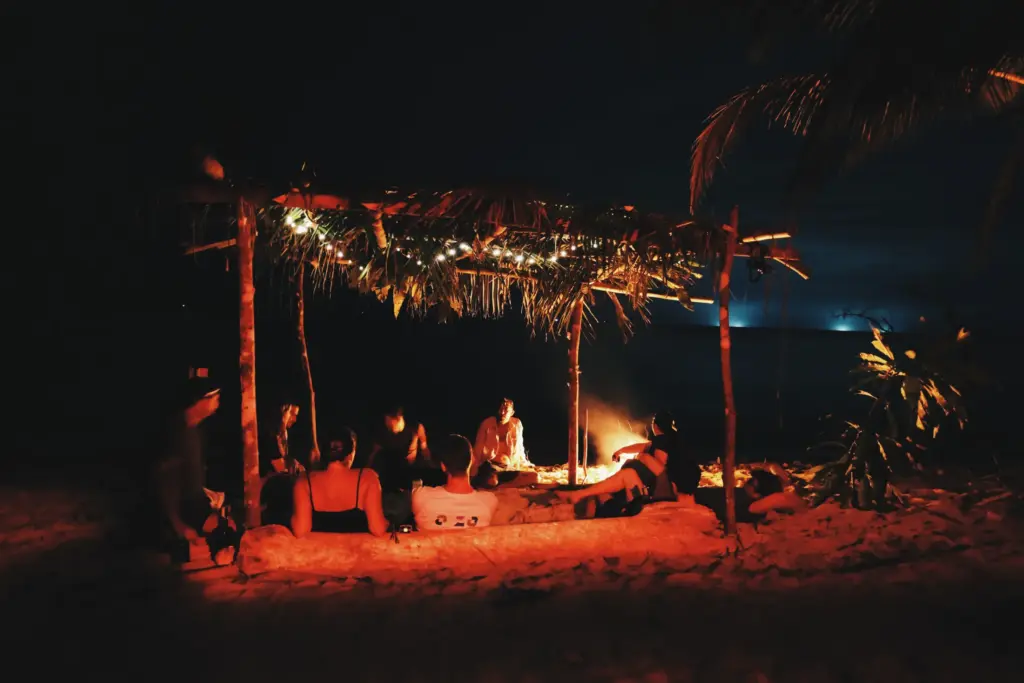
The first day is disorientation. By day two, it becomes functional. By day three, they’ve forgotten their life beyond the island. This is their life now.
When you land on a pristine island with nothing but the clothes you’re wearing, the gap between helpless and functional collapses in hours. There’s no time to overthink it. You need food, so you catch it. You need shelter, so you build it. Someone who couldn’t start a fire becomes someone who tends it. Someone who’d never tied a lashing suddenly knows how to make one tight.
The modern world teaches you to delegate and outsource. The island teaches you to do it yourself, and teaches you fast.
Why Do Survival Expedition Guests Get So Attached to What They Build?
It’s funny that things with no value in the modern world become tremendously important on an island. But the attachment isn’t about the object itself. It’s about what the object represents: your competence. Your presence. Your hands making something real.
Over hundreds of expeditions, the physical things guests hold onto are always the same. Not luxury items. Not Instagram-worthy objects. Things they made that actually work.
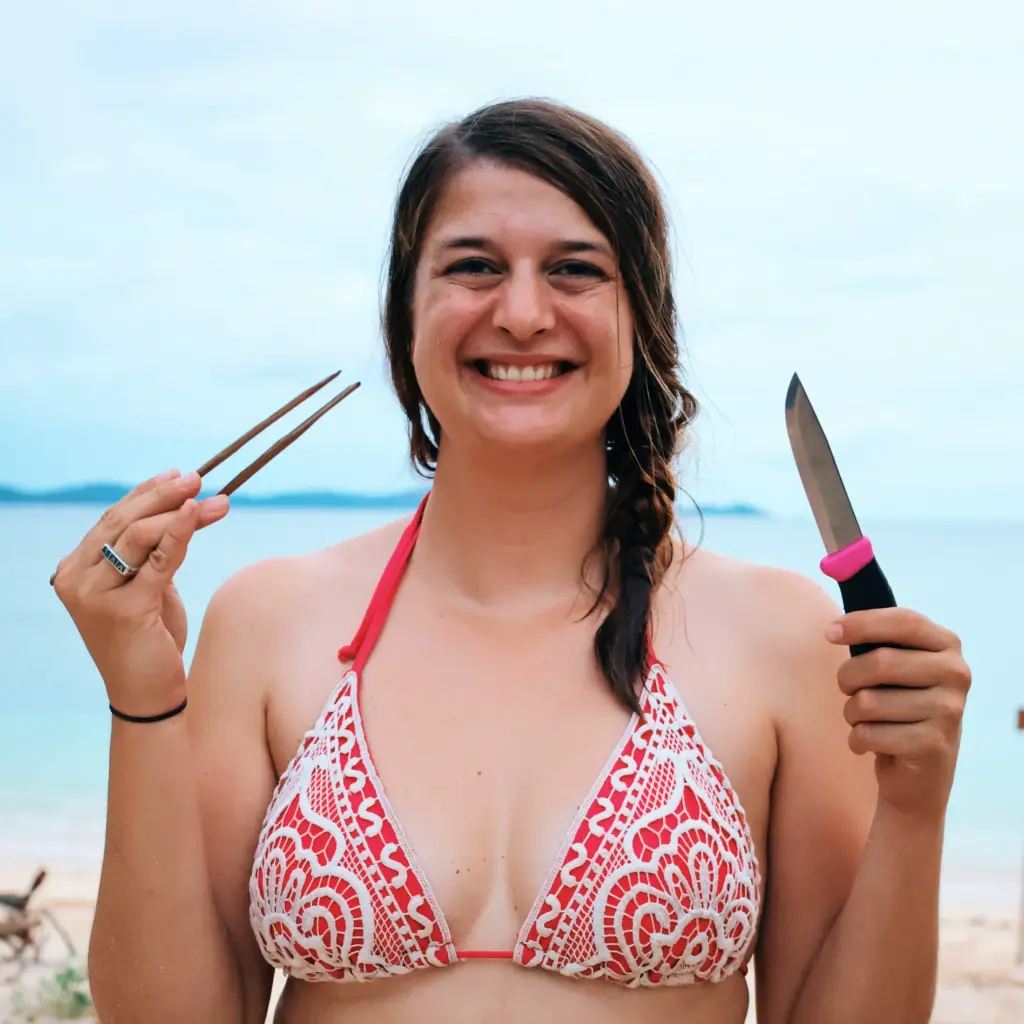
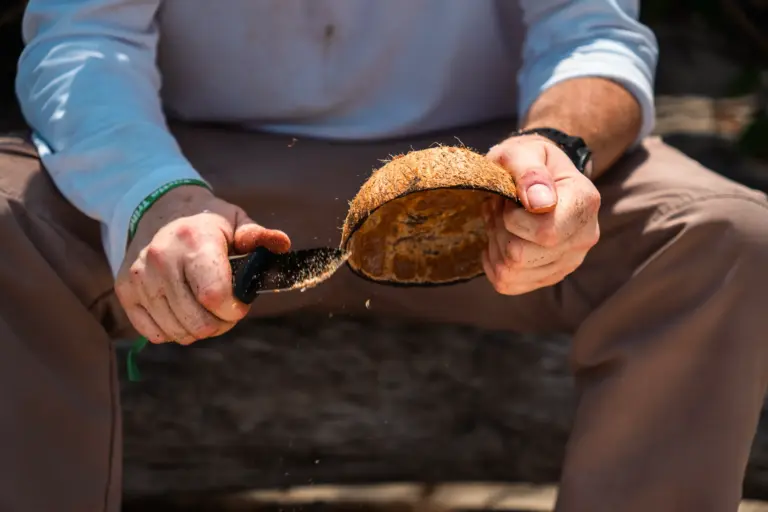
“It’s the things they make with their hands: the fishing reel, the polished coconut bowl, the little spoon, the chopsticks. I can’t bear to leave them behind.”
Tom Williams
Each one required focus to make well. And that focus, that presence, is what they can’t bear to leave behind.
The Most Telling Moment: Jos and the Fish Trap
I watched Jos in the Philippines spend three days weaving the most exquisite metre-long fish trap from bamboo and vines. It was genuinely beautiful work. The craftsmanship was there. And when it was finished, he was reluctant to put it to use. Such a thing, built so carefully, seemed too fine to risk to the reef.
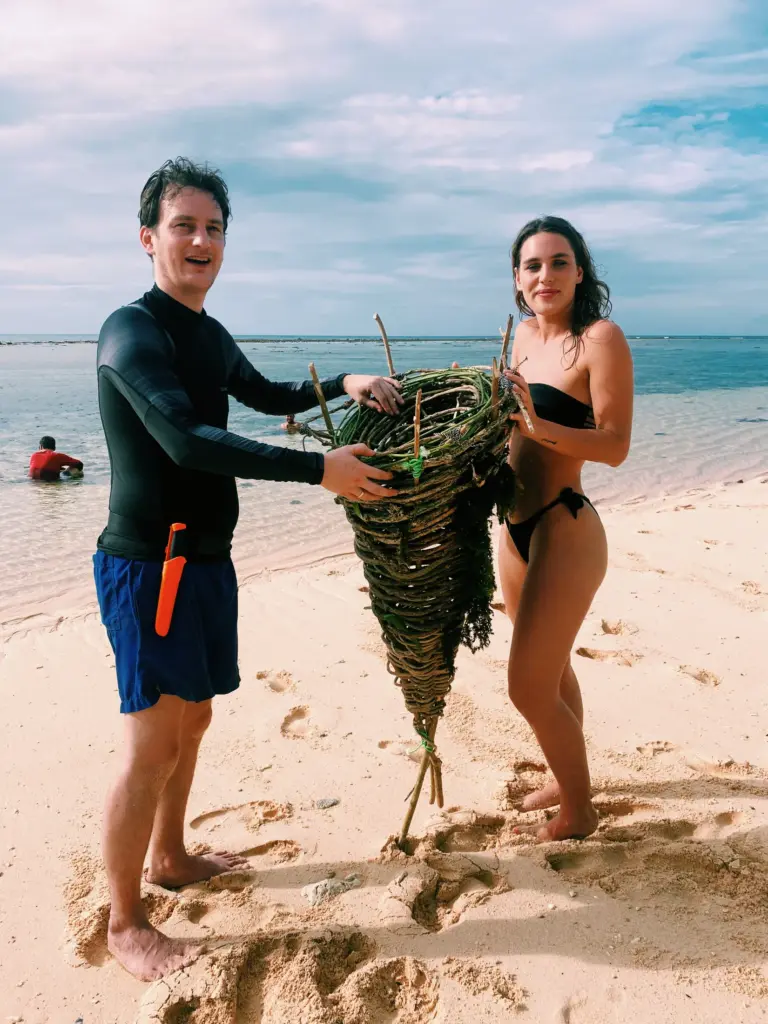
But he did it anyway. He set it, baited it, sent it out. Three hours later, the ocean had claimed it completely.
He laughed. Not the laugh of someone who’d lost something valuable, but the laugh of someone who’d understood a joke he’d been telling himself for 40 years. You make something, you let it go. You build for the sake of building. The tying matters more than whether the trap will hold forever.
What that defensive attachment tells you is simple: something real is happening inside them. The island is working.
What People Actually Discover About What Matters
Most people arrive on a wilderness survival challenge expecting a cool adventure in paradise. What actually surprises them is entirely different.
“What really surprises them is how much they feel reset and replete, like their nervous system has taken a break for the first time in years.”
Tom Williams
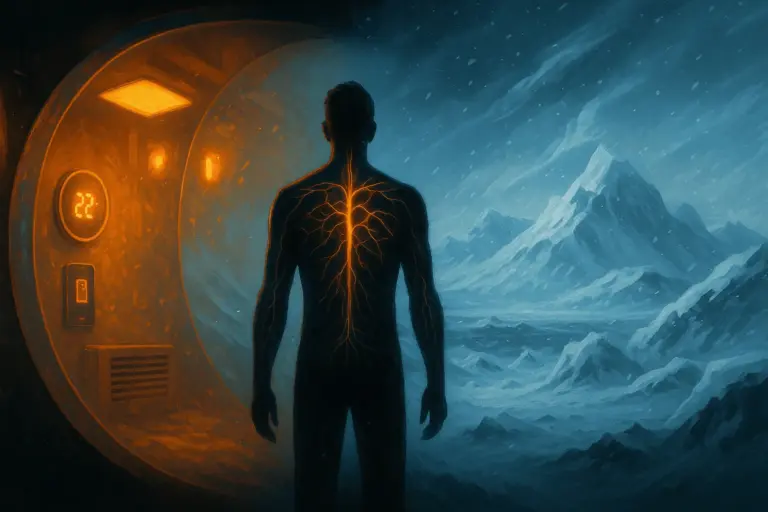
Their nervous system has been running on overdrive for so long that they’ve forgotten what calm feels like. For the first time in years, it gets a break. And that absence of constant stimulation — you genuinely have to feel this to believe it. The clarity after three days is exceptional.
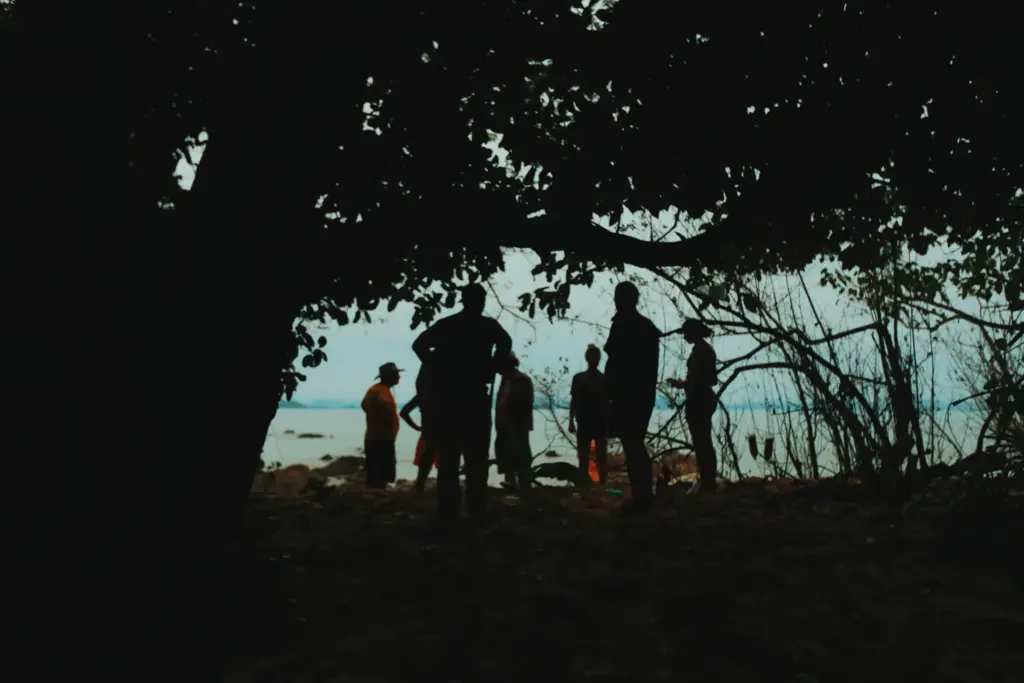
They stop scrolling. They stop optimising. They stop trying to extract value from every moment. You can’t build a shelter while planning next quarter’s targets. You can’t cook fish and think about emails. You can’t tie a knot worth anything if your mind is somewhere else.
The island forces presence. And presence, it turns out, is what they’ve been missing.
Transformation vs. Bushcraft: Who Actually Gets What From a Survival Expedition?
Some arrive expecting personal transformation, imagining they’ll come back as someone different, someone solved. Others arrive wanting to learn hands-on survival skills, thinking the point is mastery and competence. Something interesting happens in the middle.
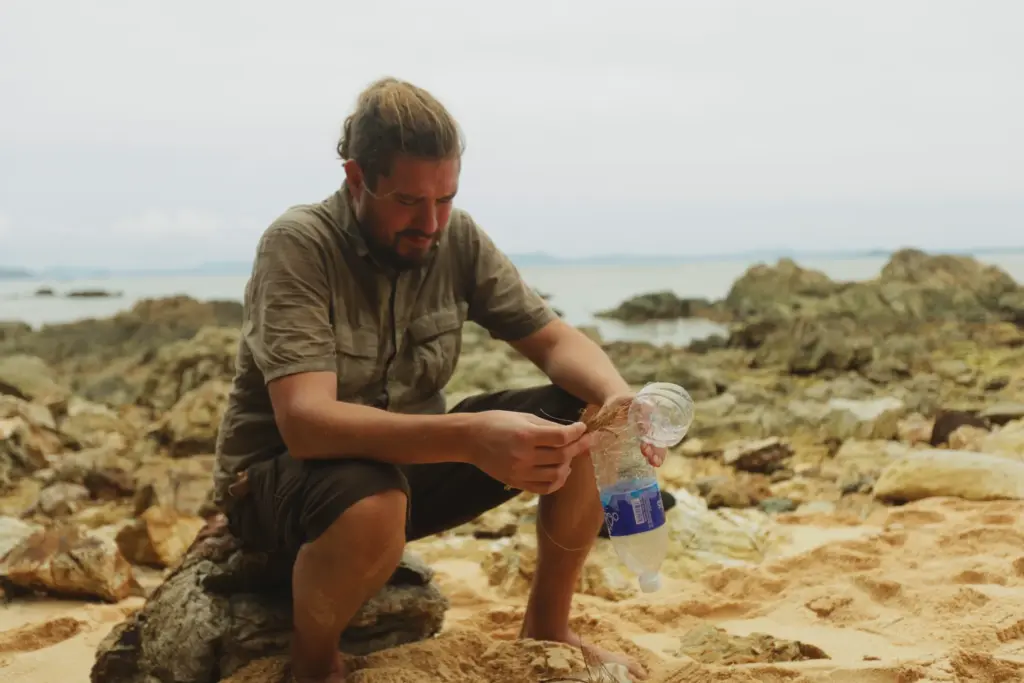
“Those that are here more for the bushcraft find out so much more about themselves. Those who are here for the transformation get so much out of bushcraft. Both parties kind of meet in the middle, and it’s great to see.”
Tom Williams
Because what the island teaches you isn’t about becoming someone else. It’s about stopping long enough to remember who you are when nobody’s asking anything of you. When there’s no audience. When the only fire you’re tending is the one that keeps you warm.
What the Island Actually Strips Away
The island doesn’t give you anything you didn’t already have. It just stops asking you for things long enough for you to remember what you need.
The fishing reel you make. The spoon you carve. The shelter that actually keeps the rain out. These things matter because your hands made them and they work. But they matter even more because in making them, you stopped doing the other thing. The thing that was slowly eroding your soul back on the mainland.
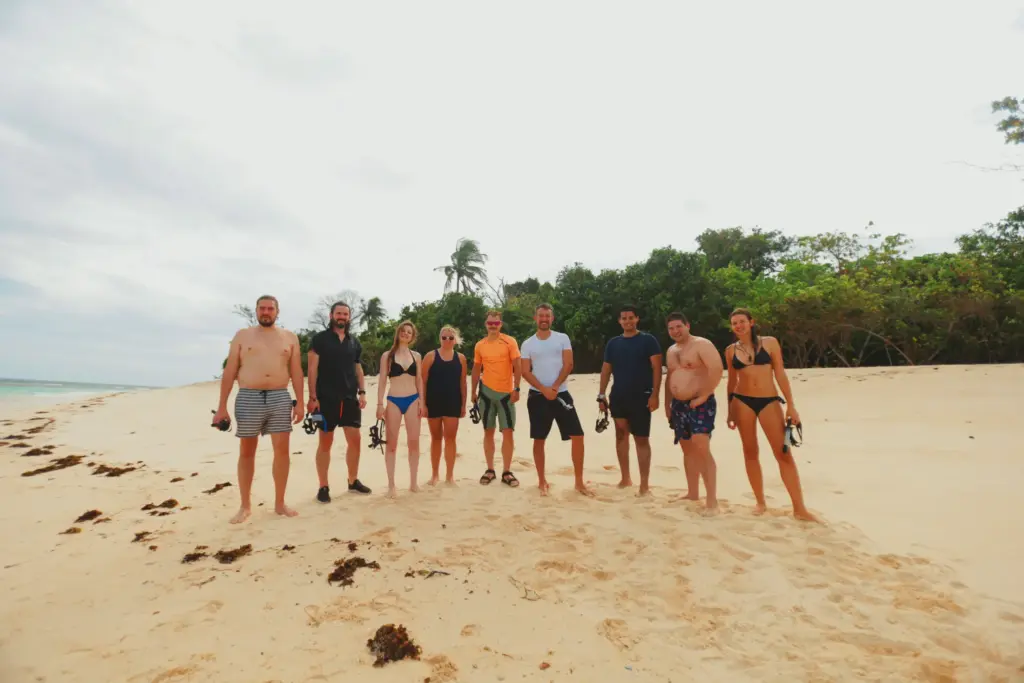
What the island strips away isn’t your confidence. It’s everything that doesn’t matter. The noise. The constant stimulation. The requirement to be optimised. And what remains is simple: your competence. Your presence. Your ability to make something real with your hands and keep it defended.
What does it take to strip your life down to what actually matters?
Ready to Experience What the Island Teaches?
Whether you’re drawn to the hands-on survival skills, the desert island experience, or just the reset your nervous system has been asking for, the island has a way of giving everyone exactly what they need.
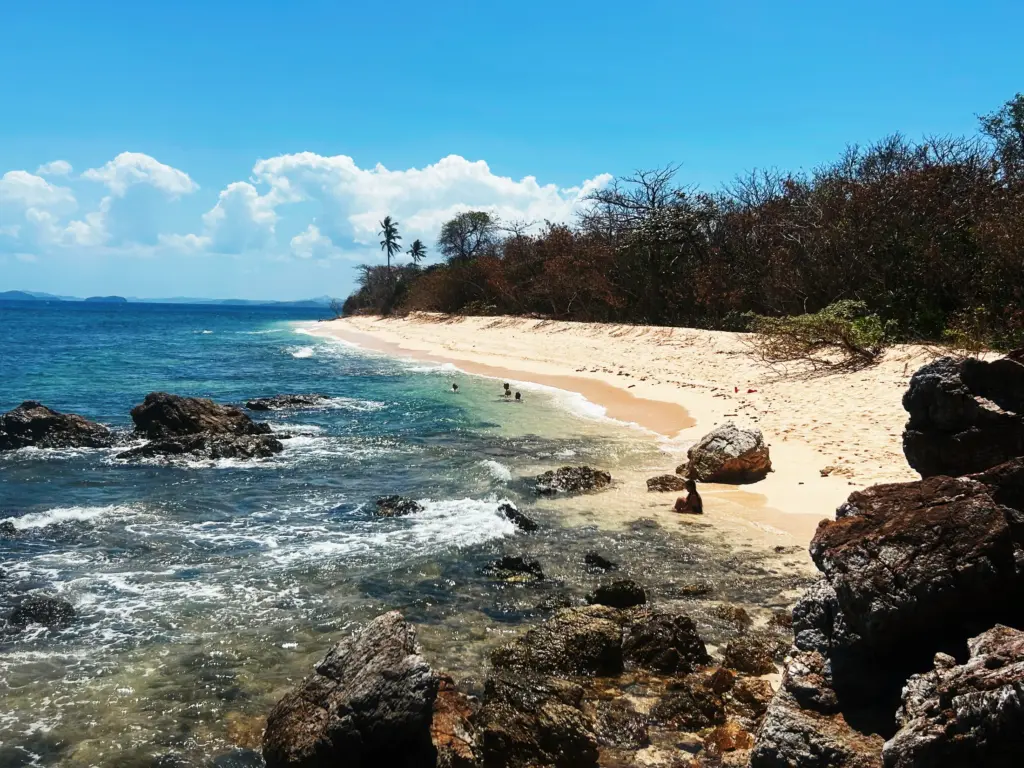
We run island expeditions across the Pacific, the Gulf of Panama, the Maldives, and the Philippines. Take the quiz to find out which one is right for you, or explore our island adventures below.
- Tonga — Ha’apai Islands expedition
- Philippines — Palawan expedition
- Panama — Pearl Islands expedition
- Maldives — Southern Atolls expedition
Frequently Asked Questions
On a Desert Island Survival expedition, guests spend the first 72 hours learning to build a shelter, source fresh water, start a fire, and find food using only what the environment provides. By day three, skills become instinct. What you build with your hands in those first days becomes surprisingly precious: the fishing reel woven from vines, the spoon you carved, the shelter that keeps the rain out.
Guests build shelters from natural materials, cook over fires they’ve lit themselves, weave fish traps from bamboo and vine, carve utensils, and construct tools for hunting and fishing. The quality of what you make improves rapidly. What starts as a leaking structure on day one is defended fiercely by day three.
Food comes from the environment. Guests fish, forage, and trap. Coconuts, shellfish, and whatever the island provides become the diet. Sourcing your own food is one of the most anchoring experiences on the expedition. Calories have real value when you’ve worked for them.
Faster than they expect. The gap between helpless and functional collapses within hours, not days. By the end of day two, most guests can source water, start a fire, and cook a meal. The nervous system adapts quickly when the stakes are real and the stimulation is simple.
Yes. No prior experience is required or expected. Desert Island Survival expeditions include a full training phase before the survival element. World-class instructors guide guests through every skill. The challenge is real, but it’s designed to be achievable, with invisible safety built in throughout.