
The World Feels Dangerous Right Now. Here Is What That Actually Means for a DIS Expedition.
Someone asked me last week, just before we were due to leave for Panama, whether they should still go. They’d been reading the news. They had a connecting flight they were nervous about. They wanted me to tell them it was fine.
I didn’t tell them it was fine. I told them what I actually thought.
The news is loud right now. I’m reading the same headlines as everyone else. As I’m writing this, there is genuine disruption to aviation through the Middle East. British Airways has cancelled flights into Dubai. Emirates is running a limited schedule. Debris from drone and missile attacks has been landing in places where, not long ago, business travellers moved through without a second thought. I understand why that creates anxiety, particularly around stopovers. That concern is not irrational. It deserves a straight answer, not a PR response.
So here is mine.
Where Desert Island Survival Actually Operates
The locations we run expeditions in — Panama’s Pearl Islands, the Philippines‘ Palawan archipelago, the Ha’apai group in Tonga, the Maldives‘ southern atolls — are not places you’ll find in geopolitical briefings. They are not proximate to conflict zones. They are not on the major transit corridors that are currently being rerouted. They are, in many ways, the exact opposite of the world the news is describing.
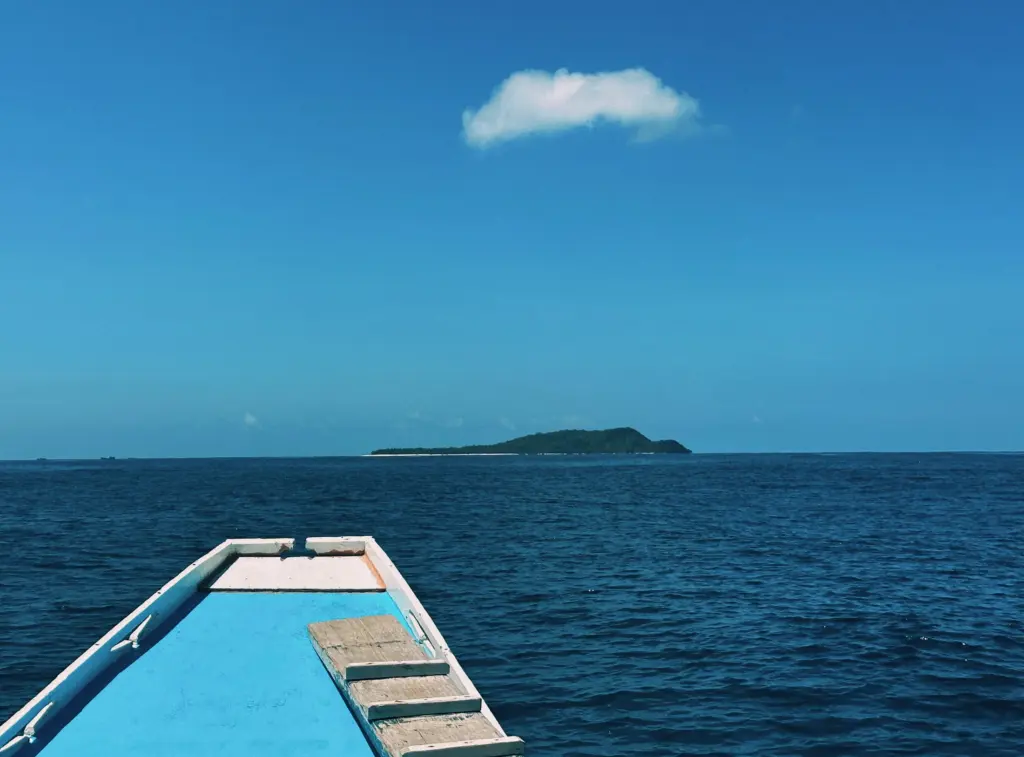
When you’re on one of our islands, you’re entirely cut off. You’re wondering what might be happening in the outside world, not tracking it. I’ve been in situations on expedition where significant global events were unfolding and the group on the island had absolutely no idea. There’s something genuinely lovely about that. The noise turns down in a way that’s very hard to manufacture anywhere else.
That said, I want to be clear about what I mean and what I don’t mean. I’m not saying the world is fine and people are overreacting. I’m saying that the gap between where the tension is and where we operate is significant enough that the two aren’t really in the same conversation.
How We Choose a Destination
Choosing an island has always had a long checklist. It did before the current geopolitical moment, and it hasn’t changed. The criteria are specific, and they’re worth knowing.
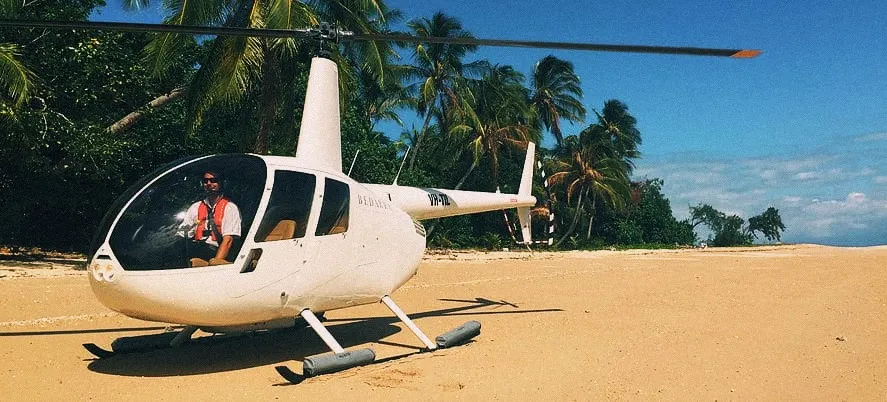
First, the Goldilocks zone. I’ve talked about this before in the context of finding islands. They have to be close enough to tourism infrastructure that we have transport links, accessible hospitals, and a functioning evacuation route if we need one. But not so close that the illusion of isolation breaks. Lights on the horizon. Boat traffic. The sound of engines. Any of that and the expedition loses something essential. Finding islands that sit in that zone is genuinely rare. In seven years I’ve found three.
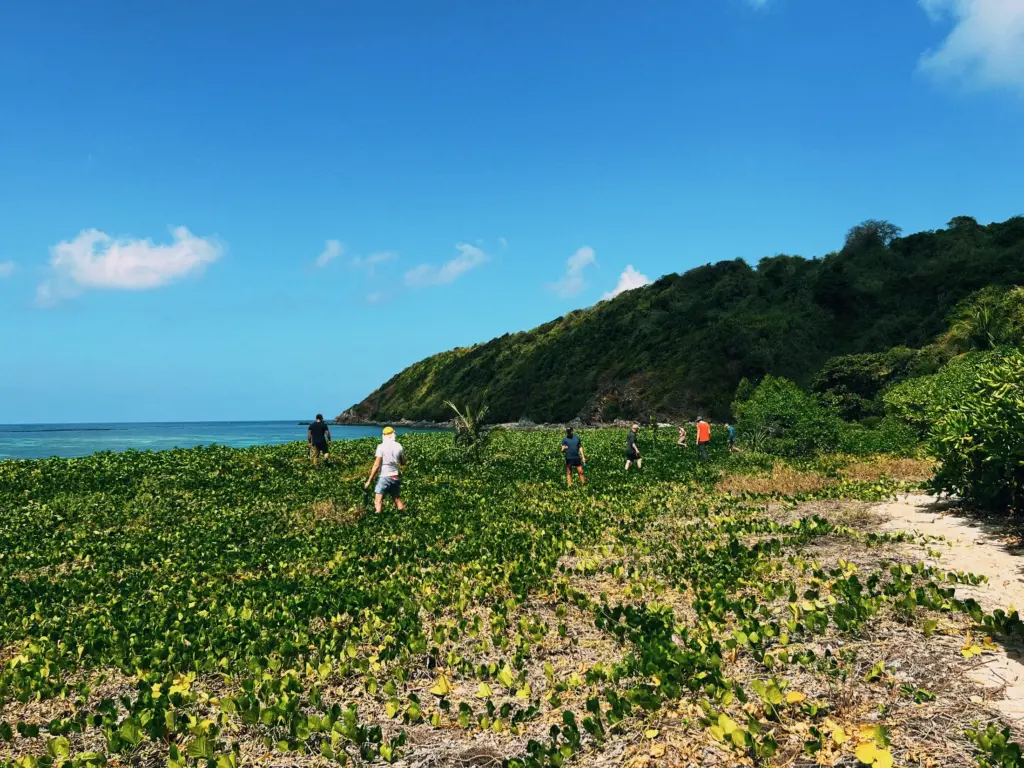
Then we scan for dangers. We have a policy: no pit vipers, no pirates. That sounds almost comic when you say it out loud, but both are real considerations depending on geography. We check for venomous species, anthropogenic risks, ocean currents that could complicate water access or emergency evacuation, and weather patterns that might hamper a medical extraction in a worst case.
After all of that, the island still has to be beautiful, have enough natural resources for the group to actually survive on, and be affordable for us to access and rent. The list of islands that pass all of those tests is short. The ones we use passed it before we ever took anyone there.
What About Stopovers and Connecting Airports?
This is a real question and it deserves a real answer. The concern I’m hearing most often right now is around stopovers through Middle Eastern hubs: Qatar, Abu Dhabi, Dubai, Riyadh.
My honest take: unless your routing specifically takes you through that region, I don’t think there is cause for significant concern. Panama connects easily through the US or directly from Europe without touching the Middle East. The Philippines routes vary, but there are clean options through East Asia. If you’re already routing through affected hubs, it’s worth checking alternatives, and I’d encourage anyone to do that before booking flights.
I’d be surprised if we’re seeing meaningful aviation disruption in a month’s time. There is a lot of pressure on all sides to return that region to stability. But I’d rather acknowledge the uncertainty than wave it away.
What the Real Risks Actually Are
Here is where I want to be genuinely useful, because I think the risks people worry about and the risks that actually exist are quite different.
The things guests tend to fear before they arrive: sharks, snakes, scorpions, a falling coconut. Statistically speaking, coconuts kill more people annually than sharks do. I mention that not to be flippant but because it illustrates something about how we calibrate risk. The dramatic scenarios feel vivid. The mundane ones don’t.

What I actually watch for on expedition: heat exhaustion, dehydration, knife injuries. We work with sharp tools and teach people to use them properly, but the learning curve involves the occasional cut. Physical effort in humidity is demanding, particularly in the first two days before the body adjusts. And weather can change conditions meaningfully, which is why every island we use has a tested evacuation route and our instructors are Wilderness First Responder certified.
What guests consistently underestimate: the mental side. Not in a frightening way. In a good way. The moment the phone disappears and the day simplifies down to finding food and building shelter, something shifts. That shift is what they came for. It can also be more confronting than they expected, in the first 48 hours particularly. I’ve never seen anyone come undone by it. I have seen people surprised by it.
When the World Came to the Island Anyway
We were running an expedition in Panama in early 2020, just as Covid was beginning to become a serious global concern. The group on the island were completely oblivious. We often joke that in a real emergency, the castaways would be the last to know. This was, briefly, one of those times.
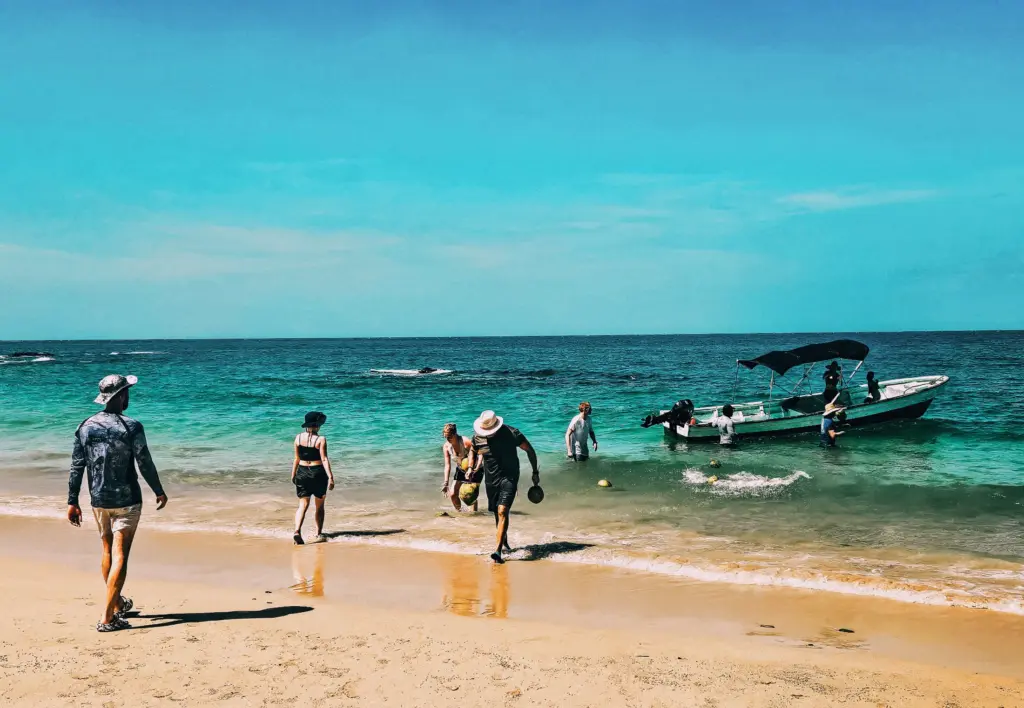
The logistics on the way home were significantly more complicated than they should have been. One guest flew back via Brazil and four different connecting flights and spent two days in airport limbo. That was genuinely difficult, and I don’t want to minimise it. But the expedition itself was unaffected. The island didn’t know. The reef didn’t know. The fish certainly didn’t.
We made real-time decisions throughout that period about whether and how to run. We pulled some expeditions. We delayed others. We stayed close to the situation and made calls based on what was actually changing, not on ambient anxiety. That is what we’ll continue to do.
What This Means If You’re Considering a Trip
If you’re sitting with genuine uncertainty about whether now is the right time, I think that’s worth taking seriously. Not because the destination is dangerous, but because going into an expedition with unresolved anxiety about logistics is its own kind of load to carry. Part of what these trips do is clear the noise. It helps if you’re not adding to it before you leave.
If you have specific questions about routing, stopovers, or what we’re monitoring ahead of any particular departure date, reach out directly. I’d rather have that conversation properly than have you sit with something unanswered.